Last Updated on April 1, 2026
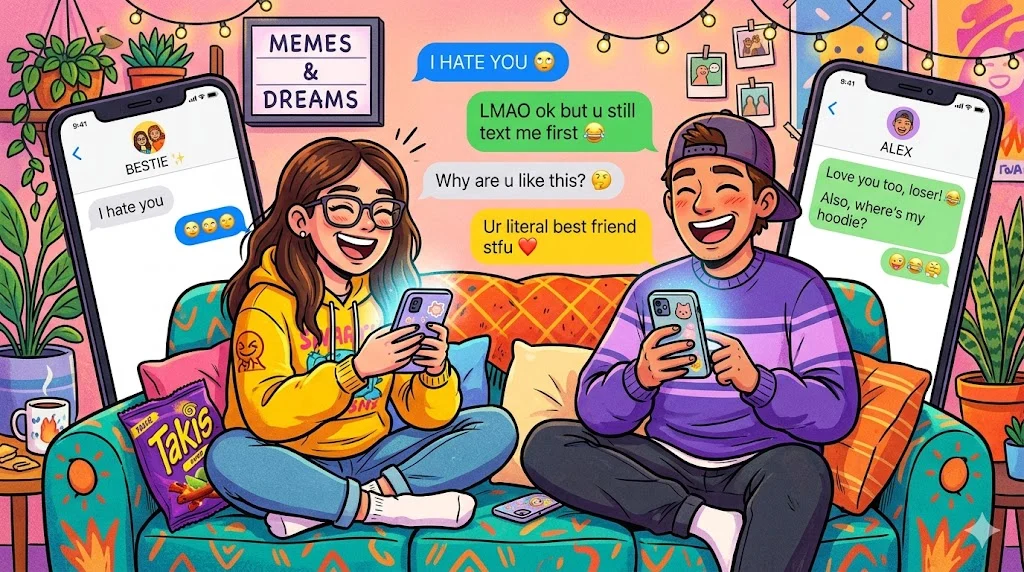
When someone says “I hate you,” the best response depends on your vibe. Keep it playful, confident, or sarcastic to match the moment and keep things fun instead of awkward.
Top quick replies: “Join the club,” “That makes two of us,” “Aw, I love you too,” “Noted with zero concern,” “Bold of you to admit that”
We’ve all been there. A friend texts “I hate you” after you roast them, your crush says it jokingly, or someone drops it mid-argument. It’s one of those phrases that can mean anything from playful teasing to real frustration. And your reply? That’s where the magic happens.
The right comeback can flip the mood, show confidence, or turn tension into laughter. That’s why having a stash of funny responses to “I hate you” is basically a social survival skill. Whether you’re texting, in DMs, or face to face, your response can make you look witty, chill, or totally unbothered.
Here are the best quick replies to “I hate you” that are funny, witty and perfect for any situation.
Top Quick Replies to “I Hate You”
| Reply | Tone | When to Use |
|---|---|---|
| Join the club | Funny | When someone says it playfully |
| That makes two of us | Sarcastic | During light teasing or banter |
| Aw, I love you too | Cute | In friendly or flirty moments |
| Noted with zero concern | Wild | When you want to seem unbothered |
| Bold of you to admit that | Witty | For a smart, confident comeback |
Funny Responses

“Join the club, we have snacks.”
Example: Used when a friend jokingly says it after you prank them.
Meaning: You’re making it playful and not taking it seriously.
“That’s okay, I already signed the paperwork.”
Example: When someone pretends to be mad over something minor.
Meaning: You’re joking like it’s official and mutual.
“You’ll get over it.”
Example: After teasing someone lightly.
Meaning: You’re brushing it off humorously.
“Good, balance is important.”
Example: When someone says it jokingly.
Meaning: You’re implying love and hate need to coexist.
“Same energy, honestly.”
Example: After a sarcastic comment exchange.
Meaning: You’re matching their vibe.
“I’ll survive this heartbreak.”
Example: When a friend dramatically says it.
Meaning: You’re turning it into a joke.
“That’s your loss, bestie.”
Example: In a playful friend argument.
Meaning: You’re being funny but confident.
“Ouch, my nonexistent feelings.”
Example: When you’re clearly unbothered.
Meaning: You’re joking about not caring.
“Put it in writing.”
Example: When someone says it casually.
Meaning: You’re making it sound official for humor.
“Cool, I hate Mondays.”
Example: When you want to deflect with randomness.
Meaning: You’re redirecting the energy humorously.
“Breaking news: I’m devastated.”
Example: Used sarcastically.
Meaning: You’re exaggerating for laughs.
“I’ll alert the authorities.”
Example: When someone says it dramatically.
Meaning: You’re playing along with exaggeration.
“Add it to the list.”
Example: After multiple jokes or complaints.
Meaning: You’re stacking the humor.
“Wow, so original.”
Example: When it’s said repeatedly.
Meaning: You’re teasing their lack of creativity.
“I’ll cry about it later.”
Example: When you want a dramatic but funny reply.
Meaning: You’re clearly not serious.
Sarcastic Responses
“Oh no, how will I ever recover?”
Example: When someone says it jokingly.
Meaning: You’re mocking the seriousness.
“That really keeps me up at night.”
Example: In a playful argument.
Meaning: You’re pretending to care deeply.
“Devastating. Truly.”
Example: When you want dry humor.
Meaning: You’re being sarcastic.
“I’m canceling myself immediately.”
Example: After teasing someone.
Meaning: You’re exaggerating guilt.
“This changes everything.”
Example: When the situation is minor.
Meaning: You’re mocking the drama.
“I’ll never be the same.”
Example: When someone is fake mad.
Meaning: You’re playing dramatic.
“Let me write that in my diary.”
Example: In sarcastic tone.
Meaning: You’re dismissing it.
“Shocking revelation.”
Example: When it’s expected.
Meaning: You’re acting unimpressed.
“I’ll inform my therapist.”
Example: For edgy humor.
Meaning: You’re exaggerating impact.
“Wow, groundbreaking.”
Example: When it’s predictable.
Meaning: You’re sarcastically unimpressed.
“I needed that character development.”
Example: After being roasted.
Meaning: You’re turning it into growth humor.
“Noted. Ignored.”
Example: When you want a sharp reply.
Meaning: You’re dismissing it coolly.
“Let me process this tragedy.”
Example: When someone is joking.
Meaning: You’re being sarcastically dramatic.
“Heart officially shattered.”
Example: Used lightly.
Meaning: You’re mocking heartbreak.
“I’ll take that under advisement.”
Example: In a mock-professional tone.
Meaning: You’re being sarcastic and formal.
Flirty Responses

“Good, that means you’re thinking about me.”
Example: When your crush says it playfully.
Meaning: You’re flipping it into flirtation.
“Hate me a little less tomorrow?”
Example: In teasing tone.
Meaning: You’re softening the vibe.
“You love me, admit it.”
Example: When there’s chemistry.
Meaning: You’re playful and confident.
“That’s not what your eyes say.”
Example: In person teasing.
Meaning: You’re being flirty.
“I’ll win you over.”
Example: When joking romantically.
Meaning: You’re confident and charming.
“Careful, that sounds like denial.”
Example: When teasing a crush.
Meaning: You’re playful and bold.
“I’m still your favorite though.”
Example: In light teasing.
Meaning: You’re asserting charm.
“You say that, but you text me first.”
Example: In DMs.
Meaning: You’re pointing out interest.
“Hate me but miss me later.”
Example: When joking.
Meaning: You’re playful and confident.
“That’s just your way of flirting.”
Example: When it feels playful.
Meaning: You’re reframing it.
“You’re obsessed with me.”
Example: In teasing tone.
Meaning: You’re joking confidently.
“I’ll take that as love.”
Example: When it’s clearly playful.
Meaning: You’re flipping the meaning.
“You’ll regret saying that.”
Example: In a flirty tease.
Meaning: You’re hinting playfully.
“I’m unforgettable, admit it.”
Example: When teasing.
Meaning: You’re confident and fun.
“You’re just mad you like me.”
Example: In playful banter.
Meaning: You’re teasing attraction.
Fatal Responses
“Get in line.”
Example: When someone says it harshly.
Meaning: You’re unbothered and bold.
“I don’t think about you enough to care.”
Example: In a comeback moment.
Meaning: You’re dismissing them.
“That’s a you problem.”
Example: When someone is annoyed.
Meaning: You’re shifting responsibility.
“And yet here I am thriving.”
Example: After criticism.
Meaning: You’re confident and unaffected.
“Cool, anyway”
Example: When ignoring negativity.
Meaning: You’re dismissing them.
“Your opinion is noted and deleted.”
Example: In sass mode.
Meaning: You’re ignoring them.
“I’ll live.”
Example: When someone is dramatic.
Meaning: You’re unbothered.
“Not everyone has taste.”
Example: For a sharp comeback.
Meaning: You’re flipping it back.
“I didn’t ask.”
Example: When annoyed.
Meaning: You’re shutting it down.
“That’s unfortunate for you.”
Example: In confident tone.
Meaning: You’re unaffected.
“Keep talking.”
Example: When provoking.
Meaning: You’re challenging them.
“And you matter because?”
Example: In fatal mode.
Meaning: You’re questioning their relevance.
“I’ve heard worse.”
Example: When brushing off.
Meaning: You’re unbothered.
“You tried.”
Example: After a weak insult.
Meaning: You’re dismissing effort.
“Stay mad.”
Example: In confident tone.
Meaning: You’re embracing their frustration.
Cute Responses
“Aww, I still like you.”
Example: When someone is fake mad.
Meaning: You’re softening things.
“That’s okay, I love you.”
Example: Between friends.
Meaning: You’re affectionate.
“You don’t mean that.”
Example: In playful tone.
Meaning: You’re dismissing negativity gently.
“I’ll win you back.”
Example: When joking.
Meaning: You’re sweet and playful.
“Hate me softly.”
Example: In teasing tone.
Meaning: You’re making it cute.
“You’re too cute to hate me.”
Example: With a crush.
Meaning: You’re being flirty-cute.
“I forgive you.”
Example: When joking.
Meaning: You’re playful and kind.
“You’ll miss me.”
Example: In light teasing.
Meaning: You’re affectionate.
“Still your best friend though.”
Example: In friend banter.
Meaning: You’re reassuring.
“That hurt a little.”
Example: In playful tone.
Meaning: You’re being cute-dramatic.
“I’ll make it up to you.”
Example: When teasing.
Meaning: You’re sweet.
“You’re stuck with me.”
Example: Between friends.
Meaning: You’re reassuring.
“Hate me today, love me tomorrow.”
Example: In teasing tone.
Meaning: You’re playful.
“I’ll take that as a compliment.”
Example: When joking.
Meaning: You’re flipping it positively.
“You’re adorable when you’re mad.”
Example: With a crush.
Meaning: You’re being sweet.
Dramatic Responses
“My heart cannot take this betrayal.”
Example: In playful drama.
Meaning: You’re exaggerating.
“I shall remember this forever.”
Example: When joking.
Meaning: You’re dramatic.
“This is the end of me.”
Example: For humor.
Meaning: You’re exaggerating impact.
“How could you?”
Example: In mock shock.
Meaning: You’re playing along.
“I trusted you.”
Example: In playful betrayal.
Meaning: You’re exaggerating.
“I’ll never recover.”
Example: When joking.
Meaning: You’re dramatic.
“This wound is deep.”
Example: For humor.
Meaning: You’re exaggerating pain.
“I am shattered.”
Example: In mock sadness.
Meaning: You’re dramatic.
“The audacity.”
Example: When reacting.
Meaning: You’re playfully shocked.
“I expected better.”
Example: In teasing tone.
Meaning: You’re dramatic.
“You’ve changed.”
Example: For humor.
Meaning: You’re exaggerating.
“This is unforgivable.”
Example: In joking tone.
Meaning: You’re dramatic.
“I’ll write a poem about this.”
Example: For humor.
Meaning: You’re exaggerating.
“My villain arc begins now.”
Example: In meme tone.
Meaning: You’re joking dramatically.
“I will remember this moment.”
Example: For effect.
Meaning: You’re dramatic.
Chill And Casual Responses
“Okay.”
Example: When unbothered.
Meaning: You’re neutral.
“Cool.”
Example: In relaxed tone.
Meaning: You’re indifferent.
“Alright then.”
Example: When moving on.
Meaning: You’re casual.
“Got it.”
Example: In neutral reply.
Meaning: You’re acknowledging.
“Fair enough.”
Example: When accepting.
Meaning: You’re calm.
“It happens.”
Example: In relaxed tone.
Meaning: You’re dismissing it.
“No worries.”
Example: When brushing off.
Meaning: You’re easygoing.
“All good.”
Example: In calm tone.
Meaning: You’re fine.
“Noted.”
Example: When acknowledging.
Meaning: You’re neutral.
“Okay, anyway”
Example: When shifting topic.
Meaning: You’re moving on.
“That’s fine.”
Example: In calm tone.
Meaning: You’re accepting.
“Sure.”
Example: When indifferent.
Meaning: You’re casual.
“If you say so.”
Example: In relaxed tone.
Meaning: You’re neutral.
“Alrighty.”
Example: In light tone.
Meaning: You’re casual.
“Cool story.”
Example: When dismissing lightly.
Meaning: You’re unbothered.
Confident Responses

“I know I’m unforgettable.”
Example: When joking.
Meaning: You’re self-assured.
“Not everyone can handle me.”
Example: In bold tone.
Meaning: You’re confident.
“I’m still amazing though.”
Example: After teasing.
Meaning: You’re self-assured.
“Your loss.”
Example: In confident reply.
Meaning: You’re unfazed.
“I’ll be fine.”
Example: When calm.
Meaning: You’re strong.
“I like me enough for both of us.”
Example: In playful tone.
Meaning: You’re confident.
“I’m not worried.”
Example: When relaxed.
Meaning: You’re secure.
“I’ll survive.”
Example: When joking.
Meaning: You’re strong.
“That doesn’t change my vibe.”
Example: In confident tone.
Meaning: You’re unaffected.
“I’m still winning.”
Example: When playful.
Meaning: You’re confident.
“I’ll be okay.”
Example: In calm tone.
Meaning: You’re self-assured.
“I’m used to it.”
Example: When joking.
Meaning: You’re unfazed.
“Still iconic.”
Example: In meme tone.
Meaning: You’re confident.
“I’m good either way.”
Example: In relaxed tone.
Meaning: You’re secure.
“Doesn’t bother me.”
Example: When calm.
Meaning: You’re unaffected.
Polite Responses
“I’m sorry you feel that way.”
Example: In serious tone.
Meaning: You’re respectful.
“Let’s talk it out.”
Example: When resolving conflict.
Meaning: You’re mature.
“I didn’t mean to upset you.”
Example: When apologizing.
Meaning: You’re sincere.
“Can we fix this?”
Example: In conflict.
Meaning: You’re solution-focused.
“I understand.”
Example: When listening.
Meaning: You’re empathetic.
“Let’s calm down.”
Example: In tension.
Meaning: You’re de-escalating.
“I care about this.”
Example: In serious talk.
Meaning: You’re genuine.
“We can work through it.”
Example: When resolving.
Meaning: You’re positive.
“I hear you.”
Example: In conversation.
Meaning: You’re attentive.
“Let’s take a break.”
Example: In argument.
Meaning: You’re mature.
“I value you.”
Example: When reassuring.
Meaning: You’re kind.
“We’ll figure it out.”
Example: In calm tone.
Meaning: You’re hopeful.
“I respect your feelings.”
Example: In serious talk.
Meaning: You’re considerate.
“Let’s fix this together.”
Example: When resolving.
Meaning: You’re collaborative.
“I don’t want us to fight.”
Example: In tension.
Meaning: You’re peaceful.
Emotional Responses

“That hurts more than you think.”
Example: When serious.
Meaning: You’re expressing pain.
“I wish you didn’t feel that way.”
Example: In calm tone.
Meaning: You’re sincere.
“I care about you though.”
Example: When emotional.
Meaning: You’re honest.
“Can we talk about it?”
Example: In conflict.
Meaning: You’re open.
“I don’t want this between us.”
Example: In serious moment.
Meaning: You’re concerned.
“I value our connection.”
Example: When emotional.
Meaning: You’re sincere.
“That stings.”
Example: In honest tone.
Meaning: You’re expressing hurt.
“I didn’t mean to hurt you.”
Example: When apologizing.
Meaning: You’re sincere.
“Let’s fix this.”
Example: In emotional talk.
Meaning: You’re hopeful.
“I still care.”
Example: When vulnerable.
Meaning: You’re honest.
“This matters to me.”
Example: In serious tone.
Meaning: You’re genuine.
“I want us to be okay.”
Example: In conflict.
Meaning: You’re caring.
“We can get through this.”
Example: When hopeful.
Meaning: You’re positive.
“I’m here.”
Example: In emotional moment.
Meaning: You’re supportive.
“I don’t hate you.”
Example: When clarifying.
Meaning: You’re honest.
FAQs
What does “I hate you” really mean?
It often means frustration, teasing, or playful annoyance rather than actual hate.
Can “I hate you” be flirty?
Yes, especially between friends or crushes. It’s often playful and teasing.
Is it okay to respond with humor?
Absolutely. Humor is one of the best ways to keep things light.
What if I don’t mean it seriously?
Use a cute or funny reply to show you’re not taking it literally.
Should I reply seriously in professional settings?
Yes, keep it polite and calm to maintain respect.
Conclusion
Responding to “I hate you” isn’t about defending yourself. It’s about owning the moment. Whether you go funny, flirty, fatal or sweet, your reply shapes how people see you and how the conversation flows.
The best part? You now have over 200 ready to use responses that fit every mood and situation. Save your favorites, try different styles, and don’t be afraid to switch it up depending on who you’re talking to.
Confidence, humor, and timing always win.
Now go ahead and turn awkward moments into iconic replies.

George Hall is an enthusiastic blogger at ReplyTix.com, recognized for creating clear, engaging and informative content. He shares practical insights and valuable knowledge to keep readers informed and motivated.