
Last Updated on April 7, 2026
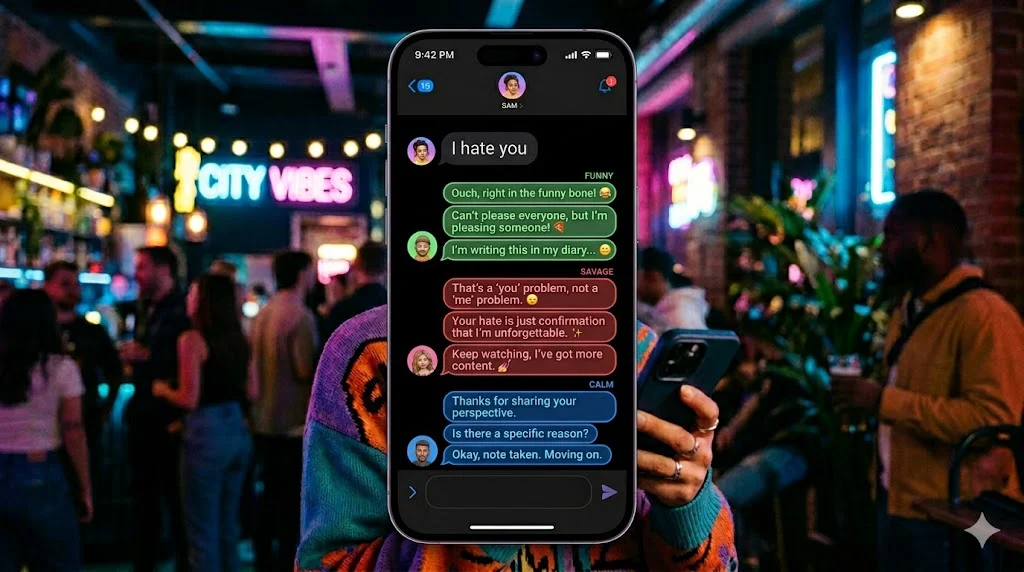
When someone says “I hate you” your response depends on the vibe, your relationship, and your mood. You can defuse tension, clap back, joke it off or keep it classy.
Top replies: “That sounds like a you problem”, “Love you too”, “Noted”, “Cool, take care”, “What happened?”
We’ve all been there. A heated text, a dramatic DM, or a random moment where someone drops the classic “I hate you.” Whether it’s coming from a friend joking around, a frustrated partner, or someone trying to get under your skin, knowing how to respond to “I hate you” can save the moment or completely flip the script.
Your reply matters more than you think. It can calm things down, show confidence, or even turn tension into humor. The right words can protect your peace and keep you in control without overreacting. So instead of freezing or firing back impulsively, here are text-ready responses for every mood, vibe, and situation.
Funny Responses
“Wow, fan behavior.”
Example: When someone jokingly says it after losing an argument.
Meaning: You’re playfully dismissing their negativity.
“That’s a strong word for someone who still texts me.”
Example: When a friend says it during a playful fight.
Meaning: You’re calling out the contradiction humorously.
“Good, keeps the balance in the universe.”
Example: When someone is being dramatic.
Meaning: You’re making light of their statement.
“Join the club, meetings are on Mondays.”
Example: When they’re clearly joking.
Meaning: You’re turning it into a shared joke.
“I’d hate me too if I were you.”
Example: When you want to sound confident and funny.
Meaning: You’re owning your personality with humor.
“Breaking news, I survived.”
Example: When someone tries to insult you.
Meaning: You’re showing you’re unbothered.
“Should I cry now or later?”
Example: When you want to be sarcastically dramatic.
Meaning: You’re not taking them seriously.
“That’s not very fan behavior of you.”
Example: In a light, teasing situation.
Meaning: You’re flipping it into humor.
“Okay but did you eat?”
Example: When someone is angry but you want to defuse it.
Meaning: You’re shifting focus with humor and care.
“Hate me after I win at least.”
Example: During a playful competition.
Meaning: You’re teasing confidently.
“Plot twist, I’m still awesome.”
Example: When someone tries to insult you.
Meaning: You’re staying confident and funny.
“I’ll recover, don’t worry.”
Example: When they expect a reaction.
Meaning: You’re brushing it off humorously.
“That hurts just kidding.”
Example: When you want to lighten the mood.
Meaning: You’re showing it doesn’t affect you.
“Add it to the list.”
Example: When they’re being dramatic.
Meaning: You’re not taking it seriously.
“Say it louder, I need content.”
Example: When you want a social media vibe reply.
Meaning: You’re turning drama into entertainment.
Fatal Responses
“That sounds like a personal issue.”
Example: When someone tries to provoke you.
Meaning: You’re shifting responsibility back to them.
“And yet here I am, thriving.”
Example: When they want to bring you down.
Meaning: You’re showing confidence.
“Not my problem.”
Example: When you want a blunt reply.
Meaning: You’re disengaging emotionally.
“I don’t think about you at all.”
Example: When they want attention.
Meaning: You’re showing indifference.
“Cool, keep that energy away from me.”
Example: When setting boundaries.
Meaning: You’re protecting your space.
“That’s unfortunate for you.”
Example: When you want to sound unbothered.
Meaning: You’re not affected.
“Still not losing sleep.”
Example: When they expect a reaction.
Meaning: You’re showing emotional control.
“Try harder.”
Example: When insult feels weak.
Meaning: You’re dismissing their effort.
“And I still don’t care.”
Example: When they repeat themselves.
Meaning: You’re shutting it down.
“That’s your burden, not mine.”
Example: When you want to sound composed.
Meaning: You’re separating yourself emotionally.
“Okay, now what?”
Example: When they expect drama.
Meaning: You’re refusing to escalate.
“You done?”
Example: When they rant.
Meaning: You’re cutting it short.
“Good thing your opinion isn’t my reality.”
Example: When they judge you.
Meaning: You’re staying grounded.
“I’ve heard worse.”
Example: When insult is mild.
Meaning: You’re unfazed.
“And I’m still winning.”
Example: When you want a power reply.
Meaning: You’re asserting confidence.
💖 Sweet Responses
“I still care about you though.”
Example: When someone is upset.
Meaning: You’re showing kindness.
“I’m sorry you feel that way.”
Example: When you want to de-escalate.
Meaning: You’re acknowledging emotions.
“What did I do?”
Example: When you want clarity.
Meaning: You’re open to fixing things.
“That hurts a little, not gonna lie.”
Example: When being honest calmly.
Meaning: You’re expressing feelings gently.
“I don’t hate you.”
Example: When they’re emotional.
Meaning: You’re reassuring them.
“We’ll get through this.”
Example: During conflict.
Meaning: You’re focusing on resolution.
“Talk to me, what’s wrong?”
Example: When they’re angry.
Meaning: You’re inviting communication.
“I’m here when you’re ready.”
Example: When giving space.
Meaning: You’re supportive.
“Let’s not end things like this.”
Example: During arguments.
Meaning: You value the relationship.
“You don’t mean that.”
Example: When they’re emotional.
Meaning: You’re calming them down.
“I care too much to fight like this.”
Example: When things escalate.
Meaning: You prioritize connection.
“We can fix this.”
Example: When conflict arises.
Meaning: You’re hopeful.
“Take a breath, it’s okay.”
Example: When emotions run high.
Meaning: You’re grounding the moment.
“I’m listening.”
Example: When they’re upset.
Meaning: You’re open and patient.
“Let’s talk when you feel better.”
Example: When giving space.
Meaning: You’re respectful.
😎 Chill And Casual Responses
“Alright.”
Example: When you don’t want drama.
Meaning: You’re keeping it neutral.
“Cool.”
Example: When you’re unbothered.
Meaning: You’re disengaging.
“Okay noted.”
Example: When staying calm.
Meaning: You’re acknowledging without reacting.
“Got it.”
Example: When ending conversation.
Meaning: You’re closing it calmly.
“That’s fine.”
Example: When you don’t want to argue.
Meaning: You accept without engaging.
“No worries.”
Example: When brushing it off.
Meaning: You’re relaxed.
“It happens.”
Example: When someone vents.
Meaning: You’re normalizing emotions.
“Alright then.”
Example: When moving on.
Meaning: You’re not invested.
“Say less.”
Example: When keeping it short.
Meaning: You understand and disengage.
“Okay, moving on.”
Example: When ending tension.
Meaning: You’re redirecting.
“That’s your vibe.”
Example: When being casual.
Meaning: You’re letting it be.
“Fair enough.”
Example: When accepting statement.
Meaning: You’re calm and neutral.
“It is what it is.”
Example: When letting go.
Meaning: You’re detached.
“Alrighty.”
Example: When staying light.
Meaning: You’re not serious.
“Noted.”
Example: When being minimal.
Meaning: You’re calm and composed.
😏 Sarcastic Responses
“Oh no, how will I survive?”
Example: When mocking exaggeration.
Meaning: You’re being ironic.
“My day is ruined.”
Example: When joking.
Meaning: You’re exaggerating sarcastically.
“I’ll alert the media.”
Example: When being dramatic.
Meaning: You’re mocking seriousness.
“Life-changing information.”
Example: When unimpressed.
Meaning: You’re dismissing it.
“Thanks for sharing.”
Example: When uninterested.
Meaning: You’re being dry.
“That’s original.”
Example: When insult feels basic.
Meaning: You’re unimpressed.
“Groundbreaking.”
Example: When mocking.
Meaning: You’re sarcastic.
“Noted with zero concern.”
Example: When dismissing.
Meaning: You don’t care.
“Wow, I’m shaken.”
Example: When pretending shock.
Meaning: You’re joking.
“So emotional.”
Example: When teasing.
Meaning: You’re mocking tone.
“Tell me more.”
Example: When uninterested.
Meaning: You’re sarcastic.
“Big feelings today.”
Example: When teasing.
Meaning: You’re downplaying.
“Should I clap?”
Example: When mocking.
Meaning: You’re unimpressed.
“I’ll recover somehow.”
Example: When joking.
Meaning: You’re fine.
“Iconic statement.”
Example: When teasing.
Meaning: You’re sarcastic.
❤️ Flirty Responses
“You mean you’re obsessed with me?”
Example: When teasing a crush.
Meaning: You’re flipping it playfully.
“Hate me but still thinking about me?”
Example: When flirting.
Meaning: You’re hinting attraction.
“That’s not what your eyes say.”
Example: In playful banter.
Meaning: You’re teasing.
“You love me really.”
Example: When joking.
Meaning: You’re playful.
“Stop flirting like that.”
Example: When teasing.
Meaning: You’re turning it into flirtation.
“Say it again but cuter.”
Example: When playful.
Meaning: You’re teasing tone.
“Aww you’re adorable when mad.”
Example: When softening mood.
Meaning: You’re being charming.
“Hate me softly.”
Example: When joking.
Meaning: You’re playful.
“You’re thinking about me too much.”
Example: When flirting.
Meaning: You’re confident.
“That’s a weird way to say you like me.”
Example: When teasing.
Meaning: You’re flipping it.
“Keep talking, I like the attention.”
Example: When playful.
Meaning: You’re enjoying it.
“You’d miss me.”
Example: When teasing.
Meaning: You’re confident.
“You don’t mean that.”
Example: When soft flirting.
Meaning: You’re playful.
“Be nice, I’m cute.”
Example: When joking.
Meaning: You’re charming.
“Hate me later, love me now.”
Example: When playful.
Meaning: You’re flirty.
🧠 Clever Responses
“Strong emotions usually come from somewhere.”
Example: When analyzing calmly.
Meaning: You’re thoughtful.
“That’s a big statement.”
Example: When reflecting.
Meaning: You’re acknowledging intensity.
“What triggered that?”
Example: When seeking clarity.
Meaning: You want understanding.
“Feelings change, conversations help.”
Example: When calming.
Meaning: You encourage dialogue.
“Let’s unpack that.”
Example: When serious.
Meaning: You want to resolve.
“That sounds deeper than it seems.”
Example: When thoughtful.
Meaning: You’re reading between lines.
“I’m open to hearing why.”
Example: When mature.
Meaning: You invite honesty.
“That’s worth discussing.”
Example: When composed.
Meaning: You take it seriously.
“We can figure this out.”
Example: When problem-solving.
Meaning: You’re solution-focused.
“Words matter, let’s choose better ones.”
Example: When correcting tone.
Meaning: You promote respect.
“Let’s not reduce this to hate.”
Example: When calming.
Meaning: You reframe.
“There’s more to this, right?”
Example: When probing gently.
Meaning: You seek truth.
“I think we’re missing something.”
Example: When thoughtful.
Meaning: You’re reflective.
“That feels like frustration talking.”
Example: When analyzing.
Meaning: You interpret emotion.
“Let’s reset and try again.”
Example: When calming.
Meaning: You offer a fresh start.
💼 Professional Responses
“I’d prefer we keep things respectful.”
Example: At work conflict.
Meaning: You set boundaries.
“Let’s focus on the issue.”
Example: In meetings.
Meaning: You redirect.
“That language isn’t productive.”
Example: During tension.
Meaning: You maintain professionalism.
“We can disagree respectfully.”
Example: Workplace disagreement.
Meaning: You promote civility.
“Let’s take a step back.”
Example: When emotions rise.
Meaning: You de-escalate.
“I’m open to feedback, not hostility.”
Example: When criticized harshly.
Meaning: You set tone.
“Let’s keep this constructive.”
Example: During conflict.
Meaning: You guide conversation.
“I don’t think that’s appropriate.”
Example: When line is crossed.
Meaning: You assert boundaries.
“Can we reset the tone?”
Example: When needed.
Meaning: You recalibrate.
“Let’s address concerns calmly.”
Example: In conflict.
Meaning: You promote calm.
“I’d like to resolve this professionally.”
Example: When serious.
Meaning: You stay composed.
“Let’s stick to facts.”
Example: During argument.
Meaning: You remove emotion.
“That’s not helpful language.”
Example: When harsh words used.
Meaning: You correct tone.
“We can do better than this.”
Example: When standards drop.
Meaning: You raise expectations.
“Let’s move forward constructively.”
Example: Ending tension.
Meaning: You focus on progress.
Dramatic Responses
“My heart is shattered.”
Example: When joking dramatically.
Meaning: You exaggerate humorously.
“I’ll never recover from this.”
Example: Playful drama.
Meaning: You’re joking.
“This betrayal!”
Example: When teasing.
Meaning: You exaggerate.
“How could you?”
Example: In fun banter.
Meaning: You dramatize.
“I trusted you.”
Example: Playful.
Meaning: You exaggerate emotion.
“The pain is unreal.”
Example: When joking.
Meaning: You mock drama.
“This is my villain origin story.”
Example: Social media style.
Meaning: You’re being funny.
“I’ll remember this forever.”
Example: Teasing.
Meaning: You exaggerate.
“You’ve changed me.”
Example: Dramatic humor.
Meaning: You’re joking.
“I’m writing this in my diary.”
Example: Playful.
Meaning: You exaggerate.
“This ends here.”
Example: Dramatic tone.
Meaning: You’re joking.
“I’m emotionally damaged now.”
Example: Meme style.
Meaning: You’re playful.
“Unforgivable.”
Example: Teasing.
Meaning: You exaggerate.
“I need time to process this.”
Example: Dramatic.
Meaning: You’re joking.
“This is the end of us.”
Example: Playful.
Meaning: You exaggerate.
💪 Confident Responses
“That doesn’t define me.”
Example: When staying strong.
Meaning: You’re self-assured.
“I’m good regardless.”
Example: When unbothered.
Meaning: You’re confident.
“I know my worth.”
Example: When insulted.
Meaning: You value yourself.
“That’s your opinion.”
Example: When calm.
Meaning: You separate views.
“I’m not affected by that.”
Example: When strong.
Meaning: You’re composed.
“I stand by who I am.”
Example: When challenged.
Meaning: You’re firm.
“I’m still me.”
Example: When criticized.
Meaning: You’re grounded.
“I don’t need approval.”
Example: When judged.
Meaning: You’re independent.
“That won’t shake me.”
Example: When attacked.
Meaning: You’re resilient.
“I’m okay with myself.”
Example: When criticized.
Meaning: You’re secure.
“Your words don’t control me.”
Example: When firm.
Meaning: You’re empowered.
“I’m not shrinking for anyone.”
Example: When strong.
Meaning: You’re bold.
“I choose peace.”
Example: When avoiding drama.
Meaning: You prioritize calm.
“I’m unbothered.”
Example: When casual.
Meaning: You’re calm.
“I’ll be fine.”
Example: When moving on.
Meaning: You’re resilient.
FAQs
What does “I hate you” usually mean?
It often signals frustration, anger, or joking exaggeration rather than real hatred.
Can “I hate you” be flirty?
Yes, in playful situations it can mean teasing or hidden affection.
How should I respond professionally?
Keep it calm, respectful, and redirect the conversation to the issue.
What if I don’t actually mean it back?
Use calm or kind responses to avoid escalating conflict.
Is humor a good response?
Yes, if the situation is light. Avoid it in serious or emotional moments.
Conclusion
Knowing how to respond to “I hate you” is all about reading the room and choosing your vibe. Whether you go funny, fatal, calm or kind, your response shapes the entire interaction. You don’t have to match negativity with negativity. Sometimes the smartest move is humor, confidence or silence.
Try different replies, see what fits your personality, and keep your energy protected. Save this list, share it with friends, and next time someone drops that line, you’ll be ready with the perfect comeback.

Samuel Green is a dedicated writer at ReplyTix.com who creates reader-friendly articles designed to simplify learning and make new ideas both engaging and accessible for everyone.