
Last Updated on April 9, 2026
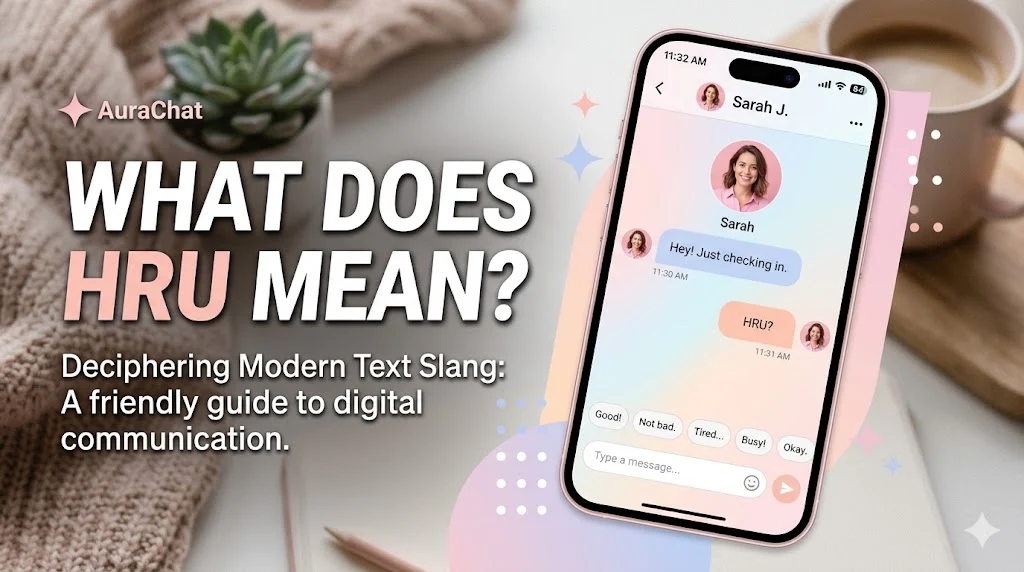
HRU means “How are you?” in text messaging.
It’s a casual abbreviation used to quickly check on someone or start a conversation in chats, social media or SMS.
Ever opened a message that just says “hru?” and paused for a second?
Is it friendly? Lazy? Do they actually care or are they just starting a conversation?
If you’ve ever overthought a simple text like this, you’re definitely not alone. Short forms like HRU are everywhere in modern messaging, but understanding the tone, intent, and best way to respond makes all the difference.
Let’s break it down in a way that actually reflects how people really text today.
What Does HRU Mean in Text (In Real Life)?
At its core, HRU = How are you.
But here’s the thing it’s not just about the words.
Depending on how it’s written and who sends it, “HRU” can feel:
- Friendly and warm 😊
- Neutral and routine 😐
- Or even a bit dry or low-effort 😅
That’s what makes it interesting. The meaning stays the same, but the vibe changes.
Why People Still Use HRU (Even in 2026)
You’d think people would just type the full sentence now but nope, HRU is still everywhere.
Here’s why:
- Fast typing – 3 letters vs 3 words
- Habit – people grew up texting like this
- Casual tone – fits perfectly in relaxed conversations
- Low-pressure opener – easy way to start chatting
Honestly, it’s the digital equivalent of saying:
“Hey how’s it going?”
A Bit of Backstory: Where Did HRU Come From?
HRU goes way back to early texting days when:
- Phones had tiny keyboards
- Messages had character limits
- Typing was painful 😅
So people shortened everything:
- “See you” → CU
- “Be right back” → BRB
- “How are you” → HRU
Even though technology improved, the habit stuck and now it’s just part of online language.
How HRU Is Actually Used Today
Let’s get real people don’t all use HRU the same way.
1. As a Genuine Check-In
“Hey! HRU? Haven’t talked in a while 😊”
👉 This one feels warm and intentional.
2. As a Conversation Starter
“hru”
👉 This is more like:
“I want to talk but I don’t know how to start.”
3. As a Routine Message
“HRU today?”
👉 Slightly more thoughtful, but still casual.
4. As a Low-Effort Text (Sometimes)
“hru”
👉 No emoji, no context, no follow-up
Yeah, this can feel a bit dry depending on the situation.
Tone Matters More Than the Word
This is where most people get confused.
Small changes = big difference:
| Version | How It Feels | Why |
|---|---|---|
| HRU? | Neutral | Standard, simple |
| Hey HRU 😊 | Friendly | Emoji adds warmth |
| hru | Casual / slightly dry | No effort signals |
| hru?? | Curious / excited | Extra punctuation |
| hruu | Playful | Informal spelling |
👉 Same meaning. Totally different vibes.
Real Chat Examples (How People Actually Text)
Here’s what real conversations look like:
Example 1: Friendly
- A: “heyy hruu 😊”
- B: “I’m good! you??”
Example 2: Neutral
- A: “HRU”
- B: “I’m okay, you?”
Example 3: Slightly Awkward
- A: “hru”
- B: “good”
- A: (conversation dies)
😅 This happens more often than people admit.
📊 Example Table: HRU in Context
| Message | Meaning | Tone | Best Use Case |
|---|---|---|---|
| HRU? | How are you? | Neutral | Everyday chats |
| Hey HRU 😊 | How are you? | Friendly | Friends, casual conversations |
| hru | How are you | Very casual | Close friends |
| HRU today? | How are you today? | Slightly caring | Checking in more personally |
| hru bro | How are you | Relaxed/slang | Informal male friendships |
HRU vs Other Common Text Slang
People often mix these up here’s how they differ:
| Term | Meaning | What It Really Asks |
|---|---|---|
| HRU | How are you | Your mood/feeling |
| WYD | What you doing | Your activity |
| SUP | What’s up | General vibe |
| HBU | How about you | Return question |
| NMU | Not much, you | Response, not a question |
👉 Quick tip:
If you want to check feelings, use HRU.
If you want to start conversation, WYD often works better.
When You Should (and Shouldn’t) Use HRU
✅ Use HRU When:
- Chatting with friends
- Messaging casually
- Sliding into a conversation
- Reconnecting with someone
❌ Avoid HRU When:
- Writing emails
- Talking to clients
- Job-related conversations
- Formal or professional settings
Instead of:
HRU?
Say:
“Hi, I hope you’re doing well.”
Better & More Engaging Alternatives
If you feel “HRU” is too dry, try these:
Friendly Alternatives
- “How’s your day going?”
- “What’s been up with you lately?”
- “How have you been?”
More Engaging Openers
- “Hey, how’s everything going on your side?”
- “What’s new with you?”
- “How are things lately?”
👉 These feel more intentional and less robotic.
How to Reply to HRU (Without Being Boring)
Let’s be honest your reply matters just as much.
❌ Basic Reply
“good”
👉 Conversation killer.
✅ Better Replies
Keep it going:
- “I’m good! Just finished work. You?”
- “Pretty good 😊 what about you?”
- “Not bad just a bit tired today 😅”
🔥 Pro Tip:
Add one extra detail.
That’s what keeps the conversation alive.
Does HRU Feel Lazy or Dry?
Sometimes yes.
Here’s the honest answer:
- If it’s from a close friend → totally fine
- If it’s from someone new → can feel low effort
- If there’s no follow-up → conversation may die
👉 It’s not the word it’s the effort behind it.
Alternate Meanings of HRU (Rare)
In texting, HRU almost always means “How are you?”
But in other contexts, it could mean:
- Human Resources Unit
- Hospital Resource Unit
👉 Still, 99% of the time it’s just texting slang.
Common Mistakes People Make
- Using HRU in formal situations
- Overthinking tone too much
- Replying with one-word answers
- Not matching the other person’s energy
👉 Best approach: keep it natural and balanced.
FAQs
1. What does HRU mean in texting?
It means “How are you?” and is used casually in chats.
2. Is HRU rude?
No but it can feel dry or low-effort if used alone without context.
3. How should I reply to HRU?
Give a short answer + add something extra:
“I’m good! Just got home. You?”
4. Is HRU flirting?
Not really but it can be, depending on tone and context.
5. What’s the difference between HRU and WYD?
- HRU = asks about feelings
- WYD = asks about activity
6. Why do people text HRU instead of full words?
Speed, habit, and casual tone.
7. Is HRU still used today?
Yes especially in casual chats and social media.
8. Does “hru” mean the same as “HRU”?
Yes but lowercase can feel more relaxed or even slightly lazy.
Conclusion
“HRU” isn’t going anywhere it’s simple, quick and widely understood.
But here’s the real takeaway:
👉 It’s not about the abbreviation it’s about the effort behind it.
If you want better conversations:
- Add a little personality
- Match the other person’s tone
- Don’t rely on one-word replies
Sometimes, even a small change like:
“Hey! HRU 😊”
can make a big difference.

Sophia Bennett is a professional writer focused on explaining word meanings, expressions and everyday language in a simple and engaging way.