
Last Updated on May 18, 2026
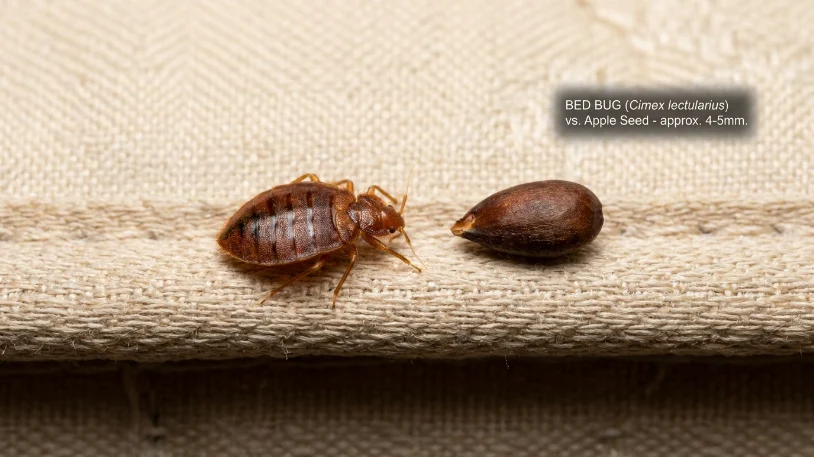
A bed bug is a small, flat, oval-shaped insect that measures about 4–7 mm long. It has a reddish-brown color, six legs, and no wings. Before feeding, it looks thin and almost paper-like. After feeding, it becomes swollen, elongated, and darker red. Baby bed bugs (nymphs) are smaller and often translucent, while eggs appear tiny, white, and oval.
Picture a tiny apple seed that moves. That’s the closest everyday comparison.
Bed bugs don’t fly. They don’t jump. Instead, they crawl slowly and hide well.
Here’s a fast checklist you can use immediately:
- Size: 4–7 mm (about an apple seed)
- Shape: Flat and oval
- Color: Reddish-brown (turns darker after feeding)
- Movement: Crawls, doesn’t jump
- Body: Segmented abdomen, six legs
If you’ve seen a small brown bug in your bed, you’re already in the right direction.
Bed Bug Appearance: Key Physical Features You Must Know
Let’s break it down in plain terms so you can recognize one instantly.
Overall Shape and Structure
A bed bug has a broad, oval body. It looks slightly flattened from top to bottom.
Think of it like this:
Like a lentil that suddenly grew legs.
The flat shape helps them squeeze into tight spaces. Mattress seams, cracks, and even behind wallpaper become perfect hiding spots.
Color Changes Based on Feeding
This is where many people get confused.
| Feeding State | Color | Appearance |
|---|---|---|
| Unfed | Light to reddish-brown | Thin, flat |
| Recently fed | Bright red | Swollen |
| Fully digested | Dark red to brown | Slightly round |
That shift matters. A fed bed bug looks dramatically different.
Size and Scale (Real-Life Comparison)
You don’t need a microscope. You can see them with your eyes.
Here’s how they compare:
- Apple seed → almost identical
- Lentil → slightly smaller
- Sesame seed → larger than this
- Pencil eraser edge → similar width
Bed Bug Life Cycle: Appearance at Every Stage
Most guides skip this. That’s a mistake.
If you only know what adults look like, you’ll miss early infestations.
Bed Bug Eggs Appearance
Bed bug eggs are tiny and easy to overlook.
- Color: Pearl white
- Size: ~1 mm (like a grain of salt)
- Shape: Oval
- Texture: Sticky
They cling to surfaces. You’ll often find them in clusters.
Baby Bed Bugs (Nymphs)
Now things get tricky.
Nymphs look like miniature versions of adults, but with a twist.
- Color: Translucent or pale
- After feeding: Bright red
- Size: 1.5 mm to 4 mm
- Visibility: Hard to see unless fed
If you spot tiny, almost invisible bugs that suddenly look red, you’re likely seeing nymphs.
They molt five times before becoming adults.
Adult Bed Bug Description
Adults are easier to recognize.
- Length: 4–7 mm
- Color: Reddish-brown
- Shape: Oval and flat
- Body: Clearly segmented abdomen
They become plump and elongated after feeding.
What Do Bed Bugs Look Like Before and After Feeding
This transformation catches people off guard.
Before Feeding
- Flat
- Thin
- Light brown
- Hard to notice
After Feeding
- Swollen
- Elongated
- Deep red
- Much easier to see
It’s almost like inflating a tiny balloon.
Bed Bug Anatomy Explained Simply
You don’t need a biology degree. Just know the basics.
- Head: Small with a beak-like mouthpart
- Antennae: Short and segmented
- Legs: Six, built for crawling
- Abdomen: Expandable and segmented
Common Bugs That Look Like Bed Bugs
Mistakes happen all the time. Let’s clear them up.
Fleas vs Bed Bugs
| Feature | Fleas | Bed Bugs |
|---|---|---|
| Movement | Jump | Crawl |
| Shape | Narrow | Oval |
| Color | Dark brown | Reddish-brown |
Ticks vs Bed Bugs
- Ticks attach to skin
- Bed bugs hide and feed briefly
Ticks look rounder and more compact.
Carpet Beetles
- Hairy larvae
- Don’t bite like bed bugs
- Found in fabrics
Booklice
- Pale and soft
- Feed on mold, not blood
Visible Signs of Bed Bugs (Beyond Appearance)
Sometimes you won’t see the bug first. You’ll see the evidence.
Clear Signs of Infestation
- Black spots: Dried feces
- Shed skins: Translucent shells
- Blood stains: On sheets
- Musty odor: In heavy infestations
Where Bed Bugs Hide (And Where to Look First)
You don’t need to tear your house apart. Start smart.
Top Hiding Spots
- Mattress seams
- Bed frame joints
- Headboards
- Couch cushions
- Behind wall decor
- Electrical outlets
Can You See Bed Bugs With the Naked Eye?
Yes, you can.
But here’s the catch.
- Early infestations are easy to miss
- Nymphs blend into surfaces
- Eggs require close inspection
Good lighting makes all the difference.
Do Bed Bugs Change Appearance in Different Conditions?
Absolutely.
Several factors influence how they look:
- Feeding status
- Age
- Lighting conditions
- Background surface
A pale bug on a white sheet may seem invisible.
Bed Bug Bites vs Bed Bug Appearance
Many people rely on bites. That’s risky.
Why Bites Mislead
- Not everyone reacts
- Bites resemble mosquito or flea bites
- Patterns vary
Seeing bites doesn’t confirm bed bugs. Seeing the bug does.
How to Identify Bed Bugs Step by Step
Follow this simple process.
Inspection Method
- Use a flashlight
- Check mattress seams
- Look for live bugs
- Search for black spots and skins
- Inspect nearby furniture
Quick Identification Table
| Feature | Bed Bug |
|---|---|
| Size | 4–7 mm |
| Shape | Oval, flat |
| Color | Reddish-brown |
| Movement | Crawling |
| Wings | None |
| Feeding effect | Swells and darkens |
How Big Are Bed Bugs Compared to Other Insects
- Smaller than a ladybug
- Larger than a flea
- Similar to an apple seed
Do Bed Bugs Crawl on Skin?
Yes, but usually at night.
They prefer exposed skin and avoid light.
What Do Dead Bed Bugs Look Like?
Dead bed bugs:
- Curl slightly
- Dry out
- Lose their deep red tone
They may look darker and brittle.
Bed Bug Shell (Exoskeleton) Explained
As nymphs grow, they shed skins.
These shells:
- Look like empty bug outlines
- Are pale and translucent
- Indicate active infestation
Tiny Bugs in Mattress Seams: Are They Bed Bugs?
Not always.
But if they match these traits, be cautious:
- Flat and oval
- Brownish color
- Found in clusters
Bed Bug Color After Feeding (Detailed Insight)
This is a key identifier.
- Fresh blood → bright red
- Digested blood → darker brown
Color tells a story. Learn to read it.
Bed Bugs Under a Microscope (What You’d See)
Magnified, they show:
- Segmented abdomen
- Fine hairs
- Detailed mouthparts
But you rarely need magnification.
How to Recognize Bed Bugs Fast
You don’t need guesswork.
Focus on three things:
- Shape: Flat and oval
- Color: Reddish-brown, darker after feeding
- Behavior: Hides, crawls, feeds at night
If all three match, you’re likely dealing with bed bugs.
FAQs
Are bed bugs visible to the human eye?
Yes. Adults are easy to see.
How small are baby bed bugs?
As small as 1.5 mm, nearly invisible.
Do bed bugs change color?
Yes. Feeding changes their color dramatically.
Can bed bugs be mistaken for lice?
Sometimes, but lice stay on the body. Bed bugs don’t.
Closing Thought
Spotting a bed bug isn’t about luck. It’s about knowing what to look for.
Once you understand their size, shape, and behavior, they become much harder to miss.
And that knowledge? It’s your first line of defense.

Michael Anderson is a content writer specializing in word meanings, definitions and clear explanations of modern terms and phrases.