Last Updated on May 26, 2026
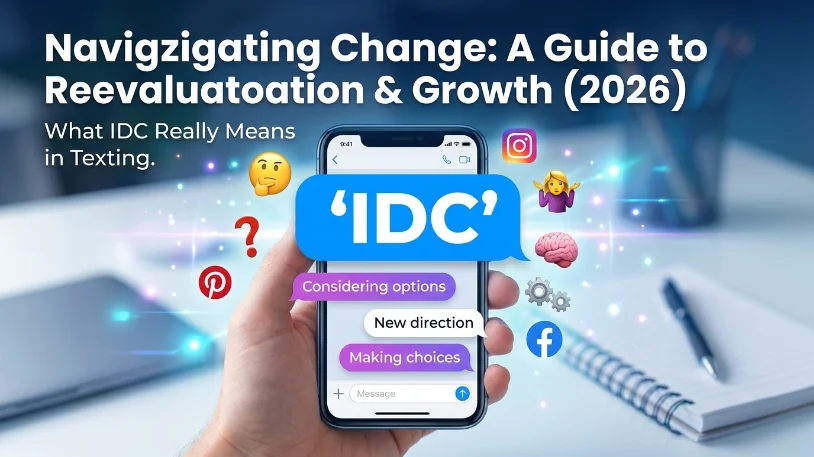
IDC stands for “I Don’t Care.” It is commonly used in texting, social media, online chats, and messaging apps to express indifference, lack of interest, or emotional detachment about a topic or situation.
Example:
- “IDC where we eat tonight.”
- “IDC what they think.”
Depending on the tone and context, IDC can sound:
- Casual
- Neutral
- Dismissive
- Rude
- Emotionally detached
If you’ve ever received a text that simply says “IDC,” you might have paused for a second and wondered: Was that rude? Casual? Serious? In today’s world of texting, social media, and instant messaging, abbreviations like “IDC” are everywhere but the tone behind them can completely change the meaning.
Whether you’re chatting with friends, scrolling through TikTok comments, or decoding a Snapchat message, understanding internet slang matters more than ever. Some abbreviations are harmless and playful, while others can sound cold or dismissive depending on context. “IDC” falls somewhere in the middle.
In this guide, you’ll learn exactly what IDC means in text, where it came from, how people use it online, when it can sound rude, and what alternatives you can use in professional or polite conversations.
What Does IDC Mean in Texting?
In digital communication, IDC is a shorthand abbreviation for “I don’t care.” People use it to quickly respond when they are:
- Indifferent about a decision
- Uninterested in an argument
- Emotionally disconnected from a topic
- Trying to end a conversation
- Being sarcastic or defensive
Because texting lacks facial expressions and vocal tone, IDC can sometimes come across harsher than intended.
For example:
- “IDC lol” → sounds playful
- “IDC.” → may sound cold or annoyed
- “IDC anymore” → can sound emotional or hurt
That’s why context is everything.
Origin of IDC
The abbreviation IDC became popular during the rise of:
- SMS texting
- AOL Instant Messenger (AIM)
- Online chatrooms
- Internet forums
- Early social media platforms
In the late 1990s and early 2000s, users shortened phrases to save:
- Typing time
- Character limits
- Mobile phone keypad effort
IDC joined other popular abbreviations like:
- LOL (Laugh Out Loud)
- BRB (Be Right Back)
- IDK (I Don’t Know)
- TBH (To Be Honest)
Today, IDC remains widely used across:
- TikTok
- Snapchat
- Discord
- X (Twitter)
- Gaming chats
How IDC Is Used in Real Conversations
IDC can carry very different meanings depending on the situation and relationship between people.
Friendly Usage
Sometimes IDC simply means someone is easygoing.
Examples
- “IDC which movie we watch 😊”
- “IDC where we go for dinner.”
- “IDC lol, you choose.”
Tone
- Relaxed
- Flexible
- Casual
- Friendly
In these examples, the speaker is not upset they’re just letting someone else decide.
Neutral Usage
People also use IDC to show indifference without emotional intensity.
Examples
- “IDC about celebrity drama.”
- “IDC who wins honestly.”
- “IDC either way.”
Tone
- Detached
- Uninterested
- Calm
This type of usage is common online when discussing trends, gossip, or debates.
Negative or Dismissive Usage
This is where IDC can become risky.
Examples
- “IDC what you say.”
- “IDC anymore.”
- “IDC, leave me alone.”
- “IDC 🤷”
Tone
- Rude
- Cold
- Defensive
- Hurtful
- Emotionally distant
When used during arguments or emotional discussions, IDC may sound insensitive or disrespectful.
IDC Meaning Based on Tone and Punctuation
Texting tone often depends on punctuation, capitalization, and emojis.
Example Tone Table
| Text Example | Possible Tone | Meaning |
|---|---|---|
| IDC | Neutral | Simple indifference |
| idc | Casual | Relaxed or informal |
| IDC. | Cold or serious | Final or dismissive |
| IDC lol | Playful | Not a big deal |
| IDC 😂 | Joking | Lighthearted |
| IDC anymore | Emotional | Hurt or exhausted |
| IDC what they think | Confident | Unbothered attitude |
| IDC 🤷 | Detached | Doesn’t matter to them |
This is why the exact same abbreviation can feel completely different depending on how it’s written.
Is IDC Rude?
The short answer: It can be.
IDC is not automatically rude, but many people perceive it negatively because the phrase “I don’t care” can sound dismissive.
When IDC May Sound Rude
- During serious conversations
- In emotional arguments
- When someone is sharing feelings
- In professional settings
- When responding too briefly
Example
Person A: “I worked really hard on this.”
Person B: “IDC.”
That response would likely seem insensitive or disrespectful.
When IDC Is Usually Fine
- Casual chats with friends
- Group decision-making
- Joking conversations
- Memes or online comments
Example
“IDC where we sit, you choose.”
This sounds cooperative rather than rude.
IDC on Social Media
On platforms like TikTok and Instagram, IDC often appears as part of internet culture and attitude-based humor.
Common Social Media Uses
Confident Attitude
- “IDC what people think about me.”
Trend Participation
- “IDC this song is still amazing.”
Emotional Expression
- “IDC anymore honestly.”
Meme Humor
- “IDC I’m eating pizza for breakfast.”
Social media often turns IDC into a statement of confidence, rebellion, or emotional exhaustion.
IDC in Relationships and Dating
In relationships, IDC can create misunderstandings if used carelessly.
Healthy Usage
- “IDC where we eat tonight ❤️”
This shows flexibility.
Problematic Usage
- “IDC about this relationship.”
This sounds emotionally detached and serious.
Because relationships rely heavily on emotional tone, using IDC too often can make someone feel ignored or unimportant.
IDC at Work or in Professional Settings
Using IDC professionally is usually not recommended.
In workplace communication, “I don’t care” may appear:
- Unprofessional
- Disrespectful
- Uncooperative
- Emotionally detached
Avoid Using IDC In:
- Emails
- Client messages
- Team chats
- Meetings
- Academic communication
Professional Alternatives to IDC
Instead of saying IDC, try softer or more respectful alternatives.
Polite Alternatives Table
| Instead of IDC | Say This Instead |
|---|---|
| IDC | “I’m okay with either option.” |
| IDC where we go | “I’m flexible.” |
| IDC what happens | “I don’t have a strong preference.” |
| IDC about that | “It’s not very important to me.” |
| IDC anymore | “I’m no longer invested in it.” |
These phrases communicate the same idea without sounding harsh.
IDC vs Similar Text Abbreviations
Many people confuse IDC with other internet slang terms.
Comparison Table
| Abbreviation | Meaning | Tone |
|---|---|---|
| IDC | I Don’t Care | Indifferent or dismissive |
| IDK | I Don’t Know | Uncertain |
| IMO | In My Opinion | Opinion-sharing |
| TBH | To Be Honest | Honest statement |
| NVM | Never Mind | Dropping topic |
| SMH | Shaking My Head | Disapproval |
| ICYMI | In Case You Missed It | Informational |
IDC vs IDGAF
These abbreviations are related but not identical.
| Term | Meaning | Intensity |
|---|---|---|
| IDC | I Don’t Care | Mild to moderate |
| IDGAF | I Don’t Give A F*** | Very strong/aggressive |
IDGAF is much more explicit and confrontational, while IDC can remain casual depending on tone.
Alternate Meanings of IDC
Although IDC usually means “I Don’t Care,” it can occasionally stand for other things depending on context.
Other Possible Meanings
| IDC Meaning | Context |
|---|---|
| International Data Corporation | Technology/business |
| Industrial Development Corporation | Finance/business |
| Infectious Disease Clinic | Medical |
| Internet Data Center | Technology |
However, in texting and online slang, IDC almost always means “I Don’t Care.”
Psychological Meaning Behind “IDC”
Interestingly, people sometimes use IDC as a defense mechanism.
Someone may say “IDC” when they actually:
- Feel hurt
- Want to appear strong
- Feel emotionally overwhelmed
- Want to avoid vulnerability
- Are frustrated or exhausted
That’s why context matters so much in digital communication.
Example:
- “IDC anymore.”
This may reflect sadness more than true indifference.
How Gen Z and Younger Users Use IDC
Younger internet users often use IDC differently than older generations.
Common Gen Z Uses
- As confidence (“IDC what people think.”)
- As humor (“IDC this meme is hilarious.”)
- Ironically (“IDC but actually I do.”)
- Dramatically (“IDC I’m deleting everything 😭”)
Online culture frequently turns IDC into exaggerated emotional expression rather than literal indifference.
Best Practices for Using IDC
Use IDC When:
✔ Talking casually with friends
✔ You genuinely have no preference
✔ The situation is lighthearted
✔ Everyone understands your tone
Avoid IDC When:
✘ Someone is emotional
✘ In professional communication
✘ During serious discussions
✘ You may sound dismissive
✘ Text tone could be misunderstood
Example Conversations Using IDC
Casual Conversation
Friend: “Want burgers or pizza?”
You: “IDC, both sound good.”
Tone:
Relaxed and friendly.
Annoyed Conversation
Person: “Why are you ignoring me?”
Reply: “IDC.”
Tone:
Cold and dismissive.
Playful Conversation
Friend: “You still listen to that old song?”
You: “IDC 😂 it’s a classic.”
Tone:
Funny and carefree.
Emotional Conversation
Person: “Do you even care anymore?”
Reply: “IDC anymore.”
Tone:
Sad, detached, emotionally exhausted.
Why IDC Became So Popular
IDC remains popular because it is:
- Fast to type
- Emotionally versatile
- Easy to understand
- Common in meme culture
- Useful in casual texting
Its flexibility allows people to express:
- Confidence
- Indifference
- Humor
- Frustration
- Emotional distance
Few abbreviations carry as many emotional shades in just three letters.
Frequently Asked Questions
1. What does IDC stand for in text?
IDC stands for “I Don’t Care.” It is commonly used in texting, social media, and online chats to express indifference or lack of preference.
2. Is IDC rude in texting?
Sometimes. IDC can sound rude if used during serious or emotional conversations, especially without emojis or explanation.
3. What does IDC mean from a girl or guy?
The meaning is generally the same regardless of gender:
- Indifference
- Flexibility
- Emotional detachment
- Confidence
The tone depends more on context than who sends it.
4. What is the difference between IDC and IDK?
- IDC = I Don’t Care
- IDK = I Don’t Know
IDC expresses indifference, while IDK expresses uncertainty.
5. Is IDC negative?
Not always. It can be casual and harmless among friends, but it may also sound dismissive or emotionally cold.
6. Can IDC mean confidence?
Yes. On social media, people often use IDC to show confidence or independence.
Example:
- “IDC what people think about my style.”
7. Should I use IDC at work?
Generally, no. It may appear unprofessional. Use softer alternatives like:
- “I’m flexible.”
- “I don’t have a preference.”
- “Either option works for me.”
8. What does “IDC anymore” mean?
It usually suggests emotional exhaustion, frustration, sadness, or detachment rather than simple indifference.
Conclusion
IDC may look like a tiny abbreviation, but it carries a surprising amount of emotional weight. Most commonly, it means “I Don’t Care,” but the real meaning depends heavily on:
- Tone
- Context
- Punctuation
- Emojis
- Relationship dynamics
In casual conversations, IDC can sound easygoing and harmless. In emotional or professional situations, though, it may come across as cold, dismissive, or rude.
The key is understanding how digital communication shapes perception. A quick “IDC” might save time, but adding a little warmth or clarification can completely change how your message is received.
When in doubt:
- Use emojis for softer tone 😊
- Choose polite alternatives in professional settings
- Avoid IDC during emotional conversations
- Remember that short texts can sound harsher than intended
Used thoughtfully, IDC is just another useful part of modern internet language.

Michael Anderson is a content writer specializing in word meanings, definitions and clear explanations of modern terms and phrases.