
Last Updated on May 29, 2026
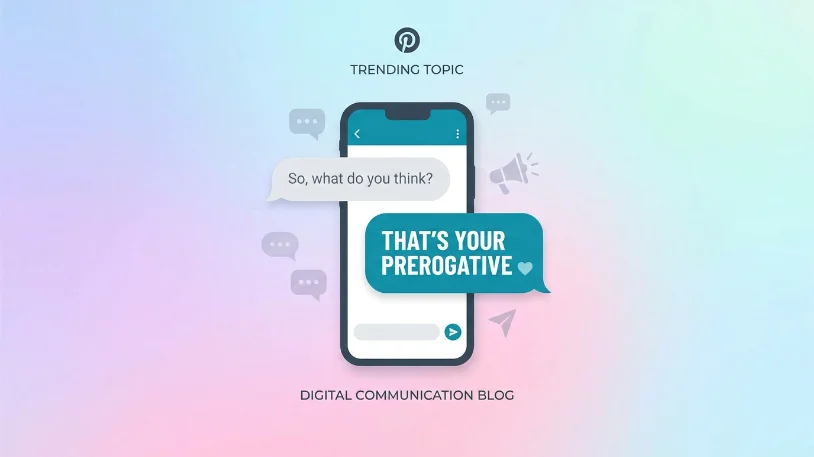
“Perogative” in text usually refers to the word “prerogative,” which means a person’s right, freedom, or privilege to make their own choice or decision. It is commonly used in casual texting and online conversations, although “perogative” is technically a misspelling.
Have you ever received a message that said something like, “Well, that’s your perogative” and wondered what it actually meant? Or maybe you’ve seen the phrase floating around in texts, social media comments, or casual conversations and noticed people spelling it differently. You’re not alone.
The phrase “perogative in text” is commonly used online to express that someone has the right or freedom to make their own decision. However, there’s an important twist: “perogative” is actually a common misspelling of the word “prerogative.”
In texting culture, people often simplify spelling, type quickly, or use phonetic versions of words. That’s why “perogative” appears so often in texts, memes, tweets, and chat conversations.
Whether you want to understand the meaning, use it correctly, avoid awkward mistakes, or learn better alternatives, this guide covers everything in a simple and conversational way.
What Does “Perogative” Mean in Text?
Simple Meaning in Everyday Language
When someone says:
“That’s your perogative.”
They usually mean:
- “That’s your choice.”
- “You have the right to decide.”
- “Do whatever you want.”
- “It’s up to you.”
Depending on tone and context, it can sound:
- Respectful
- Neutral
- Sarcastic
- Dismissive
Origin of the Word “Prerogative”
Historical Background
The correct word is prerogative, which comes from the Latin word praerogativa, meaning:
“A special right or privilege.”
Historically, the word was often associated with:
- Kings and rulers
- Legal authority
- Exclusive rights
- Personal freedoms
Over time, it became more common in everyday English and now simply refers to someone’s right to choose or act as they wish.
Why People Spell It as “Perogative”
The misspelling happens because:
- The pronunciation can sound similar
- Many people learn the word by hearing it instead of reading it
- Texting encourages fast typing
- Autocorrect doesn’t always catch it
This makes “perogative” a very common online typo.
Is “Perogative” Correct?
The Short Answer
No.
The correct spelling is:
✅ Prerogative
❌ Perogative
However, because texting and social media are informal, many people still use the incorrect spelling casually.
Quick Grammar Tip
If you’re:
- Writing professionally
- Sending business emails
- Creating academic content
- Posting formal writing
Always use:
Prerogative
How “Perogative” Is Used in Text Messages
Common Texting Contexts
People often use the word when:
- Talking about personal choices
- Ending disagreements
- Giving someone freedom to decide
- Responding with mild sarcasm
- Showing emotional distance
Example Situations
Friendly Tone 😊
“If you wanna stay home tonight, that’s your perogative!”
Meaning:
- No pressure
- Your choice is respected
Neutral Tone 😐
“It’s your perogative whether you join us or not.”
Meaning:
- Decision is entirely yours
Dismissive or Sarcastic Tone 🙄
“Well, if you wanna waste your money, that’s your perogative.”
Meaning:
- Speaker disagrees
- Slight judgment or sarcasm
Tone Meanings Behind “Perogative” in Text
Friendly Tone
When used warmly, it shows:
- Respect
- Freedom
- Acceptance
Example:
“You don’t have to explain yourself. It’s your prerogative.”
Neutral Tone
A neutral tone simply acknowledges someone’s choice.
Example:
“That’s entirely your prerogative.”
Passive-Aggressive Tone
Sometimes the phrase subtly signals disagreement.
Example:
“If that’s how you want to handle it, that’s your prerogative.”
This often implies:
- “I don’t agree.”
- “But do what you want.”
Why the Phrase Became Popular Online
Internet and Social Media Influence
The phrase gained popularity because:
- It sounds intelligent and authoritative
- It works well in debates
- It’s useful in arguments
- People use it in memes and reaction posts
Texting Culture
Online communication favors:
- Short responses
- Casual spelling
- Emotional tone
- Fast typing
That’s why misspellings like “perogative” spread quickly.
Pop Culture Influence
The word became even more recognizable after the hit song:
My Prerogative
The song helped introduce the phrase to younger audiences and pop culture conversations.
Difference Between “Perogative” and “Prerogative”
Comparison Table
| Word | Correct? | Meaning | Common Usage |
|---|---|---|---|
| Perogative | ❌ No | Misspelling of prerogative | Informal texting |
| Prerogative | ✅ Yes | Right or privilege to choose | Correct English |
Why the Confusion Happens
The pronunciation often sounds like:
“puh-ROG-uh-tiv”
So people naturally type it the way they hear it.
Examples of “Perogative” in Text Conversations
Casual Chat Example
Friend 1:
“I’m thinking about quitting my job.”
Friend 2:
“That’s your perogative, but think carefully.”
Tone:
- Supportive but cautious
Relationship Conversation Example
“If you don’t wanna talk about it, that’s your prerogative.”
Tone:
- Respectful
- Emotionally mature
Sarcastic Example
“Sure, ignore everyone’s advice. Your perogative.”
Tone:
- Annoyed
- Judgmental
Example Table: Texting Meanings by Tone
| Text ExampleToneHidden Meaning | ||
|---|---|---|
| “That’s your perogative 😊” | Friendly | I respect your choice |
| “It’s your prerogative.” | Neutral | Decision is yours |
| “Well, that’s your prerogative 🙄” | Sarcastic | I disagree with you |
| “Do whatever. Your perogative.” | Dismissive | I’m frustrated |
Is “Perogative” Rude?
It Depends on Context
The phrase itself is not rude.
But tone changes everything.
When It Sounds Polite
- Respectful conversations
- Giving someone freedom
- Mature discussions
Example:
“You have every prerogative to decline.”
When It Sounds Passive-Aggressive
The phrase can feel cold when:
- Someone is upset
- There’s tension
- It ends an argument
Example:
“If that’s what you believe, that’s your prerogative.”
This can imply:
- “I think you’re wrong.”
- “I’m done arguing.”
Professional Alternatives to “Perogative”
Sometimes “prerogative” sounds too formal or emotionally distant. Here are smoother alternatives.
Better Alternatives Table
| Alternative Phrase | Tone |
|---|---|
| “It’s your choice.” | Casual |
| “That’s up to you.” | Friendly |
| “You have the right to decide.” | Professional |
| “I respect your decision.” | Polite |
| “Feel free to choose what works best.” | Professional |
| “The decision is yours.” | Neutral |
When to Use “Prerogative” Correctly
Good Situations for Using It
Use it when discussing:
- Rights
- Personal decisions
- Freedom of choice
- Authority
- Preferences
Professional Example
“Employees have the prerogative to work remotely when approved.”
Personal Example
“It’s your prerogative whether you attend.”
Common Mistakes People Make
Misspelling It
The biggest mistake:
❌ Perogative
✅ Prerogative
Using It Too Aggressively
Because the phrase can sound cold, avoid using it:
- During emotional conflicts
- In customer service messages
- In sensitive conversations
Overusing Formal Language in Casual Texts
Sometimes simpler language sounds more natural.
Instead of:
“That’s your prerogative.”
Try:
“It’s your call.”
Similar Words and Related Expressions
“Privilege”
Means:
- A special advantage or benefit
Example:
“It’s a privilege to work here.”
Difference:
- Privilege = benefit
- Prerogative = right to choose
“Right”
More direct and common.
Example:
“You have the right to refuse.”
“Choice”
More casual and emotionally softer.
Example:
“It’s your choice.”
Alternate Meanings of “Prerogative”
While mostly used for personal choice, the word can also refer to:
Legal Authority
Governments or leaders may have:
- Executive prerogatives
- Constitutional prerogatives
Workplace Authority
Managers may have:
- Hiring prerogatives
- Decision-making prerogatives
These uses are more formal and less common in texting.
How to Respond When Someone Says “That’s Your Prerogative”
If the Tone Is Friendly
You can respond casually:
“Thanks for understanding.”
If the Tone Feels Cold
You might reply:
“I appreciate your perspective.”
If It Feels Dismissive
Sometimes the best response is calm neutrality:
“Fair enough.”
Should You Use “Perogative” in Texting?
Casual Texting
People will probably understand what you mean.
Professional Writing
Always use:
Prerogative
Correct spelling matters in:
- Emails
- Resumes
- Academic work
- Business communication
Keyword Variations and Related Terms
People searching for “perogative in text” also commonly search:
- prerogative meaning in text
- what does perogative mean
- perogative slang meaning
- prerogative definition texting
- that’s your prerogative meaning
- perogative vs prerogative
- prerogative examples
- what does prerogative mean in chat
Using these related phrases naturally improves understanding and search visibility.
FAQs
What does “perogative” mean in texting?
“Perogative” usually means someone’s right or choice to decide something. It is an incorrect spelling of “prerogative.”
Is “perogative” a real word?
Not officially. It is considered a misspelling of the correct word “prerogative.”
What is the correct spelling: perogative or prerogative?
The correct spelling is:
✅ Prerogative
Is saying “that’s your prerogative” rude?
Not always. It depends on tone and context. It can sound respectful, neutral, or passive-aggressive.
What does “that’s your prerogative” mean?
It means:
“That’s your decision”
or
“You have the right to choose.”
Why do people spell prerogative as perogative?
Mostly because:
- The pronunciation is confusing
- People type quickly
- They learned the word by hearing it
Can I use “prerogative” professionally?
Yes. It works well in formal and professional writing when discussing rights or authority.
What are simpler alternatives to “prerogative”?
Common alternatives include:
- “Your choice”
- “Up to you”
- “Your decision”
- “Your right”
Conclusion
The phrase “perogative in text” is widely used online, but it’s actually a misspelling of the correct word “prerogative.” Despite the spelling error, most people use it to express someone’s right, freedom, or personal choice.
In texting, the phrase can carry different tones depending on context:
- Friendly and supportive
- Neutral and respectful
- Sarcastic or dismissive
Understanding the tone behind the phrase is just as important as understanding the definition itself.
If you want to sound polished and professional, always use the correct spelling:
Prerogative
And when the word feels too formal, simpler alternatives like:
- “It’s your choice”
- “Up to you”
- “Your decision”
can sound more natural and conversational.
Whether you’re chatting casually, posting online, or writing professionally, knowing how to use “prerogative” correctly helps you communicate more clearly and confidently.

Michael Anderson is a content writer specializing in word meanings, definitions and clear explanations of modern terms and phrases.