
Last Updated on May 21, 2026
White tongue refers to a condition where the tongue develops a white coating, patches, or discoloration due to bacteria buildup, dead cells, dehydration, oral infections, irritation, or underlying medical conditions. It is often temporary and harmless but can sometimes indicate a health issue requiring treatment.
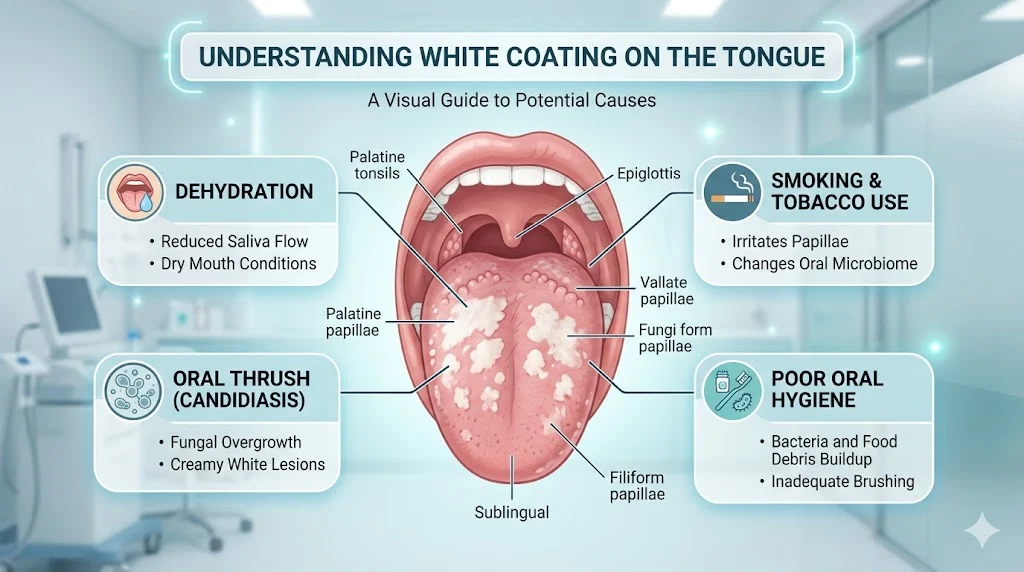
A white tongue can look harmless at first, but it sometimes signals dehydration, poor oral hygiene, infections, or underlying health conditions. In most cases, the white coating forms when debris, bacteria, dead cells, or fungi become trapped between enlarged papillae on the tongue’s surface.
Whether you noticed a thin white film after waking up or persistent white patches that won’t disappear, understanding the causes of white tongue can help you know when it’s normal and when it’s time to seek medical advice.
What Causes a White Tongue?
A white tongue develops when tiny bumps on the tongue, called papillae, become swollen or inflamed. This swelling traps bacteria, food particles, and dead cells, creating a white appearance.
Some causes are minor and temporary, while others may need professional attention.
Common White Tongue Causes
Here are the most frequent reasons people develop a white-coated tongue:
| Cause | Description | Severity |
|---|---|---|
| Poor oral hygiene | Bacteria and debris build up on the tongue | Mild |
| Dehydration | Dry mouth reduces natural cleaning from saliva | Mild |
| Smoking or tobacco use | Irrates tongue tissues and causes buildup | Moderate |
| Oral thrush | Fungal infection caused by Candida yeast | Moderate |
| Fever or illness | Illness may dry out the mouth | Mild to Moderate |
| Leukoplakia | Thick white patches from irritation | Potentially serious |
| Geographic tongue | Patchy tongue inflammation | Usually harmless |
| Lichen planus | Immune-related inflammatory condition | Moderate |
| Certain medications | Antibiotics or steroids may affect oral balance | Mild to Moderate |
| Mouth breathing | Dries the tongue overnight | Mild |
Why Does the Tongue Turn White?
The tongue naturally contains tiny finger-like structures called papillae. When these structures swell, they trap:
- Bacteria
- Dead skin cells
- Food debris
- Fungi
- Toxins
This trapped material creates the white or coated appearance.
Think of it like dust collecting in a carpet’s fibers the tongue’s surface can “hold onto” particles when it isn’t cleaned properly or becomes irritated.
Most Common White Tongue Causes
1. Poor Oral Hygiene
One of the biggest causes of white tongue is inadequate oral care.
If you skip brushing your tongue, bacteria and debris quickly accumulate.
Signs:
- Morning white coating
- Bad breath
- Dry mouth
- Sour taste
Prevention Tips:
- Brush twice daily
- Clean the tongue gently
- Floss regularly
- Use alcohol-free mouthwash
A white tongue caused by hygiene issues usually improves within days.
2. Dehydration and Dry Mouth
Saliva naturally cleans the mouth. When you’re dehydrated, less saliva is produced, allowing bacteria and dead cells to collect.
Common triggers:
- Not drinking enough water
- Fever
- Hot weather
- Excess caffeine
- Alcohol
- Sleeping with mouth open 😴
Clue:
A dry, sticky mouth with a pale or white-coated tongue.
3. Oral Thrush (Yeast Infection)
Oral thrush is a fungal infection caused by Candida yeast overgrowth.
It’s especially common in:
- Babies
- Older adults
- People using inhaled steroids
- People taking antibiotics
- Individuals with weakened immune systems
Symptoms:
- Thick white patches
- Creamy coating
- Burning sensation
- Pain while eating
Unlike simple coating, thrush patches may bleed slightly when scraped.
4. Smoking and Tobacco Use
Smoking changes the mouth’s bacterial balance and irritates the tongue.
This may lead to:
- White buildup
- Dry mouth
- Bad breath
- Increased risk of leukoplakia
Smokers often notice a persistent white coating that returns quickly after cleaning.
5. Leukoplakia
Leukoplakia causes thick white patches that cannot easily be wiped away.
It’s often linked to:
- Smoking
- Chronic irritation
- Alcohol use
While usually benign, some cases can become cancerous over time.
Important:
Persistent white patches lasting more than two weeks should be evaluated by a dentist or doctor.
6. Geographic Tongue
Despite the alarming name, geographic tongue is usually harmless.
It creates:
- Irregular smooth patches
- White borders
- Map-like appearance
Symptoms may come and go.
Some people experience:
- Burning
- Sensitivity to spicy foods 🌶️
7. Oral Lichen Planus
This inflammatory condition affects the mucous membranes inside the mouth.
It often appears as:
- Lacy white lines
- White patches
- Painful sores
Doctors believe it’s related to immune system dysfunction.
8. Illness or Fever
Temporary white tongue often appears during illness.
Common triggers:
- Cold or flu
- Fever
- Viral infections
- Stomach illness
The coating usually disappears once the illness improves.
White Tongue Symptoms to Watch For
Not all white tongues look the same.
Mild White Tongue Symptoms
- Thin white coating
- Morning buildup
- Mild bad breath
- Dryness
Moderate Symptoms
- Thick patches
- Pain or burning
- Altered taste
- Cracks on tongue
Serious Warning Signs 🚨
Seek medical advice if you notice:
- Persistent patches over 2 weeks
- Bleeding
- Severe pain
- Difficulty swallowing
- Hard lumps
- Red-and-white lesions
Is White Tongue Dangerous?
Usually, white tongue is harmless and temporary.
However, certain conditions may require treatment.
Usually Harmless Causes
- Dehydration
- Poor hygiene
- Temporary illness
- Mouth breathing
Potentially Serious Causes
- Leukoplakia
- Severe fungal infections
- Immune disorders
- Oral cancer (rare)
The key factor is persistence and associated symptoms.
White Tongue in Different Situations
White Tongue in the Morning
This is extremely common.
During sleep:
- Saliva production decreases
- Bacteria multiply
- The mouth dries out
Brushing the tongue usually resolves it.
White Tongue After Antibiotics
Antibiotics kill beneficial bacteria, which can allow yeast to overgrow.
This commonly leads to:
- Oral thrush
- White patches
- Dry mouth
Eating probiotic-rich foods may help restore balance.
White Tongue in Babies
Infants commonly develop oral thrush.
Signs include:
- Milk-like patches
- Fussiness during feeding
- White coating that doesn’t wipe away
A pediatrician may prescribe antifungal medication.
White Tongue During Illness
Many viral infections temporarily affect the mouth’s natural bacterial balance.
The tongue may appear:
- Pale white
- Fuzzy
- Dry
Hydration often helps.
White Tongue vs Similar Conditions
White Tongue vs Oral Thrush
| Feature | White Tongue | Oral Thrush |
|---|---|---|
| Cause | Debris/bacteria buildup | Fungal infection |
| Pain | Usually mild | Often painful |
| Texture | Thin coating | Thick creamy patches |
| Removable | Often removable | May bleed if scraped |
| Severity | Usually harmless | Needs treatment sometimes |
White Tongue vs Leukoplakia
| Feature | White Tongue | Leukoplakia |
|---|---|---|
| Appearance | Coating | Thick fixed patches |
| Duration | Temporary | Persistent |
| Risk Level | Usually low | Sometimes precancerous |
| Cause | Hygiene or dryness | Chronic irritation |
How to Get Rid of White Tongue
Treatment depends on the cause.
At-Home Remedies
Improve Oral Hygiene
- Brush teeth twice daily
- Use a tongue scraper
- Floss consistently
Stay Hydrated 💧
Drink plenty of water throughout the day.
Reduce Irritants
Avoid:
- Smoking
- Excess alcohol
- Extremely spicy foods
Use Saltwater Rinses
Warm saltwater may reduce bacteria.
Medical Treatments for White Tongue
If symptoms persist, a doctor or dentist may recommend:
| Treatment | Used For |
|---|---|
| Antifungal medication | Oral thrush |
| Prescription mouthwash | Inflammation |
| Biopsy | Suspicious patches |
| Dental cleaning | Severe buildup |
| Lifestyle changes | Smoking-related irritation |
Foods That May Help Prevent White Tongue
Healthy eating supports oral bacteria balance.
Helpful Foods
- Yogurt with probiotics
- Fresh fruits
- Crunchy vegetables
- Water-rich foods
- Green tea
Foods That May Worsen It
- Sugary snacks
- Excess alcohol
- Tobacco
- Very spicy foods
Real-World Examples of White Tongue Situations
Friendly Example
“I woke up with a white tongue because I forgot to drink enough water yesterday.”
Tone: Casual and harmless.
Concerned Example
“The white patches on my tongue haven’t gone away for weeks.”
Tone: Medical concern.
Medical Context Example
“My doctor said the white coating was oral thrush caused by antibiotics.”
Tone: Clinical and informative.
Popular Searches Related to White Tongue
People commonly search for:
- white tongue causes
- why is my tongue white
- white coating on tongue
- white tongue dehydration
- oral thrush symptoms
- white tongue treatment
- tongue discoloration causes
- how to clean white tongue
Using these related phrases naturally helps readers better understand the topic.
Alternate Meanings of “White Tongue”
Although “white tongue” mainly refers to a medical condition, the phrase can occasionally appear metaphorically in literature or slang to describe:
- Difficulty speaking
- Dry mouth from nervousness
- Pale appearance from illness
However, these uses are uncommon compared to the medical meaning.
Professional Alternatives and Medical Terms
Doctors may use more specific terms depending on the condition.
| Common Phrase | Medical/Professional Term |
|---|---|
| White tongue | Coated tongue |
| Yeast infection | Oral candidiasis |
| White patches | Leukoplakia |
| Dry mouth | Xerostomia |
When Should You See a Doctor?
You should seek medical advice if:
- The white coating lasts longer than 2 weeks
- You have pain or burning
- You struggle to swallow
- Patches bleed
- You smoke heavily
- You have immune system problems
Persistent tongue changes should never be ignored.
FAQs
1. What is the most common cause of white tongue?
Poor oral hygiene and dehydration are the most common causes of white tongue.
2. Is white tongue a sign of illness?
Sometimes. Minor illness, fever, oral thrush, or immune conditions may contribute to a white tongue.
3. Can dehydration cause white tongue?
Yes. A dry mouth allows bacteria and debris to collect more easily.
4. How do I clean a white tongue?
Use a tongue scraper or soft toothbrush daily and stay hydrated.
5. Is white tongue contagious?
A simple coated tongue is not contagious, but oral thrush can sometimes spread in certain situations.
6. Can stress cause white tongue?
Stress may contribute indirectly by causing dry mouth, poor sleep, or weakened immunity.
7. How long does white tongue last?
Minor cases may disappear within days, while infections or chronic conditions can last longer without treatment.
8. When should I worry about a white tongue?
Persistent patches, pain, bleeding, or difficulty swallowing should be medically evaluated.
Conclusion
White tongue is common and usually harmless, especially when caused by dehydration, poor oral hygiene, or temporary illness. In many cases, improving oral care and staying hydrated quickly solve the problem.
However, persistent white patches, pain, or recurring symptoms may indicate oral thrush, leukoplakia, or other medical conditions that deserve professional attention.
The best approach is simple:
- Keep your mouth clean
- Drink enough water
- Avoid smoking
- Pay attention to lasting changes
Your tongue can reveal a surprising amount about your overall health and listening to those signs early can make a big difference.

Sophia Bennett is a professional writer focused on explaining word meanings, expressions and everyday language in a simple and engaging way.