
Last Updated on May 11, 2026
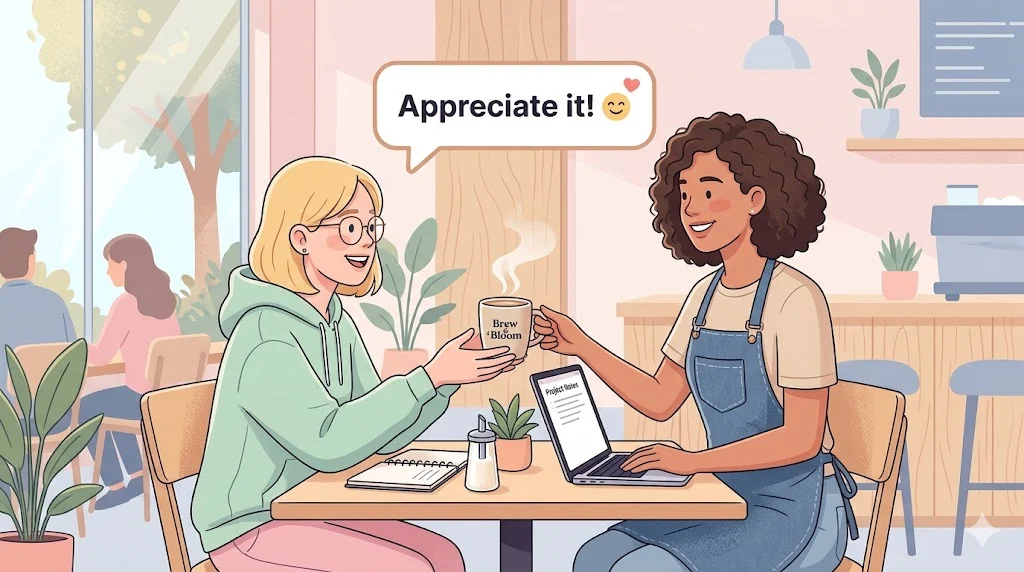
“Appreciate it” is a common English phrase used to express gratitude or acknowledgment for something someone has done. It is an informal, concise way of saying “I appreciate it,” meaning “I am thankful for your help, effort, or action.”
Why “Appreciate It” Matters in Everyday Communication
Think about the last time someone helped you maybe they held the door, explained something, or went out of their way for you. What did you say? Chances are, you replied with something like “thanks” or “appreciate it.”
This short, simple phrase carries a lot of emotional weight. It’s casual yet meaningful, quick yet powerful. Whether in text messages, workplace emails, or everyday conversations, “appreciate it” has become a go-to expression for modern communication.
But what exactly does it mean? When should you use it? And can it sometimes sound rude or dismissive?
Let’s break it all down.
What Does “Appreciate It” Mean?
At its core, “appreciate it” means:
- You recognize someone’s effort
- You feel thankful for what they did
- You are acknowledging their help or kindness
It’s essentially a shortened version of:
- “I appreciate it”
- “I really appreciate your help”
- “I’m grateful for that”
Key Idea:
👉 It combines gratitude + acknowledgment in one compact phrase.
Origin and Evolution of “Appreciate It”
Where Did It Come From?
The word “appreciate” comes from the Latin appretiare, meaning:
- “to value”
- “to give worth to”
Over time, in English, it evolved to mean:
- recognizing value
- expressing gratitude
How Did “Appreciate It” Become Popular?
Originally, people used full sentences like:
- “I appreciate your help”
- “I appreciate what you’ve done”
But with the rise of:
- texting
- social media
- fast-paced communication
👉 The phrase got shortened to “appreciate it” for speed and convenience.
Modern Usage Trend
Today, it’s widely used in:
- Casual conversations
- Workplace chats (Slack, Teams)
- Text messages
- Social media replies
How “Appreciate It” Is Used in Real Life
This phrase fits into many everyday situations. Let’s explore the most common ones.
1. Expressing Gratitude
- “You fixed the issue? Appreciate it!”
- “Thanks for helping me move really appreciate it.”
👉 Tone: Friendly and genuine
2. Acknowledging Help Quickly
- “Got the file. Appreciate it.”
- “Thanks for sending that over, appreciate it.”
👉 Tone: Efficient and polite
3. Casual Conversations
- “You grabbed coffee for me? Appreciate it 😊”
- “Appreciate it, bro!”
👉 Tone: Relaxed and informal
4. Workplace Communication
- “Appreciate it. I’ll review this today.”
- “Thanks for the update, appreciate it.”
👉 Tone: Professional but slightly informal
Tone Matters: Friendly vs Neutral vs Dismissive
Even though “appreciate it” is generally positive, tone can change based on context.
Tone Breakdown
| Tone Type | Example | Meaning |
| Friendly 😊 | “Thanks! Appreciate it!” | Warm and genuine |
| Neutral 👍 | “Appreciate it.” | Polite but brief |
| Slightly Dismissive 😐 | “Yeah, appreciate it.” | Can sound rushed or uninterested |
Important Tip:
👉 Adding “thanks” or punctuation can make it feel warmer.
- Better: “Thanks, appreciate it!”
- Less warm: “Appreciate it.”
Examples of “Appreciate It” in Context
Friendly Tone
- “You helped me a lot today, really appreciate it 🙌”
- “Appreciate it! That means a lot.”
Neutral Tone
- “Received your email. Appreciate it.”
- “Got it, appreciate it.”
Slightly Cold or Dismissive Tone
- “Okay. Appreciate it.”
- “Yeah, appreciate it.”
👉 These can feel less sincere depending on delivery.
When Should You Use “Appreciate It”?
Use It When:
- Someone helps you
- You want to acknowledge effort
- You need a quick thank-you
- You’re in casual or semi-formal settings
Avoid It When:
- Writing very formal emails (use full sentences instead)
- Expressing deep gratitude (it may feel too short)
- Communicating in sensitive situations
Comparison With Similar Phrases
Here’s how “appreciate it” compares to other common expressions:
| Phrase | Tone | Use Case |
| Thanks | Casual | Everyday use |
| Thank you | Neutral/Formal | Polite situations |
| Appreciate it | Casual/Modern | Quick gratitude |
| Much appreciated | Semi-formal | Polished tone |
| Grateful | Emotional/Formal | Deeper appreciation |
“Appreciate It” vs “Thank You”
Key Differences:
- “Thank you” → More traditional and universally polite
- “Appreciate it” → More modern and conversational
Example:
- “Thank you for your assistance.” → Formal
- “Appreciate it!” → Casual
👉 Both are correct it depends on context.
Professional Alternatives to “Appreciate It”
If you want to sound more polished, here are better options:
Formal Alternatives
- “I truly appreciate your assistance.”
- “Thank you for your support.”
- “I’m grateful for your help.”
Semi-Formal Alternatives
- “Much appreciated!”
- “Thanks, I appreciate it.”
- “I really appreciate that.”
Friendly Alternatives
- “Thanks a lot!”
- “Big thanks!”
- “Really appreciate it 😊”
Alternate Meanings of “Appreciate”
While “appreciate it” usually means gratitude, the word “appreciate” can also mean:
1. To Recognize Value
- “I appreciate good music.”
2. To Understand Something
- “I appreciate your point of view.”
👉 But in “appreciate it,” it almost always means gratitude.
Common Mistakes to Avoid
❌ Using It in Very Formal Writing
- Wrong: “Appreciate it for your cooperation.”
- Better: “I appreciate your cooperation.”
❌ Sounding Too Short or Cold
- “Appreciate it.” (can feel abrupt)
👉 Fix:
- “Thanks, appreciate it!”
❌ Overusing It
Using it too often can make it feel less genuine.
Example Table: When to Use “Appreciate It”
| Situation | Example Sentence | Best Practice |
| Friend helps you | “Appreciate it, man!” | Casual tone |
| Work email | “Thanks, appreciate it.” | Semi-formal |
| Boss communication | “I appreciate your support.” | Formal |
| Text message | “Got it, appreciate it 👍” | Quick and friendly |
| Serious gratitude | “I’m truly grateful.” | More emotional |
Tips for Using “Appreciate It” Naturally
- Add “thanks” for warmth
- Use emojis in casual settings 😊
- Avoid using it alone in formal emails
- Match tone with situation
- Don’t overuse it
FAQs
1. Is “appreciate it” rude?
No, it’s not rude. However, if used alone without warmth, it may feel slightly cold or rushed.
2. Is “appreciate it” formal or informal?
It’s generally informal to semi-formal.
3. Can I use “appreciate it” in emails?
Yes, but preferably in casual or workplace emails not very formal ones.
4. What’s the difference between “thanks” and “appreciate it”?
“Thanks” is simpler; “appreciate it” emphasizes recognition of effort.
5. Can “appreciate it” sound sarcastic?
Yes, depending on tone. For example:
- “Yeah appreciate it.” (can sound sarcastic)
6. Is it okay to say just “appreciate it”?
Yes, but adding “thanks” makes it sound more genuine.
7. What’s a more professional way to say “appreciate it”?
- “I appreciate your assistance.”
- “Thank you for your support.”
8. Why do people use “appreciate it” so often?
Because it’s quick, modern, and fits fast communication styles like texting and chatting.
Conclusion
“Appreciate it” is one of those phrases that perfectly fits modern communication. It’s short, easy, and meaningful making it ideal for everyday use.
- It means gratitude and acknowledgment
- It’s casual but polite
- Tone depends on context and delivery
- Adding warmth (like “thanks”) improves it
- Use alternatives in formal situations
👉 Final Tip:
Use “appreciate it” when you want to sound natural and friendly but adjust your tone depending on who you’re speaking to.

Sophia Bennett is a professional writer focused on explaining word meanings, expressions and everyday language in a simple and engaging way.