
Last Updated on May 2, 2026
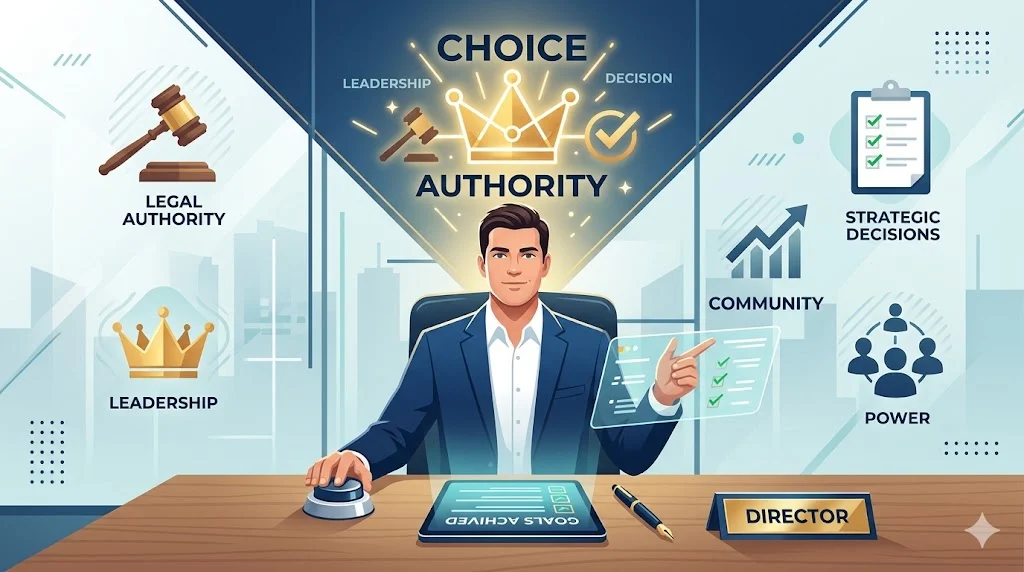
“Prerogative” means a special right, privilege or advantage that a person, group or authority has to make decisions or take actions without needing permission from others. It often refers to exclusive power or choice in a given situation.
What Does “Prerogative” Really Mean and Why It Matters
Have you ever heard someone say, “That’s my prerogative” and wondered what it actually means? It sounds formal, slightly powerful, and a bit mysterious but the meaning is actually quite simple once you break it down.
In everyday language, “prerogative” refers to a personal or official right to decide or act freely without needing approval from others. It is often used when someone wants to emphasize authority, independence, or exclusive control over a choice.
From legal discussions to casual conversations, the word prerogative meaning in English carries weight, confidence, and sometimes even a hint of authority or disagreement.
In this complete guide, we’ll explore everything about prerogative meaning, including its definition, origin, usage, tone, examples, comparisons, alternatives, FAQs, and more.
What Does Prerogative Mean?
Core Meaning
Prerogative is a special right, privilege, or power that allows someone to make decisions or take actions independently.
Simple explanation:
- A right to choose freely
- A privilege held by someone in authority
- Exclusive decision-making power
- Personal or official advantage
Example:
- “It is my prerogative to leave early today.”
Origin of the Word “Prerogative”
The word prerogative has deep historical roots.
Etymology:
- From Latin praerogativa
- prae = before
- rogare = to ask or vote
Originally, it referred to the group that voted first in Roman elections, influencing decisions before others.
Evolution of meaning:
- Ancient Rome → voting privilege
- Middle English → royal privilege
- Modern English → personal or official right
Today, it broadly means any special right or authority to decide.
Why the Word “Prerogative” Is Important
The term is widely used because it expresses:
Key ideas:
- Authority
- Independence
- Decision-making power
- Exclusive rights
- Personal choice
It is often used in legal, political, and everyday conversational contexts.
How “Prerogative” Is Used in Real Life
The word appears in both formal and informal communication.
1. Everyday Conversation 🗣️
Used when someone asserts personal choice.
Example:
- “It’s my prerogative to change my mind.”
2. Workplace / Professional Context 👔
Used to describe authority or responsibility.
Example:
- “It is the manager’s prerogative to approve leave.”
3. Legal or Government Context ⚖️
Used to describe official powers.
Example:
- “The president has the prerogative to grant pardons.”
4. Personal Relationships 💬
Used to express independence.
Example:
- “It’s my prerogative to decide what I wear.”
Tone Variations of “Prerogative”
The word can sound different depending on how it is used.
1. Confident Tone 💪
- “That’s my prerogative.”
2. Neutral Tone
- “It is his prerogative to decide.”
3. Defensive Tone 😐
- “It’s my prerogative, don’t question it.”
4. Formal Tone 👔
- “The decision falls under his prerogative.”
5. Dismissive Tone ⚠️
- “My prerogative end of discussion.”
Table: Prerogative Tone Examples
| Tone Type | Example | Meaning |
| Confident | That’s my prerogative | Strong personal choice |
| Formal | It is his prerogative | Official authority |
| Neutral | A leader’s prerogative | Standard explanation |
| Defensive | My prerogative! | Resistance |
| Dismissive | My prerogative | Closing discussion |
Examples of Prerogative in Sentences
Casual Examples 😊
- “It’s my prerogative to stay home today.”
- “She changed plans her prerogative.”
Professional Examples 👔
- “It is the CEO’s prerogative to restructure the company.”
- “Approval is at the manager’s prerogative.”
Legal Examples ⚖️
- “Granting pardons is a royal prerogative.”
- “The court exercised its prerogative powers.”
Strong/Assertive Tone
- “I will do it my prerogative.”
Comparison: Prerogative vs Similar Words
Understanding prerogative meaning becomes easier when compared with related terms.
Prerogative vs Privilege
| Word | Meaning | Difference |
| Prerogative | Right to decide | Authority-based |
| Privilege | Special benefit | Advantage-based |
👉 Prerogative = decision power
👉 Privilege = special benefit
Prerogative vs Right
| Word | Meaning | Usage |
| Right | Legal or moral entitlement | General |
| Prerogative | Exclusive decision power | Authority-specific |
Prerogative vs Authority
- Authority = power to enforce decisions
- Prerogative = freedom to decide
Alternate Meanings of Prerogative
The word is mostly consistent in meaning, but may appear in:
1. Legal Context
- Special powers of government or monarch
2. Political Context
- Executive decision-making rights
3. Everyday Language
- Personal freedom of choice
👉 There are no major alternate meanings beyond “special right or power.”
Polite or Professional Alternatives to Prerogative
In many situations, simpler words may be clearer.
Alternatives:
- Right
- Choice
- Authority
- Decision-making power
- Discretion
- Freedom
Example replacements:
- “It is my prerogative to leave early.”
→ “It is my right to leave early.” - “It is the manager’s prerogative.”
→ “It is the manager’s decision.”
When NOT to Use Prerogative
Avoid using it when:
- Simple language is needed
- Speaking to non-native speakers
- Casual conversation where clarity matters more
- Overly technical or legal tone is unnecessary
Why Prerogative Matters in Communication
The word is important because it reflects:
Key concepts:
- Independence
- Authority
- Decision-making freedom
- Personal boundaries
- Leadership power
It is often used to assert control or express autonomy clearly and confidently.
FAQs
1. What does prerogative mean in simple words?
It means a special right or power to make your own decisions.
2. How do you use prerogative in a sentence?
Example: “It is my prerogative to decide.”
3. Is prerogative a legal term?
Yes, it is often used in legal and political contexts.
4. What is another word for prerogative?
Right, privilege, authority, or discretion.
5. Is prerogative formal or informal?
It is mostly formal but can be used in casual speech.
6. What is royal prerogative?
It refers to special powers held by a monarch or government.
7. Can I say “my prerogative” in conversation?
Yes, it is commonly used to express personal choice.
8. What is the difference between prerogative and privilege?
Prerogative is decision power, while privilege is a special benefit.
Conclusion
The word prerogative represents special rights, authority, and decision-making power. Whether used in formal law, workplace discussions, or everyday conversations, it highlights independence and control over choices.
- Prerogative = special right or decision power
- Common in legal, political, and personal contexts
- Often used to assert independence (“my prerogative”)
- More formal than simple words like “choice”
- Closely related to authority and privilege
Understanding this word helps you communicate with clarity, confidence and precision, especially in formal or expressive situations.

Michael Anderson is a content writer specializing in word meanings, definitions and clear explanations of modern terms and phrases.