
Last Updated on May 15, 2026
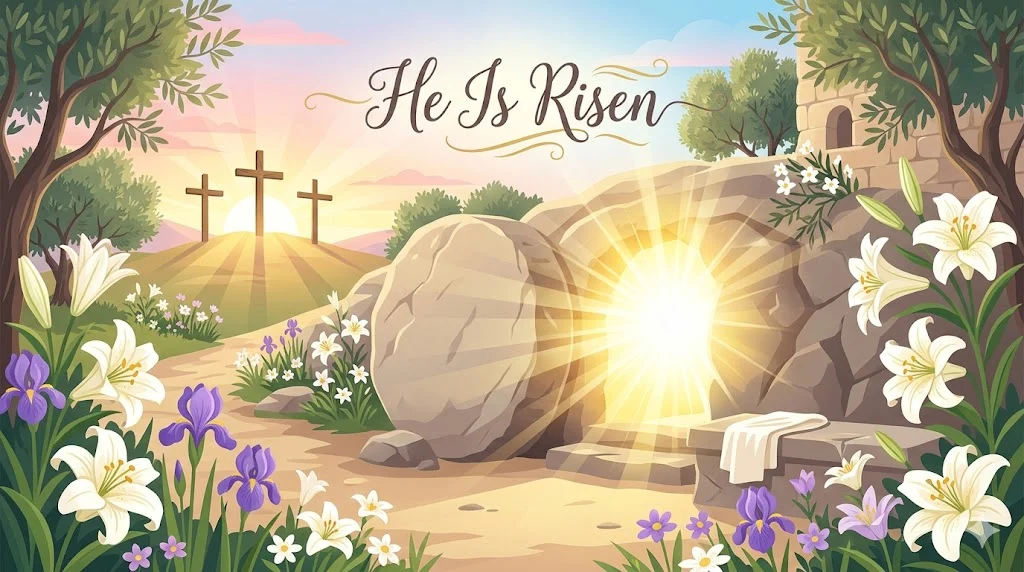
“He is risen” and “He has risen” are Christian phrases used to declare the resurrection of Jesus Christ. “He is risen” is the traditional and liturgical form, while “He has risen” is the grammatically modern English version. Both express the belief that Jesus rose from the dead.
Why “He Is Risen” Is One of the Most Powerful Easter Phrases
Few phrases in the Christian world carry as much emotional and spiritual weight as “He is risen!” It is short, powerful, and filled with hope, celebration, and faith.
Every year during Easter, Christians around the world greet each other with this declaration, celebrating the resurrection of Jesus Christ. But many people often wonder:
👉 Is it correct to say “He is risen” or “He has risen”?
👉 Are both correct?
👉 Do they mean the same thing?
The answer is yes but with important historical, linguistic, and theological differences.
In this complete guide, we’ll break down everything about “he is risen vs he has risen”, including meaning, origin, grammar, usage, tone, comparisons, examples, FAQs, and more.
What Does “He Is Risen” or “He Has Risen” Mean?
Core Meaning
Both “He is risen” and “He has risen” mean that Jesus Christ has risen from the dead, referring to the resurrection celebrated in Christianity.
Simple explanation:
- Jesus came back to life after crucifixion
- The resurrection is central to Christian belief
- Phrase is used as a joyful Easter proclamation
- Expresses hope, victory, and faith
Origin of “He Is Risen”
The phrase “He is risen” comes from older English Bible translations, especially:
Key historical source:
- King James Bible (1611)
- Early Christian liturgical traditions
- Greek and Latin scripture translations
Biblical reference:
In the Gospel accounts (e.g., Matthew 28:6), the angel declares:
“He is not here: for he is risen…”
This wording reflects older English grammar, where “is risen” was a common structure.
Why it stuck:
- Used in church liturgy for centuries
- Became a traditional Easter greeting
- Symbolic and poetic tone
- Strong emotional and spiritual resonance
Origin of “He Has Risen”
“He has risen” is a modern grammatical version of the same idea.
Why it developed:
- Modern English prefers “has + past participle”
- Clearer grammatical structure
- Easier for contemporary understanding
- Used in modern Bible translations
Modern examples:
- NIV Bible: “He has risen” (paraphrased in modern contexts)
- Contemporary sermons and speech
Difference Between “He Is Risen” and “He Has Risen”
Although both phrases mean the same thing, their tone and structure differ.
Grammar difference
| Phrase | Structure | Style |
| He is risen | Passive/archaic structure | Traditional |
| He has risen | Present perfect tense | Modern English |
Tone difference
| Phrase | Tone | Usage |
| He is risen | Formal, religious, poetic | Church, Easter greetings |
| He has risen | Modern, clear, conversational | Everyday speech |
Key insight
👉 “He is risen” emphasizes spiritual declaration
👉 “He has risen” emphasizes grammatical clarity
Real-Life Usage of “He Is Risen”
1. Easter Greetings ✝️
- “He is risen! Happy Easter!”
2. Church Services ⛪
- “He is risen indeed!”
3. Religious Celebrations 🙏
- Used in hymns and sermons
4. Social Media Posts 📱
- “He is risen! ✝️ Hallelujah!”
Real-Life Usage of “He Has Risen”
1. Modern Bible Reading 📖
- “Jesus has risen from the dead.”
2. Casual Conversation
- “He has risen, just like the scriptures say.”
3. Educational Context 🎓
- Used in explaining Christian theology
Examples in Sentences
Traditional Style (He is risen)
- “He is risen! Praise the Lord.”
- “He is risen indeed, hallelujah!”
- “We celebrate because He is risen.”
Modern Style (He has risen)
- “He has risen from the dead, as written in scripture.”
- “Christ has risen, bringing hope to believers.”
- “The Bible says He has risen.”
Tone Variations of Both Phrases
1. Joyful Tone 😊
- “He is risen! Rejoice!”
2. Reverent Tone 🙏
- “He is risen, as foretold in scripture.”
3. Celebratory Tone 🎉
- “He has risen! Happy Easter!”
4. Reflective Tone
- “He has risen, giving hope to the world.”
Comparison with Similar Religious Expressions
He is risen vs Christ is risen
| Phrase | Meaning | Usage |
| He is risen | Refers to Jesus | Traditional greeting |
| Christ is risen | Direct reference to Christ | Liturgical response |
👉 “Christ is risen” is often answered with “Indeed He is risen.”
He is risen vs He lives
| Phrase | Meaning | Tone |
| He is risen | Resurrection event | Formal/religious |
| He lives | Ongoing presence of faith | Emotional/modern |
He is risen vs Alleluia
- “He is risen” = declaration
- “Alleluia” = praise expression
Are Both “He Is Risen” and “He Has Risen” Correct?
Yes both are correct, but used differently:
✔ “He is risen” → traditional religious English
✔ “He has risen” → modern grammatical English
👉 Neither is wrong. The difference is style, not meaning.
Polite or Alternative Expressions
If you want variations, here are alternatives:
Religious alternatives:
- “Christ is risen”
- “The Lord has risen”
- “He is risen indeed”
Modern alternatives:
- “Jesus has risen”
- “The resurrection has happened”
- “He rose from the dead”
When to Use Each Phrase
Use “He is risen” when:
- Speaking in church ⛪
- Writing Easter greetings ✝️
- Using traditional religious language
- Participating in liturgy
Use “He has risen” when:
- Writing essays or explanations 📚
- Speaking in modern English contexts
- Teaching or discussing theology
- Using clear, grammatical structure
Why This Phrase Matters in Christianity
The phrase represents:
Key meanings:
- Victory over death
- Hope and salvation
- Fulfillment of prophecy
- Central Christian belief
- Celebration of Easter
It is one of the most important declarations in Christian faith.
FAQs
1. Is it correct to say He is risen or He has risen?
Yes, both are correct depending on style and context.
2. What does He is risen mean?
It means Jesus Christ has risen from the dead.
3. Why do Christians say He is risen?
It is a traditional Easter greeting celebrating resurrection.
4. What is the difference between He is risen and He has risen?
“He is risen” is traditional, while “He has risen” is modern grammar.
5. Can I say Christ is risen instead?
Yes, it is another common Christian expression.
6. What do you reply to He is risen?
The traditional response is “He is risen indeed!”
7. Is He is risen grammatically correct?
Yes, it is correct in older and liturgical English.
8. When is He is risen used?
It is mainly used during Easter celebrations.
Conclusion
Both “He is risen” and “He has risen” express the same powerful truth in Christianity the resurrection of Jesus Christ. The difference lies not in meaning, but in language style and tradition.
- Both phrases are correct
- “He is risen” = traditional, liturgical style
- “He has risen” = modern English usage
- Commonly used during Easter celebrations
- Represents hope, faith, and resurrection
Whether you choose the traditional or modern form, both expressions carry the same message of joy, faith, and spiritual victory.

Sophia Bennett is a professional writer focused on explaining word meanings, expressions and everyday language in a simple and engaging way.