
Last Updated on June 7, 2026
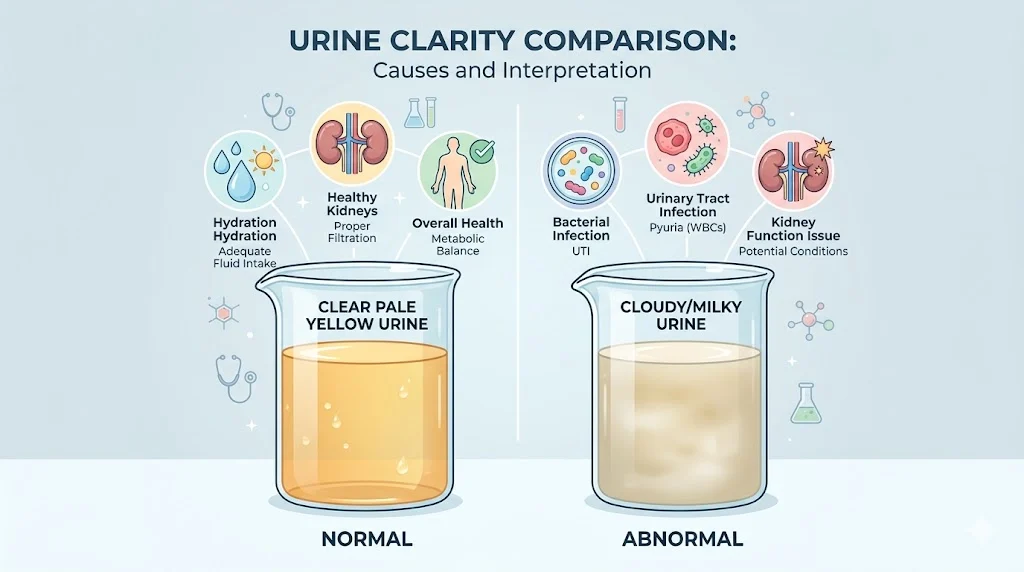
Cloudy urine refers to urine that appears milky, hazy, or less transparent than normal, often caused by substances like bacteria, white blood cells, crystals, or mucus. While it can be harmless (like dehydration), it may also signal underlying health issues such as urinary tract infections (UTIs) or kidney problems.
Why Does Your Urine Look Cloudy?
You glance into the toilet and notice something unusual—your urine isn’t its usual clear, pale yellow. Instead, it looks cloudy or milky. Instantly, questions start racing: Is this normal? Should I be worried?
Here’s the truth cloudy urine is common, and in many cases, it’s completely harmless. But sometimes, it can be your body’s subtle way of signaling that something isn’t quite right.
In this comprehensive guide, we’ll break down everything you need to know about cloudy urine meaning, including causes, symptoms, real-life examples, and when it’s time to see a doctor.
What Does Cloudy Urine Mean?
Cloudy urine simply means that your urine lacks its typical transparency. This change in appearance is usually due to extra substances present in the urine, such as:
- White blood cells
- Bacteria
- Crystals (like calcium or phosphate)
- Mucus
- Pus
Quick Insight:
- Normal urine: Clear to light yellow
- Cloudy urine: Hazy, milky, or foggy
Origin & Medical Context of the Term
The term “cloudy urine” isn’t slang—it comes directly from clinical observation in medicine, especially in fields like:
- Urology
- Nephrology
- General healthcare
Doctors have long used urine appearance as a diagnostic clue. Even before advanced lab tests, visual inspection of urine helped identify infections, dehydration, and metabolic disorders.
Why It Became Popular
Today, the phrase “cloudy urine meaning” is widely searched online because:
- People are more health-conscious
- Symptoms are easily noticeable at home
- It’s often associated with infections (which people want quick answers about)
Common Causes of Cloudy Urine
Let’s explore the most common reasons your urine may appear cloudy:
1. Dehydration 💧
When you don’t drink enough water:
- Urine becomes concentrated
- Minerals and waste build up
Result: Cloudy or darker urine
✔ Usually harmless
✔ Improves with hydration
2. Urinary Tract Infection (UTI)
One of the most common causes of cloudy urine.
Symptoms:
- Burning sensation while urinating
- Frequent urge to pee
- Strong odor
- Lower abdominal pain
Cloudiness happens due to:
- White blood cells
- Bacteria
- Pus
3. Kidney Stones
Mineral deposits in the kidneys can lead to:
- Crystals in urine
- Pain (especially in lower back)
- Blood in urine
4. Vaginal Discharge (in females)
Sometimes, cloudy urine is not from urine itself but:
- Mixing with vaginal discharge
- Hormonal changes
5. Sexually Transmitted Infections (STIs)
Certain infections can cause:
- Cloudy urine
- Unusual discharge
- Pain during urination
6. Excess Protein in Urine (Proteinuria)
This may indicate:
- Kidney problems
- Chronic diseases
7. Diet Factors 🍽️
Some foods can temporarily cause cloudy urine:
- Dairy products
- Foods high in phosphorus
8. Medications & Supplements
Certain drugs and vitamins can alter urine appearance:
- Vitamin B supplements
- Antibiotics
Real-World Usage & Interpretation
Unlike internet slang or abbreviations, “cloudy urine” is a literal, descriptive medical term. However, how people talk about it can vary depending on tone:
Friendly Tone 😊
- “Hey, I noticed my urine looks cloudy—probably need to drink more water.”
Neutral Tone 😐
- “Cloudy urine can indicate dehydration or infection.”
Concerned Tone ⚠️
- “Cloudy urine with pain might mean a UTI—get it checked.”
Example Table: Causes & What They Mean
| Cause | Appearance | Other Symptoms | Seriousness Level |
| Dehydration | Dark & cloudy | Thirst, dry mouth | Low |
| UTI | Milky/cloudy | Burning, urgency | Moderate |
| Kidney Stones | Cloudy + crystals | Severe pain, blood | High |
| Proteinuria | Foamy/cloudy | Swelling, fatigue | High |
| Diet-related | Slight cloudiness | None | Low |
| STIs | Cloudy + discharge | Pain, irritation | Moderate–High |
Cloudy Urine vs Similar Terms
Let’s clear up confusion between related urine conditions:
| Term | Meaning | Key Difference |
| Cloudy urine | Hazy or milky appearance | Visual change only |
| Foamy urine | Bubbly or frothy | Often protein-related |
| Dark urine | Deep yellow/brown color | Usually dehydration |
| Bloody urine | Red or pink | Indicates bleeding |
Alternate Meanings (If Any)
Unlike many keywords, “cloudy urine” has no slang or alternate meanings. It is strictly:
- A medical observation
- Used in both professional and everyday language
When Should You Be Concerned?
Cloudy urine isn’t always a red flag—but here’s when you shouldn’t ignore it:
Seek medical attention if you notice:
- Persistent cloudiness (more than 2–3 days)
- Pain while urinating
- Strong, foul smell
- Blood in urine
- Fever or chills
Professional & Polite Alternatives
In formal or medical communication, instead of saying “cloudy urine,” you might hear:
- “Turbid urine” (clinical term)
- “Reduced urine clarity”
- “Urine with sediment”
Practical Tips to Manage Cloudy Urine
Here’s what you can do:
✅ Stay Hydrated
- Drink 6–8 glasses of water daily
✅ Maintain Hygiene
- Especially important for preventing UTIs
✅ Monitor Diet
- Avoid excessive processed or salty foods
✅ Don’t Ignore Symptoms
- Early detection prevents complications
FAQs
1. Is cloudy urine always a sign of infection?
No. It can be caused by dehydration or diet. But infections are a common cause.
2. Can cloudy urine go away on its own?
Yes especially if caused by dehydration. Drinking water often clears it up.
3. What does cloudy urine with smell indicate?
A strong odor along with cloudiness may suggest a UTI or bacterial infection.
4. Is cloudy urine normal during pregnancy?
It can happen, but it’s best to consult a doctor to rule out infections.
5. Can diet cause cloudy urine?
Yes foods high in phosphorus or calcium can temporarily affect urine clarity.
6. Should I worry about cloudy urine without pain?
Not always. If it persists, get it checked.
7. Does cloudy urine mean kidney disease?
Not necessarily but persistent cases could indicate kidney issues.
8. How can I quickly fix cloudy urine?
- Drink more water
- Avoid irritants
- Seek medical advice if symptoms persist
Conclusion
Cloudy urine is one of those symptoms that can either be completely harmless or a sign of something more serious and the difference lies in the details.
- Occasional cloudiness = usually harmless
- Persistent cloudiness = worth checking
- Accompanied symptoms = don’t ignore
Your body often sends subtle signals before bigger problems arise. Paying attention to changes like urine clarity can help you stay ahead of potential health issues.

Michael Anderson is a content writer specializing in word meanings, definitions and clear explanations of modern terms and phrases.