Last Updated on May 18, 2026
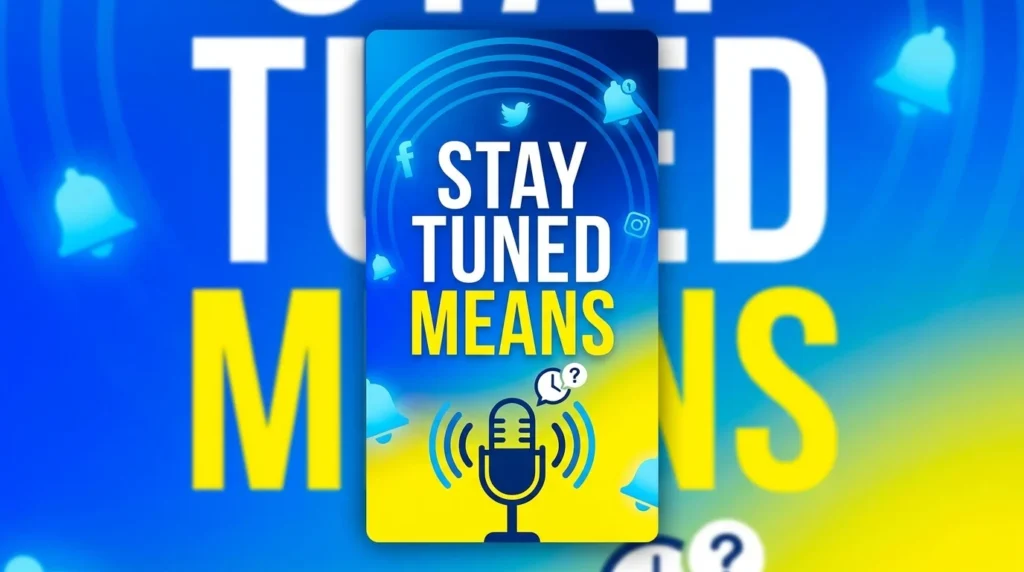
Stay tuned is an expression used to encourage people to continue paying attention for upcoming news, updates, announcements, or content.
The phrase is often friendly, exciting, and engaging.
Have you ever watched a video, read a social media post, or listened to a podcast where someone ends with “Stay tuned!” and wondered what it really means? This popular phrase appears everywhere from television and YouTube to texting and professional announcements. It sounds simple, but its tone and purpose can change depending on the situation.
Whether you’re learning English, improving communication skills, or simply curious about internet slang and everyday expressions, understanding “stay tuned” can help you sound more natural and confident in conversations.
Let’s dive in.
What Does Stay Tuned Mean?
“Stay tuned” means to continue paying attention because more information, updates, or entertainment will be shared soon.
It is commonly used to tell someone:
- Don’t leave yet
- Keep watching or listening
- Wait for future updates
- More is coming soon
Origin of the Phrase “Stay Tuned”
The expression “stay tuned” originally came from the world of radio broadcasting.
In the early days of radio, listeners had to manually adjust the dial to the correct frequency or “tune” their radios to hear broadcasts clearly. Broadcasters would say:
“Stay tuned for more programs.”
This literally meant:
Keep your radio tuned to this station.
Over time, the phrase evolved into a figurative expression used across television, media, marketing, and everyday conversations.
Today, people use it online, in business communication, and even in casual texting.
Why “Stay Tuned” Is So Popular
The phrase remains popular because it creates:
- Curiosity
- Anticipation
- Excitement
- Audience engagement
Content creators, brands, influencers, and businesses frequently use it to keep audiences interested.
Examples include:
- Upcoming product launches
- YouTube video series
- Social media announcements
- TV episode previews
- Sports updates
- Company news
It’s short, memorable, and universally understood.
How Stay Tuned Is Used in Everyday Conversation
1. Social Media Usage
People often use “stay tuned” before announcing future content.
Example
“Big surprise coming tomorrow 👀 Stay tuned!”
Tone: Exciting and promotional
2. Television and Entertainment
TV hosts commonly use the phrase before commercials or future segments.
Example
“Stay tuned after the break for our exclusive interview.”
Tone: Informative and engaging
3. Business and Marketing
Brands use it to build suspense around announcements.
Example
“We’re launching something special next week. Stay tuned!”
Tone: Professional but exciting
4. Personal Conversations
Friends may use it casually when they’re not ready to share information yet.
Example
“I might have some good news soon. Stay tuned 😂”
Tone: Playful and informal
“Stay Tuned” Meaning by Tone
The meaning can slightly change depending on context and delivery.
Friendly Tone
Used to create excitement or curiosity.
Example
“More travel photos coming soon stay tuned! ✈️”
Meaning:
Keep following for updates.
Professional Tone
Used in business, media, or formal communication.
Example
“Stay tuned for further updates regarding the event schedule.”
Meaning:
More official information will be shared later.
Promotional Tone
Often used in advertising and marketing.
Example
“A major discount is on the way. Stay tuned!”
Meaning:
Pay attention for upcoming offers.
Slightly Dismissive Tone (Rare)
Sometimes the phrase can sound vague or evasive if overused.
Example
“We can’t answer that question yet. Stay tuned.”
Meaning:
No information is available right now.
In some situations, people may feel the speaker is avoiding details.
Examples of “Stay Tuned” in Different Contexts
Casual Examples
| Situation | Example Sentence | Tone |
|---|---|---|
| Friend texting | “I’ve got a secret to tell you later. Stay tuned!” | Playful |
| Instagram post | “New reel dropping tonight stay tuned 🔥” | Exciting |
| Family conversation | “We’ll know the results tomorrow, so stay tuned.” | Neutral |
Professional Examples
| Situation | Example Sentence | Tone |
|---|---|---|
| Company email | “Stay tuned for additional product updates.” | Professional |
| Webinar | “Stay tuned for the Q&A session.” | Informative |
| News broadcast | “Stay tuned for weather updates.” | Formal |
Entertainment Examples
| Platform | Example |
|---|---|
| YouTube | “Part 2 is coming next week, stay tuned!” |
| TV show | “Stay tuned after these messages.” |
| Podcast | “Stay tuned for next episode’s guest reveal.” |
Is “Stay Tuned” Formal or Informal?
“Stay tuned” is generally considered:
- Semi-formal
- Conversational
- Widely acceptable in professional settings
It works well in:
- Marketing
- Media
- Customer communication
- Team updates
- Social media
However, in highly formal writing, alternatives may sound more polished.
Professional Alternatives to “Stay Tuned”
Sometimes you may want a more professional or polished expression.
Best Alternatives
| Alternative Phrase | Best Use Case |
|---|---|
| “More updates to follow” | Business communication |
| “We’ll keep you informed” | Professional emails |
| “Further details will be shared soon” | Formal announcements |
| “Please check back later” | Websites and customer service |
| “More information is coming soon” | Marketing |
| “Watch this space” | Creative industries |
| “Keep an eye out” | Casual-professional tone |
Difference Between “Stay Tuned” and Similar Expressions
Stay Tuned vs. Keep Watching
| Phrase | Meaning | Usage |
|---|---|---|
| Stay tuned | Wait for future updates | Broad/general |
| Keep watching | Continue viewing right now | Videos/TV |
Example
- “Stay tuned for tomorrow’s announcement.”
- “Keep watching to learn the final result.”
Stay Tuned vs. Watch This Space
These phrases are similar but have slightly different styles.
| Phrase | Tone |
|---|---|
| Stay tuned | Common and universal |
| Watch this space | More creative or dramatic |
“Watch this space” is especially common in British English.
Stay Tuned vs. Coming Soon
| Phrase | Focus |
|---|---|
| Stay tuned | Audience attention |
| Coming soon | Upcoming content/event |
Example:
“New product coming soon. Stay tuned for details.”
Both can work together.
Grammar and Usage Tips
Correct Usage
Correct
- “Stay tuned for updates.”
- “Stay tuned to learn more.”
- “Stay tuned exciting news ahead!”
Common Mistakes
Incorrect
- “Stay tune”
- “Stay tuned on”
- “Keep tuned”
The proper phrase is always:
“Stay tuned”
Can “Stay Tuned” Be Used in Texting?
Yes it’s extremely common in texting and online messaging.
Text Examples
- “I’ll tell you later 😂 stay tuned”
- “Big changes coming. Stay tuned!”
- “Stay tuned 👀”
People often add emojis to increase suspense or excitement.
Popular emojis include:
- 👀
- 🔥
- 🚀
- 🎉
- 😎
“Stay Tuned” in Social Media Marketing
Marketers love this phrase because it boosts engagement and anticipation.
Why Brands Use It
1. Builds Curiosity
People naturally want to know what happens next.
2. Encourages Return Visits
Audiences may revisit pages or accounts for updates.
3. Creates Suspense
It makes announcements feel more exciting.
Example Marketing Captions
- “Huge giveaway announcement tomorrow 👀 Stay tuned!”
- “Something exciting is launching this Friday!”
- “Stay tuned for exclusive behind-the-scenes content.”
Psychological Effect of “Stay Tuned”
The phrase works because it triggers curiosity.
Humans naturally dislike incomplete information. This psychological principle is related to the “curiosity gap,” where people want closure after hearing partial information.
That’s why creators use phrases like:
- “Stay tuned”
- “Wait for it”
- “More coming soon”
These expressions encourage continued attention.
Alternate Meanings of “Stay Tuned”
While the phrase usually means “wait for updates,” it can occasionally imply:
Stay Focused or Connected
Example:
“Stay tuned to your audience’s needs.”
Here, it means:
Remain aware or attentive.
This usage is less common but still correct.
When NOT to Use “Stay Tuned”
Although popular, the phrase can become repetitive if overused.
Avoid using it:
- Too frequently in marketing
- Without actually providing updates later
- In very formal legal or academic writing
Overusing suspense phrases may frustrate audiences.
Best Situations to Use “Stay Tuned”
Ideal Use Cases
- Product launches
- Event announcements
- Video series
- News updates
- Teasers
- Podcast episodes
- Streaming content
- Email campaigns
Examples of “Stay Tuned” in Pop Culture
The phrase appears constantly in entertainment and media.
Common Places You Hear It
- TV commercials
- YouTube channels
- Podcasts
- Sports broadcasts
- Reality shows
- News stations
Example:
“Stay tuned for scenes from next week’s episode.”
Quick Usage Cheat Sheet
| Situation | Should You Use “Stay Tuned”? |
|---|---|
| Instagram teaser | Yes |
| Business newsletter | Yes |
| Academic essay | Usually no |
| TV broadcast | Yes |
| Friendly texting | Yes |
| Legal contract | No |
Synonyms and Related Expressions
Common Synonyms
- Keep watching
- Wait for updates
- Check back soon
- Keep an eye out
- Watch this space
- More to come
- Don’t miss it
FAQs
1. What does “stay tuned” mean in texting?
In texting, “stay tuned” means more information or updates will come later. It’s often used playfully or to build suspense.
2. Is “stay tuned” rude?
No, it is usually friendly or neutral. However, if used repeatedly without giving information, it may sound dismissive.
3. Can “stay tuned” be used professionally?
Yes. Businesses, marketers, and media professionals frequently use it in announcements and updates.
4. What is another way to say “stay tuned”?
Alternatives include:
- “More updates soon”
- “Keep an eye out”
- “We’ll keep you informed”
- “Watch this space”
5. Is “stay tuned” formal English?
It is semi-formal and acceptable in many professional situations, though highly formal writing may require alternatives.
6. Why do people say “stay tuned”?
People use the phrase to encourage others to continue paying attention for future news, content, or announcements.
7. What does “stay tuned” mean on social media?
On social media, it usually means new posts, announcements, or content are coming soon.
8. Can “stay tuned” mean “wait”?
Yes, indirectly. It suggests waiting while remaining attentive for future information.
Conclusion
The phrase “stay tuned” is one of the most recognizable expressions in modern communication. Originally rooted in radio broadcasting, it has evolved into a powerful way to create anticipation, engagement, and curiosity across television, social media, marketing, and everyday conversation.
In simple terms, “stay tuned” means:
Keep paying attention because more information or content is coming soon.
It works well in both casual and professional settings, especially when you want to:
- Build excitement
- Encourage audience engagement
- Tease future updates
- Maintain attention
However, using it thoughtfully matters. Pair it with real updates, clear communication, and the right tone to keep audiences interested instead of frustrated.
Whether you’re writing captions, sending announcements, or simply trying to understand common English expressions, knowing how and when to use “stay tuned” can make your communication sound more natural, polished, and engaging.

Michael Anderson is a content writer specializing in word meanings, definitions and clear explanations of modern terms and phrases.