
Last Updated on June 26, 2026
A coquette is a person who flirts playfully to attract attention, often with charm and subtle confidence. In modern slang, it also describes a soft, feminine aesthetic centered on romantic fashion, delicate details, and graceful self-expression.
A coquette is someone who flirts in a playful and teasing way, usually to gain attention or admiration. The word traditionally describes a woman, though modern usage feels more flexible.
This isn’t aggressive flirting. It feels lighter. Softer. More controlled.
A coquette doesn’t chase attention blindly. Instead, she creates it with intention.
What Makes the Meaning Unique
Here’s where it gets interesting.
Not all flirting is the same. A coquette stands out because she blends:
- Charm with restraint
- Interest with mystery
- Attention with distance
That balance matters.
She might smile, engage, then pull back slightly. That push-and-pull creates intrigue. People lean in without realizing why.
Think of it like a dance. One step forward. One step back.
Pronunciation and Quick Usage
- Pronounced: koh-KET
- Type: Noun
Example:
- She has a coquette personality playful, confident, and a little mysterious.
Coquette Meaning in English: Beyond Just Flirting
Why “Coquette” Is More Than a Simple Word
At first glance, it looks like just another synonym for “flirt.”
But that’s not accurate.
A coquette doesn’t simply flirt. She curates attention. She shapes how people perceive her. That adds depth to the meaning.
Layers of Meaning
The term carries several layers at once:
- Surface Layer: Playful flirtation
- Social Layer: Awareness of attraction dynamics
- Psychological Layer: Control over emotional engagement
- Cultural Layer: Expression of femininity
Each layer adds nuance. Strip them away, and the word loses its power.
A Quick Comparison Table
| Aspect | Coquette | Regular Flirting |
|---|---|---|
| Intent | Strategic and playful | Casual or spontaneous |
| Style | Subtle and controlled | Direct or obvious |
| Energy | Soft and intriguing | Varies widely |
| Impact | Creates curiosity | Creates attention |
The Origin of Coquette: Where the Word Comes From
French Roots That Shaped the Meaning
The word coquette comes from French. It’s the feminine form of coquet.
Originally, it described someone who was:
- Stylish
- Slightly vain
- Playfully flirtatious
The deeper root connects to the word for a rooster. That symbol matters.
Roosters show off. They strut. They attract attention. The connection isn’t accidental.
How the Meaning Developed Over Time
Language evolves. So did this word.
In earlier centuries, a coquette often appeared in:
- Social circles
- Royal courts
- Literature
These women used charm as a social tool. Sometimes, people admired them. Other times, they judged them.
Historical Timeline
| Period | Meaning Shift |
|---|---|
| 1600s | Flirtatious and vain |
| 1700s | Socially strategic woman |
| 1800s | Literary archetype |
| 1900s | Slightly negative label |
| Today | Aesthetic and personality |
That shift changed everything.
Coquette Meaning in Modern Culture
Why the Word Is Trending Again
Scroll through social media, and you’ll see it everywhere.
So why now?
Because culture shifted.
People started embracing:
- Soft femininity
- Romantic expression
- Intentional aesthetics
The word “coquette” fits perfectly into that space.
The Role of Social Media
Platforms like TikTok didn’t just revive the word. They transformed it.
Instead of focusing on behavior, they emphasized:
- Visual identity
- Mood
- Lifestyle
Now, “coquette” often describes how something looks and feels, not just how someone acts.
Common Modern Usage
You’ll see phrases like:
- “Coquette aesthetic”
- “Coquette energy”
- “That outfit is so coquette”
Notice the shift.
It moved from a person to a vibe.
Coquette Aesthetic Meaning: The Viral Trend Explained
What Is the Coquette Aesthetic?
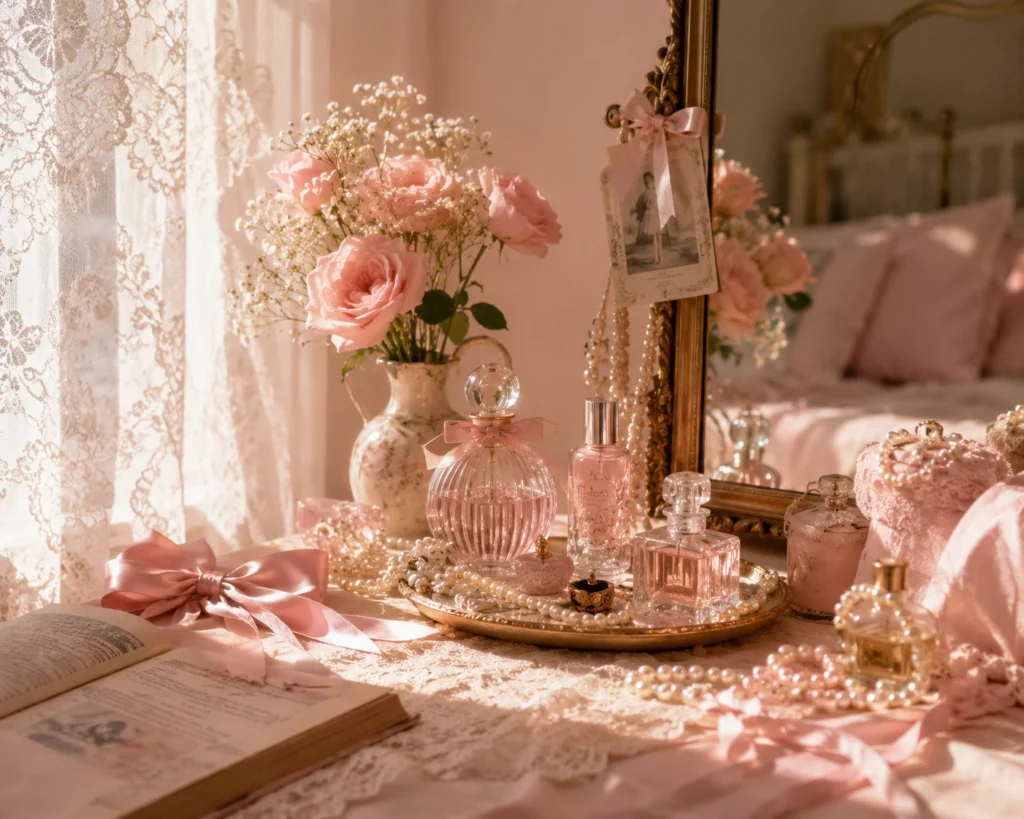
The coquette aesthetic is a style built on softness, romance, and femininity.
It draws inspiration from:
- Vintage fashion
- Parisian elegance
- Delicate details
This isn’t bold or edgy. It feels gentle but intentional.
Key Visual Elements
You’ll instantly recognize the look:
- Bows and ribbons
- Lace and silk fabrics
- Soft pastel colors
- Pearls and dainty jewelry
- Flowing dresses
Everything feels light. Nothing feels forced.
Style Breakdown Table
| Element | Description |
|---|---|
| Colors | Pink, ivory, soft beige |
| Fabrics | Lace, chiffon, satin |
| Accessories | Bows, pearls, ribbons |
| Mood | Romantic, dreamy |
Why the Coquette Trend Feels So Powerful
Emotional Appeal
There’s a reason people connect with it.
The aesthetic taps into:
- Nostalgia
- Romance
- Softness
In a world that often feels loud and fast, this style slows things down.
Cultural Shift Toward Femininity
For years, trends leaned toward minimalism or bold statements.
Now, things changed.
People are reclaiming:
- Delicacy
- Elegance
- Soft expression
And they’re doing it without apology.
A Subtle Form of Confidence
Here’s the key insight.
The coquette aesthetic isn’t weak. It’s controlled.
It says:
- “I don’t need to be loud to stand out.”
- “I choose softness on my own terms.”
That quiet confidence makes it powerful.
Coquette vs Soft Girl vs Femme Fatale
Understanding the Differences Clearly
These terms often overlap. That creates confusion.
Let’s break it down.
| Style | Core Identity | Energy |
|---|---|---|
| Coquette | Playful charm | Light and teasing |
| Soft Girl | Emotional softness | Gentle and calm |
| Femme Fatale | Strong seduction | Bold and intense |
Key Takeaway
- Coquette = balance of charm and mystery
- Soft girl = pure gentleness
- Femme fatale = power and dominance
Each one tells a different story.
Coquette Personality Traits Explained
What Defines a Coquette Personality
It’s not just about appearance.
A coquette often shows:
- Playfulness
- Awareness
- Emotional control
- Subtle confidence
Behavioral Patterns
You might notice:
- Light teasing
- Selective attention
- Controlled vulnerability
They don’t reveal everything at once. That creates curiosity.
A Simple Analogy
Think of a coquette like a movie trailer.
It shows just enough to interest you.
It never gives away the whole story.
How to Recognize Coquette Behavior in Real Life
Everyday Signs
You’ll spot it quickly once you know what to look for:
- Smiling without overcommitting
- Engaging, then stepping back
- Maintaining elegance in conversation
Social Dynamics
In social settings, a coquette often:
- Draws attention naturally
- Avoids appearing desperate
- Keeps interactions light but memorable
Why It Works
The behavior creates:
- Curiosity
- Emotional engagement
- A sense of mystery
People remember what they can’t fully figure out.
Is Coquette Positive or Negative? Understanding the True Tone
Why People Disagree on the Meaning
The word “coquette” sits in a gray area.
Some people hear it and think:
- Charming
- Elegant
- Confident
Others hear something different:
- Manipulative
- Attention-seeking
- Superficial
So which one is correct?
The answer depends on context, tone, and intent.
Positive Interpretation of Coquette
In modern usage, especially online, “coquette” often feels positive.
It represents:
- Self-expression
- Feminine confidence
- Playful charm
Instead of hiding femininity, it celebrates it.
Many people now see it as a form of soft power.
Negative Interpretation of Coquette
However, the older meaning still lingers.
In some contexts, calling someone a coquette can imply:
- Emotional manipulation
- Insincerity
- Superficial behavior
This view comes from historical attitudes toward women who used charm socially.
The Role of Tone in Meaning
Tone changes everything.
Compare these:
- “She has a coquette style.” → Positive
- “She acts like a coquette.” → Potentially critical
The same word. Completely different impact.
How to Use “Coquette” Correctly in Real Life
Natural Sentence Examples
Using the word correctly makes a big difference.
Here are some clear examples:
- Her outfit has a coquette aesthetic soft, elegant, and detailed.
- She carries herself with a coquette charm.
- That look feels very coquette, especially with the lace and ribbons.
Notice the pattern. The word often describes:
- Style
- Energy
- Personality
When You Should Use It
Use “coquette” when describing:
- Fashion styles
- Aesthetic choices
- Playful personality traits
- Romantic or soft energy
It works best in creative or expressive contexts.
When You Should Avoid It
Avoid using it when:
- The audience may not understand the term
- The tone could sound judgmental
- You’re in formal or professional writing
Quick Usage Guide
| Situation | Use “Coquette”? |
|---|---|
| Fashion blog | Yes |
| Social media caption | Yes |
| Academic writing | No |
| Casual conversation | Yes (context matters) |
Coquette Meaning in Slang and Internet Culture
How Social Media Changed the Meaning
Online culture reshaped the word.
Originally, it focused on behavior. Now, it focuses on:
- Aesthetic identity
- Mood and vibe
- Visual storytelling
That shift made the word more accessible.
Modern Slang Definition
In slang, “coquette” often means:
- Soft feminine energy
- Romantic visual style
- Delicate, curated appearance
It’s less about flirting. More about presentation.
Common Slang Phrases
You’ll often see:
- “Coquette aesthetic”
- “Coquette core”
- “She’s so coquette”
- “Giving coquette energy”
These phrases signal a visual and emotional vibe, not just behavior.
Why the Slang Version Went Viral
Several factors drove the trend:
- Short-form video content
- Aesthetic-driven platforms
- Desire for identity expression
People didn’t just want to define themselves.
They wanted to style themselves.
Coquette Fashion Guide: How to Achieve the Look
Core Style Philosophy
The coquette style isn’t random. It follows a clear formula:
Soft + Romantic + Intentional = Coquette
Every detail matters. Nothing feels accidental.
Essential Clothing Pieces
To build a coquette wardrobe, focus on:
- Flowing dresses
- Lace tops
- Satin skirts
- Cardigans
- Ballet flats
Each piece should feel:
- Light
- Feminine
- Elegant
Signature Accessories
Accessories define the look.
Key items include:
- Ribbon hair ties
- Pearl necklaces
- Delicate rings
- Vintage handbags
These details complete the aesthetic.
Color Palette Breakdown
| Color | Effect |
|---|---|
| Soft pink | Romantic and gentle |
| Ivory | Clean and delicate |
| Beige | Warm and subtle |
| Pastel blue | Calm and dreamy |
Avoid harsh or overly bold colors. The palette should feel cohesive.
Coquette Outfit Formulas That Always Work
Simple Outfit Structure
You don’t need a full wardrobe overhaul.
Use this formula:
- Top: Lace or soft fabric
- Bottom: Flowing skirt
- Shoes: Ballet flats or heels
- Accessories: Bows or pearls
This creates a balanced look.
Everyday Outfit Example
- White lace blouse
- Light pink midi skirt
- Beige flats
- Pearl necklace
The result feels effortless but polished.
Advanced Styling Tips
To elevate the look:
- Mix textures (lace + satin)
- Keep silhouettes soft
- Focus on fit and flow
Small details create a big impact.
Coquette Personality vs Appearance
Why It’s Not Just About Looks
Many people think coquette is purely visual.
That’s not true.
The aesthetic works best when it aligns with behavior.
Personality Traits That Match the Style
A coquette personality includes:
- Playfulness
- Emotional awareness
- Subtle confidence
- Graceful communication
Without these traits, the aesthetic can feel forced.
The Balance Between Style and Behavior
Here’s the key idea:
- Style attracts attention
- Behavior maintains it
When both align, the effect feels natural.
Common Mistakes People Make About Coquette
Misunderstanding the Concept
Many people reduce the meaning too much.
They think it’s:
- Just flirting
- Just fashion
- Just social media
In reality, it’s a mix of all three.
Top Misconceptions
| Misconception | Reality |
|---|---|
| It’s manipulative | It can be playful and harmless |
| It’s outdated | It’s trending globally |
| It’s only fashion | It includes behavior and energy |
Why These Misconceptions Happen
People oversimplify.
They ignore:
- Cultural context
- Historical meaning
- Modern evolution
That leads to confusion.
Coquette vs Flirt: What’s the Real Difference?
Key Distinction
A flirt seeks attention.
A coquette controls attention.
That difference matters.
Side-by-Side Comparison
| Trait | Coquette | Flirt |
|---|---|---|
| Intent | Strategic | Casual |
| Style | Subtle | Direct |
| Energy | Soft | Varies |
| Impact | Intriguing | Immediate |
Why the Difference Matters
Understanding this helps you:
- Use the word correctly
- Recognize behavior patterns
- Avoid misinterpretation
Psychological Insight Behind Coquette Behavior
The Attraction Principle
Coquette behavior works because it uses:
- Curiosity
- Uncertainty
- Emotional pacing
People feel drawn to what they can’t fully predict.
Push and Pull Dynamic
This pattern creates interest:
- Show attention
- Pull back slightly
- Re-engage
It keeps interactions dynamic.
Why It Feels Compelling
The brain responds to:
- Variation
- Anticipation
- Subtle rewards
That’s why coquette energy feels engaging.
Coquette Meaning in Culture and Society
Why the Concept Still Exists Today
Some words fade. Others evolve.
“Coquette” survived because it taps into something timeless:
the human desire to attract, intrigue, and connect.
Even as culture changes, that core instinct stays the same.
However, the way people express it shifts. That’s why the meaning of coquette feels both classic and modern at once.
Cultural Interpretation Across Time
Different societies interpret “coquette” in different ways.
- In traditional European settings, it often carried a moral judgment
- In modern Western culture, it leans toward self-expression
- In digital spaces, it becomes aesthetic identity
This shift reflects a larger change in how people view:
- Femininity
- Power
- Social interaction
The Modern Cultural Role
Today, “coquette” represents more than behavior.
It symbolizes:
- Intentional presentation
- Emotional awareness
- Controlled expression
In simple terms, it reflects how people choose to be seen.
Coquette in Media, Fashion, and Pop Culture
Representation in Film and Literature
The “coquette” archetype appears everywhere once you notice it.
Classic stories often feature characters who:
- Charm effortlessly
- Maintain mystery
- Control social dynamics
These characters aren’t always villains or heroes. They sit in between.
That ambiguity makes them compelling.
Fashion Industry Influence
Fashion didn’t just adopt the coquette aesthetic. It amplified it.
Design trends now include:
- Romantic silhouettes
- Vintage-inspired pieces
- Soft textures
Runways and editorials frequently highlight:
- Lace detailing
- Ribbon accents
- Flowing fabrics
These elements reinforce the visual identity of coquette style.
Social Media and Viral Growth
Social platforms accelerated everything.
Instead of slow cultural change, trends now spread instantly.
The coquette aesthetic gained traction because it:
- Photographs well
- Feels aspirational
- Offers identity through visuals
Short-form content made it easy to replicate and share.
Related Aesthetics and Terms You Should Know
Understanding the Aesthetic Ecosystem
Coquette doesn’t exist alone. It sits within a broader network of styles.
These related terms help clarify its position.
Key Related Aesthetics
| Term | Meaning | Relation to Coquette |
|---|---|---|
| Romanticcore | Focus on love and softness | Very similar |
| Balletcore | Inspired by ballet fashion | Overlaps visually |
| Girlycore | Emphasizes femininity | Broader category |
| Vintage feminine | Old-era elegance | Strong influence |
How They Connect
All these styles share:
- Soft visuals
- Emotional tone
- Feminine expression
However, coquette stands out because it adds:
playfulness and subtle flirtation.
Advanced Usage of the Word “Coquette”
Using It in Writing and Speech
To sound natural, use “coquette” in context.
Examples:
- The design carries a coquette elegance that feels timeless.
- Her presence has a coquette quality inviting yet distant.
Notice how the word adds tone and texture to the sentence.
Adjective Form: Coquettish
The adjective form is coquettish.
It describes behavior or style.
Examples:
- She gave a coquettish smile.
- The outfit has a coquettish charm.
Variations and Modern Adaptations
Online, people adapt the word creatively:
- Coquette core
- Coquette energy
- Coquette vibe
These variations keep the word relevant in digital culture.
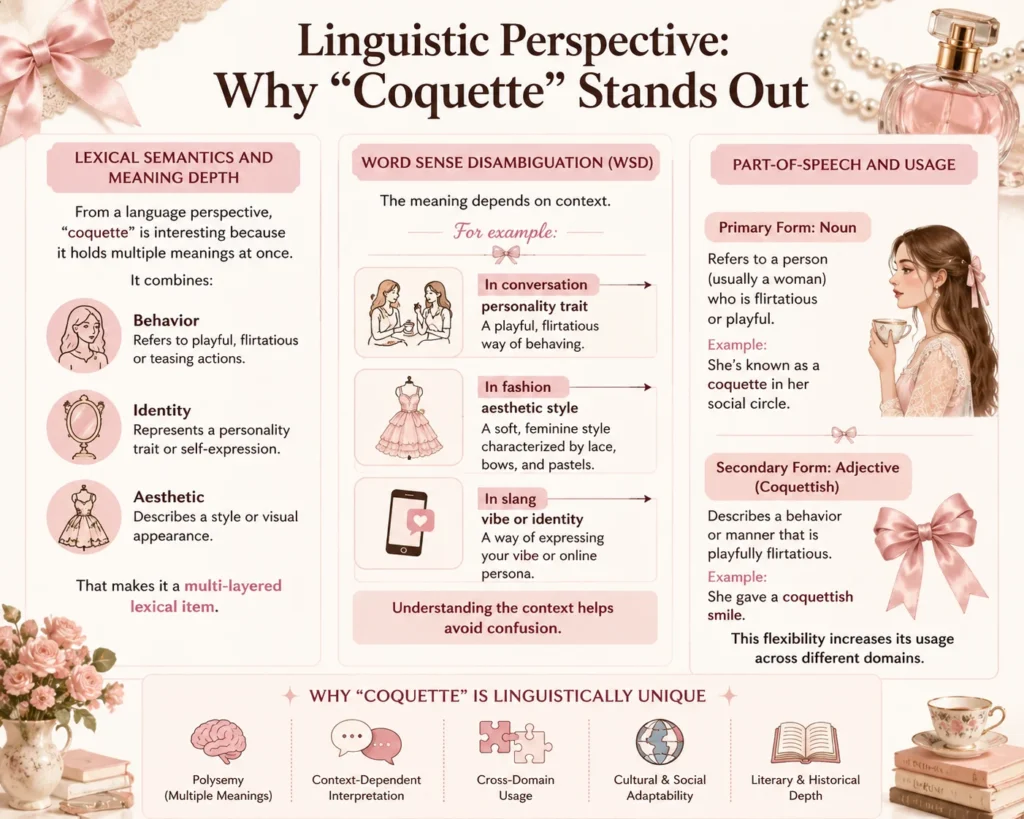
Linguistic Perspective: Why “Coquette” Stands Out
Lexical Semantics and Meaning Depth
From a language perspective, “coquette” is interesting because it holds multiple meanings at once.
It combines:
- Behavior
- Identity
- Aesthetic
That makes it a multi-layered lexical item.
Word Sense Disambiguation (WSD)
The meaning depends on context.
For example:
- In conversation → personality trait
- In fashion → aesthetic style
- In slang → vibe or identity
Understanding the context helps avoid confusion.
Part-of-Speech and Usage
- Primary form: Noun
- Secondary form: Adjective (coquettish)
This flexibility increases its usage across different domains.
Why the Coquette Trend Keeps Growing
Psychological Appeal
The trend works because it aligns with human psychology.
It taps into:
- Curiosity
- Attraction
- Emotional nuance
People are drawn to subtlety.
Visual Simplicity Meets Emotional Depth
The aesthetic looks simple. But it carries emotional weight.
Soft colors. Light fabrics. Gentle expressions.
Together, they create:
- Calm
- Romance
- Nostalgia
Identity and Self-Expression
Modern audiences want more than trends.
They want:
- Identity
- Meaning
- Personal branding
The coquette concept offers all three.
Expert Insight: The Hidden Power of Coquette Energy
It’s About Control, Not Attention
Many people misunderstand this.
A coquette doesn’t seek constant attention.
She controls when and how attention appears.
That control creates:
- Presence
- Influence
- Memorability
Subtlety as a Strength
In a world full of noise, subtlety stands out.
Quiet confidence often feels more powerful than loud expression.
That’s the essence of coquette energy.
Frequently Asked Questions
What does coquette mean in simple terms?
It means a person who flirts playfully or a soft, feminine aesthetic in modern usage.
Is coquette a personality or a style?
Both. It describes behavior and aesthetic.
Why is coquette trending now?
Because people are embracing soft femininity and visual identity.
Can coquette be used for men?
Traditionally no, but modern language is evolving.
What is the difference between coquette and coquettish?
“Coquette” is a noun. “Coquettish” is an adjective describing behavior.
Final Thoughts
Words don’t survive by accident.
“Coquette” stayed relevant because it adapts.
It started as a label for flirtation.
It evolved into a cultural symbol.
Now, it represents something bigger:
- Expression
- Identity
- Intentional presence
And that’s why it continues to grow.
Because at its core, it reflects a simple idea:
How you present yourself shapes how the world responds to you.

Michael Anderson is a content writer specializing in word meanings, definitions and clear explanations of modern terms and phrases.