Last Updated on June 24, 2026
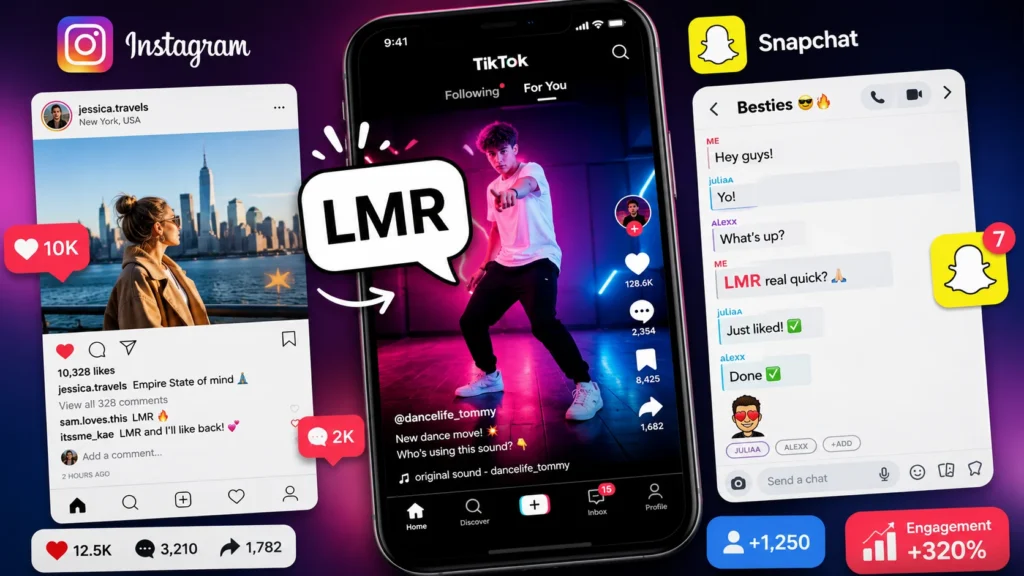
LMR means “Like My Recent.” It’s a popular social media acronym used in texting, Instagram, TikTok, and Snapchat. People use it to ask others to like their latest post, often in exchange for engagement. In rare contexts, LMR can also mean “Last Minute Resistance,” but this is far less common.
You’ve probably seen LMR pop up in a comment or message and wondered what it actually means. It looks simple. Three letters. No explanation.
Here’s the clear answer.
LMR stands for “Like My Recent.”
It’s a direct request. Someone wants you to visit their profile and like their latest post. No guessing needed.
This phrase belongs to the fast-moving world of internet slang and social media shorthand. People shorten everything. Speed matters. Attention spans are short. LMR fits that environment perfectly.
However, context always plays a role. While “Like My Recent” dominates, you might run into other meanings depending on where you see it. We’ll unpack those soon so you don’t misread the situation.
LMR Meaning in Text, Chat, and Online Conversations
LMR rarely appears in formal writing. You won’t see it in emails or professional messages. It lives where conversations move quickly.
Think:
- Instagram comments
- TikTok replies
- Snapchat chats
- WhatsApp messages
- DMs across platforms
It’s part of a bigger language system called digital shorthand.
Why People Use LMR Instead of Full Sentences
Typing a full request feels slow. It breaks the flow.
Compare these:
- “Can you please like my most recent post?”
- “LMR”
The second one wins instantly. It’s faster. It feels native to online culture.
People choose LMR because it is:
- Efficient – saves time
- Recognizable – widely understood
- Casual – fits informal conversations
The Role of Speed in Modern Communication
Online communication runs on speed. Messages fly back and forth. Nobody wants to slow down.
That’s why abbreviations like LMR exist.
Shorter messages keep conversations alive. Longer ones often get ignored.
LMR thrives because it respects that rule.
LMR Meaning on Instagram, TikTok, and Snapchat
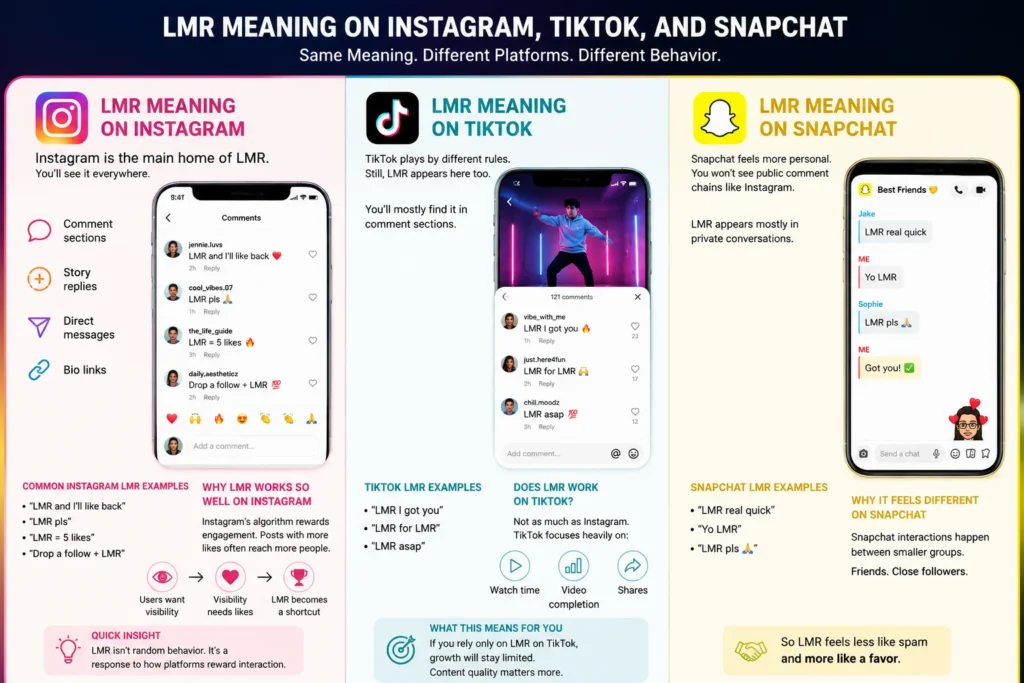
Each platform shapes how people use LMR. The meaning stays consistent, but the behavior shifts.
LMR Meaning on Instagram
Instagram is the main home of LMR. This is where it became popular and where it still dominates.
You’ll see it everywhere:
- Comment sections
- Story replies
- Direct messages
- Bio links
Common Instagram LMR Examples
- “LMR and I’ll like back”
- “LMR pls”
- “LMR = 5 likes”
- “Drop a follow + LMR”
These phrases create a simple exchange. You like their post. They return the favor.
Why LMR Works So Well on Instagram
Instagram’s algorithm rewards engagement. Posts with more likes often reach more people.
That creates a cycle:
- Users want visibility
- Visibility needs likes
- LMR becomes a shortcut
It’s not complicated. It’s strategic.
Quick Insight
LMR isn’t random behavior. It’s a response to how platforms reward interaction.
LMR Meaning on TikTok
TikTok plays by different rules. Still, LMR appears here too.
You’ll mostly find it in comment sections.
TikTok LMR Examples
- “LMR I got you”
- “LMR for LMR”
- “LMR asap”
Does LMR Work on TikTok?
Not as much as Instagram.
TikTok focuses heavily on:
- Watch time
- Video completion
- Shares
Likes matter, but they aren’t the main driver.
So while people use LMR, it carries less weight here.
What This Means for You
If you rely only on LMR on TikTok, growth will stay limited.
Content quality matters more.
LMR Meaning on Snapchat
Snapchat feels more personal. You won’t see public comment chains like Instagram.
LMR appears mostly in private conversations.
Snapchat LMR Examples
- “LMR real quick”
- “Yo LMR”
- “LMR pls 🙏”
Why It Feels Different on Snapchat
Snapchat interactions happen between smaller groups. Friends. Close followers.
So LMR feels less like spam and more like a favor.
Simple Comparison
| Platform | How LMR Is Used | Effectiveness |
|---|---|---|
| Public + comments | High | |
| TikTok | Comments only | Medium |
| Snapchat | Private chats | Low to medium |
How LMR Is Used in Real Conversations
Understanding real usage makes everything clearer.
Let’s break it down.
Everyday LMR Examples
- “LMR and I’ll return”
- “Hey, LMR pls”
- “LMR for spam likes”
- “LMR asap”
- “LMR if you’re active”
What These Examples Reveal
Each message shares the same goal. Get engagement.
However, tone shifts depending on wording.
Tone Breakdown
- Friendly: “LMR pls 😊”
- Neutral: “LMR”
- Transactional: “LMR for LMR”
- Spammy: repeated comments across posts
Tone shapes how people respond.
A Quick Analogy
Think of LMR like this:
It’s the online version of asking someone to clap for you and promising to clap back.
Simple. Direct. Effective in the short term.
Alternative Meanings of LMR (Context Matters)
LMR doesn’t always mean “Like My Recent.” Context changes everything.
Still, alternative meanings are far less common.
LMR Meaning Variations
| Context | Meaning | Popularity |
|---|---|---|
| Social Media | Like My Recent | Extremely high |
| Dating Slang | Last Minute Resistance | Low |
| Forums/Gaming | Varies | Very low |
What Is Last Minute Resistance?
In dating slang, LMR can mean “Last Minute Resistance.”
It refers to hesitation that appears at the last moment in a romantic or physical situation.
Important Clarification
This meaning is:
- Rare in everyday chat
- Highly context-specific
- Often misunderstood
If you see LMR on Instagram or TikTok, it almost always means Like My Recent.
Why LMR Became So Popular
LMR didn’t just appear out of nowhere. It evolved from user behavior.
The Real Driver Behind LMR
Social media platforms reward interaction. The more engagement a post gets, the more visibility it receives.
That leads to one thing.
Users look for shortcuts.
The Growth Loop
- Post content
- Ask for likes
- Gain engagement
- Increase reach
LMR fits perfectly into this loop.
Behavioral Insight
People naturally respond to requests when there’s a benefit.
LMR leverages that.
“You help me, I help you.”
That simple idea fuels its popularity.
Is LMR Spam or Legit?
This question matters more than most people realize.
LMR sits in a gray area.
When LMR Is Acceptable
- Used occasionally
- Sent to friends
- Part of small communities
When LMR Becomes Spam
- Mass commenting
- Copy-paste behavior
- Overuse across posts
Real Impact on Your Profile
Overusing LMR can:
- Damage credibility
- Attract low-quality engagement
- Reduce trust
Key Insight
Not all engagement is good engagement.
Quality matters more than quantity.
Should You Use LMR?
LMR works. But that doesn’t mean you should rely on it.
Pros of LMR
- Fast engagement boost
- Easy to use
- Useful for new accounts
Cons of LMR
- Low-value likes
- No real audience growth
- Can look unprofessional
- Short-term gains only
Honest Conclusion
LMR helps in the beginning. It doesn’t sustain growth.
Better Alternatives to LMR
If you want real results, you need smarter strategies.
High-Impact Alternatives
- Ask engaging questions
- Use emotional storytelling
- Create curiosity hooks
- Encourage natural interaction
Example Comparison
| Weak Approach | Strong Approach |
|---|---|
| LMR | “Double tap if you agree” |
| LMR pls | “Would you try this?” |
| LMR asap | “Tag someone who needs this” |
Why These Work Better
They feel natural. They invite genuine engagement.
People respond because they want to not because they feel obligated.
Common Mistakes People Make with LMR
Most users don’t realize they’re using LMR incorrectly.
Biggest Mistakes
- Overusing it
- Using it on business profiles
- Ignoring context
- Expecting guaranteed returns
What Happens When You Overdo It
People stop engaging. Some may even block you.
That hurts your reach more than it helps.
LMR vs Other Social Media Slang
LMR is just one piece of a larger puzzle.
Comparison Table
| Term | Meaning | Difference |
|---|---|---|
| LMR | Like My Recent | Focused |
| L4L | Like for Like | Broader |
| F4F | Follow for Follow | Long-term exchange |
Key Difference
LMR targets one post. Others focus on general engagement.
LMR Meaning in Texting and Messages
Outside public platforms, LMR still appears in private chats.
Example Messages
- “Hey, LMR real quick”
- “Can you LMR?”
- “LMR and I’ll return”
Why It Works Here
- Quick to type
- Easy to understand
- Fits casual tone
LMR Meaning in WhatsApp and Private Chats
In apps like WhatsApp, usage becomes more selective.
People send it to:
- Friends
- Close followers
- Group chats
Example Usage
- “Guys LMR pls 🙏”
- “LMR and I’ll like yours too”
Psychology Behind LMR Meaning in Social Media
You might think LMR is just a shortcut. Three letters. A simple ask.
But there’s something deeper going on.
LMR works because it taps into basic human psychology. People don’t just respond randomly. They follow patterns.
The Reciprocity Principle
At the core of LMR sits one powerful idea:
If someone does something for you, you feel the urge to return the favor.
This is called reciprocity.
LMR uses it perfectly:
- “Like my recent”
- “I’ll like yours back”
That exchange feels fair. Balanced. Almost automatic.
Social Validation and Micro-Dopamine Hits
Likes are more than numbers. They trigger emotional responses.
Every notification gives a small reward. A quick boost. A signal that people noticed you.
LMR speeds up that reward cycle.
Instead of waiting, users ask for engagement directly.
Fear of Missing Out (FOMO)
LMR also taps into subtle pressure.
When someone sees:
- “LMR ASAP”
- “LMR if you’re active”
It creates urgency.
People don’t want to feel left out. So they act quickly.
Behavioral Summary
| Trigger | How LMR Uses It | Result |
|---|---|---|
| Reciprocity | “I’ll like back” | Mutual engagement |
| Validation | More likes = more value | Emotional reward |
| FOMO | Urgent phrasing | Faster response |
How Social Media Algorithms React to LMR
Here’s where things get technical. And interesting.
Not all engagement helps you grow.
What Algorithms Actually Care About
Most platforms prioritize:
- Watch time
- Meaningful interaction
- Content quality
- User retention
Likes matter. But they’re not everything.
The Problem With LMR Engagement
LMR often creates low-quality signals.
Why?
Because:
- People like posts without interest
- No real interaction follows
- Engagement lacks depth
Example Scenario
Imagine two posts:
Post A
- 100 likes from LMR
- No comments
- No shares
Post B
- 50 likes
- 20 comments
- 10 shares
Post B wins. Every time.
Key Insight
Algorithms reward interest, not obligation.
LMR creates obligation-based engagement. That’s the difference.
Does LMR Help With Growth in 2026?
Let’s answer this clearly.
Short-Term vs Long-Term Impact
| Metric | LMR Impact |
|---|---|
| Likes | High (short-term) |
| Reach | Medium |
| Followers | Low-quality growth |
| Retention | Weak |
When LMR Still Works
- New accounts with zero engagement
- Small friend-based networks
- Early-stage growth testing
When It Stops Working
- Larger accounts
- Brand profiles
- Content-driven pages
Honest Truth
LMR can kickstart visibility. It cannot sustain success.
Advanced Alternatives to LMR (Real Growth Methods)
If you want real engagement, you need to move beyond shortcuts.
Let’s break down what actually works.
Content Hooks That Replace LMR
Strong hooks pull people in without asking.
Examples:
- “You’ve been doing this wrong”
- “Nobody talks about this trick”
- “This changed everything for me”
Emotional Triggers That Drive Engagement
People engage when they feel something.
Use:
- Curiosity
- Surprise
- Relatability
- Humor
Engagement Without Asking Directly
Instead of LMR, try:
- “What would you do here?”
- “Agree or disagree?”
- “Pick one”
These feel natural. Not forced.
Comparison Table
| Strategy | Engagement Quality | Long-Term Growth |
|---|---|---|
| LMR | Low | Weak |
| Hooks | High | Strong |
| Questions | High | Strong |
| Storytelling | Very high | Excellent |
Common LMR Patterns You Should Recognize
Once you understand LMR, you start noticing patterns everywhere.
Popular LMR Formats
- “LMR and I’ll return”
- “LMR for LMR”
- “LMR = likes back”
- “LMR ASAP”
- “LMR pls”
What These Patterns Reveal
They all follow one structure:
Request → Promise → Exchange
That’s the formula.
LMR Meaning in Gen Z and Internet Slang Culture
LMR doesn’t exist alone. It’s part of a bigger language shift.
Why Slang Keeps Evolving
Online communication changes fast.
New terms appear because people want:
- Speed
- Identity
- Belonging
Where LMR Fits In
LMR belongs to a category called functional slang.
This type of slang:
- Has a clear purpose
- Drives action
- Supports platform behavior
Other Functional Slang Examples
| Term | Meaning | Purpose |
|---|---|---|
| L4L | Like for Like | Engagement exchange |
| F4F | Follow for Follow | Growth tactic |
| SFS | Shoutout for Shoutout | Exposure |
Key Insight
LMR isn’t just slang. It’s a tool.
LMR Meaning in Online Communities and Niche Groups
Different communities use LMR differently.
Micro-Communities
In smaller groups:
- LMR feels normal
- Engagement feels mutual
- Trust is higher
Large Public Spaces
In large audiences:
- LMR feels spammy
- People ignore it
- Engagement drops
Why Context Changes Everything
The same phrase can feel helpful in one place and annoying in another.
That’s the power of context.
Mistakes That Kill Your Growth When Using LMR
Some mistakes don’t just hurt. They destroy progress.
Critical Mistakes
- Spamming LMR across posts
- Using it without content quality
- Ignoring audience behavior
- Relying on it as a main strategy
What Happens Over Time
- Engagement drops
- People stop responding
- Algorithm limits reach
Hard Truth
If your content needs LMR to survive, the problem isn’t visibility. It’s value.
FAQs
What does LMR mean in chat?
LMR means Like My Recent. It’s used to ask someone to like your latest social media post.
What does LMR mean in texting?
In texting, LMR keeps the same meaning. It’s a quick request for engagement.
What is LMR slang meaning?
LMR slang meaning is Like My Recent, commonly used on Instagram, TikTok, and Snapchat.
What does LMR stand for?
LMR stands for Like My Recent.
Is LMR still popular?
Yes, but its effectiveness is declining as platforms prioritize real engagement.
Is LMR bad for your account?
Not always. But overusing it can harm your credibility and growth.
Final Takeaway
LMR looks small. It feels simple. But it reveals how social media really works.
It shows:
- How people chase attention
- How platforms reward behavior
- How shortcuts shape interaction
Use it if you must. But don’t depend on it.
Because in the long run, the accounts that win don’t ask for attention.
They earn it.

Sophia Bennett is a professional writer focused on explaining word meanings, expressions and everyday language in a simple and engaging way.