
Last Updated on June 5, 2026
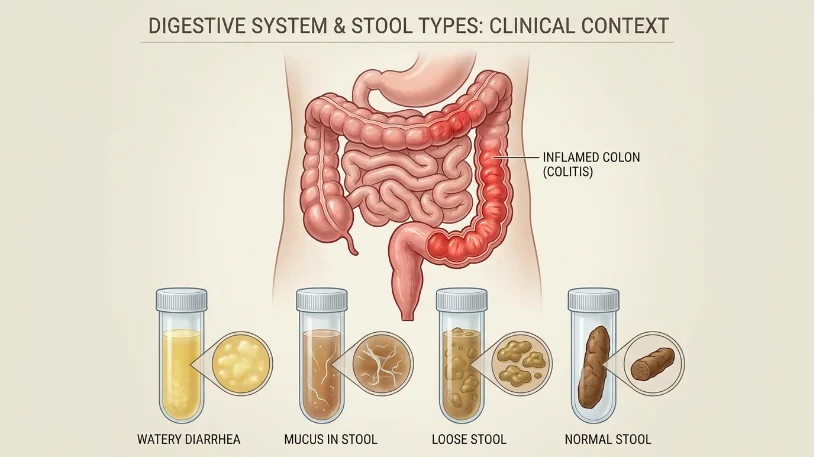
C. diff poop usually appears as frequent, watery diarrhea that has a strong foul smell and may contain mucus or a yellow-green tint. It often occurs after antibiotic use and is linked with abdominal cramping, dehydration, and urgent bowel movements. Unlike normal diarrhea, C. diff stool is more persistent, more watery, and occurs multiple times per day, sometimes with signs of colon inflammation such as mucus or blood. If you notice these symptoms, especially after antibiotics, you should contact a healthcare provider for stool testing.
What Does C Diff Poop Look Like?
C. diff poop is not just “bad diarrhea.” It is a very specific type of bowel movement linked to a bacterial infection called Clostridioides difficile infection. This infection disrupts your gut microbiome and triggers inflammation in your colon.
When you understand what C. diff stool looks like, you can act faster. And with this infection, timing matters.
Let’s break it down in a simple but detailed way so you know exactly what to look for in real life.
Understanding C. diff Infection and Why Stool Changes Happen
C. diff is a bacterial infection in the intestines that usually appears after antibiotic use. Antibiotics kill “good” gut bacteria, which normally keep harmful bacteria under control.
When that balance breaks, C. diff can grow rapidly and release toxins that irritate the colon lining.
That irritation leads to:
- Watery diarrhea
- Frequent bowel movements
- Strong stool odor
- Mucus in stool
- Abdominal pain and cramping
The stool changes happen because your digestive system cannot absorb water properly while the colon is inflamed.
What Does C Diff Poop Look Like in Real Life?
C. diff stool has a very recognizable pattern, especially when the infection becomes active.
Typical Appearance of C. diff Stool
People often describe C. diff poop as:
- Extremely watery
- Yellow, green, or brown liquid stool
- Loose stool with no solid form
- Frequent and urgent bowel movements
- Sometimes containing mucus or a slimy texture
Unlike normal diarrhea, it doesn’t “settle down” after a day or two. It continues or worsens.
Key Visual Clues
If you are trying to identify C. diff stool appearance, look for:
- Stool that looks like “dirty water”
- Pale yellow watery diarrhea
- Greenish fluid-like stool
- Floating or frothy appearance
- Sticky mucus strands in stool
C Diff Stool Color: What It Usually Looks Like
Color alone does not confirm infection, but it gives strong clues.
Common Colors Seen in C. diff Stool
| Stool Color | What It May Indicate in C. diff |
| Yellow | Very common in watery diarrhea cases |
| Green | Rapid intestinal transit, bile not processed |
| Brown (liquid) | Severe diarrhea with gut inflammation |
| Pale or clay-like | Possible bile disruption (less common) |
Important Insight
C. diff stool color can vary depending on:
- Diet
- Hydration level
- Infection severity
- Gut speed (how fast food moves through intestines)
So color alone is not enough. You always combine it with consistency and frequency.
C Diff Stool Consistency: The Biggest Warning Sign
If there is one defining feature of C. diff poop, it is consistency.
How It Feels and Looks
C. diff stool is usually:
- Completely watery
- Thin like urine or soup
- Unformed with no solid pieces
- Sometimes foamy or frothy
- Mixed with mucus in severe cases
Why It Happens
The toxins released by C. diff bacteria damage the colon lining. This prevents normal water absorption, so fluid stays in the stool instead of being absorbed.
That is why it becomes so watery and uncontrollable.
C Diff Smell: One of the Strongest Clues
One of the most talked-about symptoms is the smell.
What C. diff stool smells like
People often describe it as:
- Extremely foul
- Rotten or sulfur-like
- Stronger than normal diarrhea
- Unusual and persistent odor
Why the smell is so strong
The infection produces toxins and disrupts normal gut bacteria. This leads to:
- Abnormal fermentation in the gut
- High bacterial byproducts
- Rapid digestion of undigested food
The result is a smell that stands out even in typical diarrhea cases.
Frequency of C. diff Bowel Movements
C. diff is not just about appearance. It also changes how often you go.
Typical pattern
People with C. diff often experience:
- 3 to 10+ bowel movements per day
- Sudden urgent need to go
- Inability to control timing
- Night-time diarrhea episodes
Why frequency increases
Inflammation in the colon causes:
- Reduced water absorption
- Increased intestinal movement
- Constant irritation signals to the brain
This creates a cycle of frequent diarrhea that does not easily stop.
Mucus in C. diff Stool
Mucus is a key sign many people overlook.
What it looks like
- Slimy strands in stool
- Clear or whitish gel-like substance
- Stringy appearance mixed with diarrhea
Why mucus appears
The colon produces mucus when it is inflamed. In C. diff infection, the intestinal lining becomes irritated, causing excess mucus production.
C. diff Stool vs Normal Diarrhea
Not all diarrhea is C. diff. Here is how you can compare.
Comparison Table
| Feature | C. diff Stool | Normal Diarrhea |
| Duration | Lasts days to weeks | Usually 1–3 days |
| Frequency | Very high (multiple daily) | Moderate |
| Smell | Extremely foul | Mild to strong |
| Mucus | Common | Rare |
| Trigger | Antibiotics, infection | Food, virus, stress |
| Consistency | Pure watery liquid | Loose but sometimes formed |
C. diff vs Antibiotic-Associated Diarrhea
This comparison matters because they look similar.
Key difference
- Antibiotic-associated diarrhea is usually mild
- C. diff is severe, persistent, and worsening
Signs it may be C. diff instead
- Diarrhea continues after stopping antibiotics
- Severe abdominal pain appears
- Stool becomes fully watery and frequent
- Fever may develop
Other Symptoms That Accompany C. diff Stool
C. diff is not just a stool problem. It affects the whole digestive system.
Common symptoms include:
- Abdominal cramping
- Lower stomach pain
- Fever in some cases
- Loss of appetite
- Nausea
- Dehydration signs (dry mouth, dizziness)
Why these happen
The infection causes inflammation in the colon and intestines, which affects digestion and water balance.
What Causes C. diff Infection?
Understanding the cause helps you understand the stool changes.
Main causes
- Recent antibiotic use
- Hospital or healthcare exposure
- Weakened gut microbiome
- Long-term illness or immune weakness
How it spreads
C. diff spores can survive on surfaces and spread through:
- Hands
- Contaminated objects
- Healthcare environments
Risk Factors for C. diff Infection
Some people are more likely to develop it.
Higher risk groups:
- Adults over 65
- People on antibiotics
- Hospitalized patients
- Individuals with weakened immunity
- People with previous C. diff infection
How C. diff Is Diagnosed
You cannot confirm C. diff just by stool appearance.
Medical testing includes:
- Stool sample test for toxins
- PCR test for bacterial DNA
- Clinical symptom evaluation
Why testing is necessary
Other conditions can look similar, such as:
- Food poisoning
- Viral gastroenteritis
- IBS flare-ups
Only a lab test confirms infection.
When You Should See a Doctor
C. diff can become serious if ignored.
Seek medical help if you notice:
- Watery diarrhea more than 3 times daily for 2+ days
- Severe abdominal pain
- Blood or mucus in stool
- Signs of dehydration
- Symptoms after antibiotic use
Emergency warning signs
- Confusion or weakness
- Severe dehydration
- High fever
- Rapid heartbeat
Treatment for C. diff Infection
Treatment depends on severity, but it must be guided by a healthcare provider.
Common treatment approaches
- Specific antibiotics targeting C. diff
- Hydration therapy
- Electrolyte replacement
- Probiotic support (in some cases)
Important note
Do not self-treat persistent diarrhea after antibiotics. C. diff requires medical management.
Recovery Timeline for C. diff Stool Normalization
Recovery is not instant.
Typical timeline
| Stage | What happens |
| 1–3 days | Treatment begins, diarrhea may continue |
| 4–7 days | Stool frequency starts reducing |
| 1–3 weeks | Stool becomes more formed |
| 4+ weeks | Gut microbiome slowly stabilizes |
Why recovery takes time
Your gut bacteria need time to rebuild after infection and antibiotic disruption.
How to Prevent C. diff Infection
Prevention focuses on gut health and hygiene.
Practical prevention steps:
- Use antibiotics only when necessary
- Wash hands properly with soap
- Avoid unnecessary hospital exposure
- Support gut health with fiber-rich foods
- Stay hydrated
C. diff Stool Characteristics Summary Table
| Feature | C. diff Stool Pattern |
| Color | Yellow, green, brown liquid |
| Consistency | Watery, unformed |
| Smell | Extremely foul |
| Frequency | 3–10+ times daily |
| Mucus | Often present |
| Duration | Persistent, worsening |
FAQs
What does C. diff poop look like?
It looks like watery, frequent diarrhea that may be yellow, green, or brown with a very strong foul smell.
Does C. diff cause watery diarrhea?
Yes, watery diarrhea is the most common symptom of C. diff infection.
Can C. diff cause mucus in stool?
Yes, mucus often appears due to colon inflammation.
What does C. diff smell like?
It usually has a strong, foul, and unusual odor compared to normal diarrhea.
How can you tell if you have C. diff?
You cannot confirm it visually. Stool testing by a healthcare provider is required.
Final Thoughts
C. diff poop is not just loose stool. It is a pattern of watery, frequent, foul-smelling diarrhea often triggered after antibiotics and linked to colon inflammation.
If you notice these symptoms, especially together, it is not something to ignore. The stool itself becomes a signal your gut is under serious stress, and early medical attention makes a major difference in recovery.

Michael Anderson is a content writer specializing in word meanings, definitions and clear explanations of modern terms and phrases.