
Last Updated on June 3, 2026
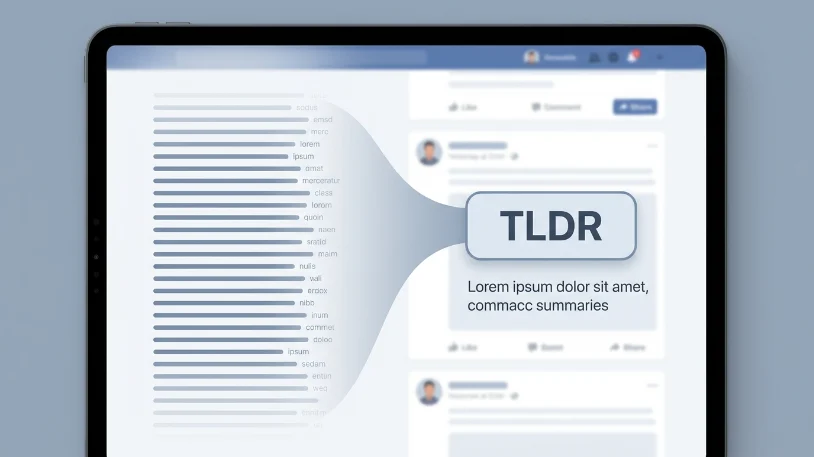
TLDR means “Too Long; Didn’t Read.” It’s an internet slang abbreviation used to summarize long content in a short, easy to read sentence. People use TLDR in text messages, social media, emails, and online articles to give quick takeaways without reading the full content.
TLDR stands for “Too Long; Didn’t Read.”
It’s a simple phrase people use when:
- A piece of content feels too long
- They want a quick summary
- They need the main point fast
You’ll usually see it written like this:
TLDR: This article explains what TLDR means and how to use it.
In plain terms, TLDR acts like a shortcut. Instead of reading everything, you get the key idea in seconds.
TLDR Meaning Explained in Simple Terms
When someone writes TLDR, they’re doing one of two things:
- Admitting they didn’t read something long
- Providing a short summary for others
It depends on context.
Two Core Meanings:
| Situation | Meaning |
|---|---|
| Reader uses TLDR | “I didn’t read all of this.” |
| Writer uses TLDR | “Here’s a short summary.” |
That dual meaning makes TLDR powerful and slightly tricky.
TLDR Full Form and Abbreviation Meaning
Let’s break it down word by word:
- Too Long → The content is lengthy
- Didn’t Read → The reader skipped it
Put together:
Too Long; Didn’t Read = A response to long content or a summary of it
Key Facts:
- It’s an informal abbreviation
- It belongs to internet slang
- It works across multiple platforms
Where Did TLDR Come From?
TLDR didn’t appear overnight. It evolved from early internet culture.
Back when online forums dominated discussions, people posted long paragraphs. Others didn’t always have the patience to read everything.
So they responded with:
“TLDR”
That phrase spread quickly.
Later, writers flipped the idea. Instead of complaining, they added summaries at the top or bottom of posts.
Platforms That Popularized TLDR:
Today, TLDR appears almost everywhere.
How TLDR Is Used Online
TLDR solves a modern problem: too much information, too little time.
Let’s look at real-world usage.
TLDR Meaning in Text Messages
In texting, TLDR keeps things short.
Example:
“That story was long TLDR please?”
Or:
“TLDR: He canceled the plan last minute.”
It saves time and keeps conversations moving.
TLDR Meaning in Chat
In chats, especially group chats, long messages can overwhelm people.
So someone might say:
“TLDR?”
That means:
“Give me the short version.”
TLDR Meaning in Social Media
Social media thrives on speed.
People scroll fast. They don’t read everything.
So creators use TLDR to keep attention.
Example:
- Long post explaining something
- Followed by:
TLDR: This product isn’t worth the price.
TLDR Meaning in Emails
Yes, TLDR shows up in emails too.
Especially in:
- Startups
- Tech teams
- Internal communication
Example:
Subject: Project Update
Body:
Detailed explanation
TLDR: Project delayed by 2 days due to server issues.
It helps busy readers stay informed.
Different Ways to Write TLDR
People don’t always write it the same way.
Common Formats:
- TLDR
- TL;DR
- tldr
- tl;dr:
Which One Should You Use?
| Format | Best Use |
|---|---|
| TLDR | Casual writing |
| TL;DR | Slightly formal |
| tldr | Informal chat |
| tl;dr: | When adding a summary |
In most cases, the difference doesn’t matter much. Context matters more.
How to Use TLDR Correctly
Using TLDR well takes a bit of skill.
You want clarity. Not confusion.
Simple Rules for TLDR Usage
- Keep it short
- Focus on the main idea
- Avoid adding new information
- Place it where readers can easily see it
Good vs Bad TLDR Examples
Bad TLDR:
TLDR: Stuff happened.
Too vague. Useless.
Good TLDR:
TLDR: The meeting got postponed to Friday due to scheduling conflicts.
Clear. Direct. Helpful.
TLDR Examples in Real Life
Let’s make this practical.
Example: Social Media Post
Long post about a product experience
TLDR: Great features, but battery life is poor.
Example: Work Email
Detailed report
TLDR: Sales increased by 12% this quarter.
Example: Blog Article
Long guide
TLDR: Follow these 5 steps to improve your writing.
Example: Casual Chat
Friend sends a long story
“TLDR bro 😂”
That means:
“I didn’t read all that.”
When You Should NOT Use TLDR
TLDR works well. But not always.
Avoid TLDR In These Situations:
- Formal documents (academic papers, legal writing)
- Sensitive topics (serious conversations)
- Very short messages
- Professional settings with strict tone
Why It Can Backfire
Sometimes TLDR sounds dismissive.
It may feel like:
- You didn’t care enough to read
- You’re rushing the conversation
So use it carefully.
TLDR vs Summary: What’s the Difference?
They look similar. They aren’t identical.
Comparison Table
| Feature | TLDR | Summary |
|---|---|---|
| Tone | Casual | Neutral/Formal |
| Length | Very short | Can be longer |
| Usage | Internet slang | Academic/professional |
| Purpose | Quick takeaway | Detailed overview |
Simple Way to Think About It
- TLDR = Quick shortcut
- Summary = Full explanation in shorter form
Why TLDR Became So Popular
This isn’t random.
It reflects how people consume information today.
Key Reasons Behind Its Popularity
- Short attention spans
- Information overload
- Fast scrolling habits
- Need for quick value
A Simple Analogy
Think of TLDR like a movie trailer.
You don’t watch the whole film.
You just get the highlights.
Psychology Behind TLDR Usage
There’s a deeper reason people love TLDR.
Cognitive Behavior Insights
- The brain prefers quick rewards
- Long content feels like effort
- Short summaries reduce mental load
What This Means
People don’t hate reading.
They just want:
- Faster insights
- Clear takeaways
- Less effort
TLDR delivers all three.
Similar Internet Slang to Know
If you understand TLDR, you’ll likely see these too.
Common Internet Abbreviations
| Term | Meaning |
|---|---|
| ELI5 | Explain Like I’m 5 |
| IMO | In My Opinion |
| FWIW | For What It’s Worth |
| SMH | Shaking My Head |
Why These Matter
They shape how people communicate online.
Short. Fast. Efficient.
How TLDR Fits Into Modern Communication
TLDR isn’t just slang anymore.
It’s becoming part of structured communication.
Where It’s Common Now
- Business emails
- Online articles
- Product descriptions
- Internal reports
Why Professionals Use It
Because it:
- Saves time
- Improves clarity
- Highlights key points
Best Practices for Writing Effective TLDRs
Want to write better TLDRs?
Follow this.
Checklist
- One or two sentences max
- Clear takeaway
- No fluff
- No repetition
- Easy to understand
Pro Tip
Write your TLDR last.
That way, you already know the key message.
TLDR in SEO and Content Writing
This is where things get interesting.
Why TLDR Helps SEO
- Improves user experience
- Reduces bounce rate
- Helps readers stay longer
- Matches search intent
Where to Place TLDR in Articles
- Top (for quick answers)
- Bottom (for summary)
- Both (for maximum clarity)
Common Mistakes People Make With TLDR
Avoid these.
Mistakes List
- Writing too much
- Being too vague
- Adding new info
- Using it in the wrong tone
- Forgetting clarity
TLDR Meaning in Email Communication
Let’s zoom into emails again.
Why It Works in Emails
People skim emails.
They don’t read everything.
So TLDR helps them:
- Understand quickly
- Take action faster
Example Email Structure
- Opening
- Details
- TLDR summary
- Action point
Is TLDR Rude or Polite?
It depends.
When It Feels Rude
- Replying “TLDR” alone
- Ignoring someone’s effort
- Using it sarcastically
When It’s Helpful
- Providing summaries
- Helping busy readers
- Clarifying long content
Simple Rule
If it adds value, it’s fine.
If it dismisses effort, avoid it.
TLDR Meaning With Examples in Sentences
Let’s make it crystal clear.
Examples
- “TLDR: The event got canceled.”
- “I didn’t read it, TLDR.”
- “Here’s the TLDR version.”
- “TLDR: Save money by switching plans.”
What Does TLDR Mean in Texting and Chat?
In texting and chat, TLDR means speed.
Why People Use It
- Quick replies
- Less typing
- Faster understanding
Typical Scenario
Someone sends a long message.
You reply:
“TLDR?”
That means:
“Summarize it.”
Future of TLDR in Digital Communication
TLDR isn’t going anywhere.
Trends Showing Its Growth
- Short-form content dominance
- AI summaries
- Faster communication tools
What to Expect
More platforms will:
- Auto-generate TLDRs
- Highlight key points
- Reduce reading time
Final Thoughts
Let’s wrap it up clearly.
- TLDR means “Too Long; Didn’t Read.”
- It summarizes long content into short insights
- It’s widely used in text, chat, emails, and social media
- It saves time and improves communication

Michael Anderson is a content writer specializing in word meanings, definitions and clear explanations of modern terms and phrases.