Last Updated on June 8, 2026
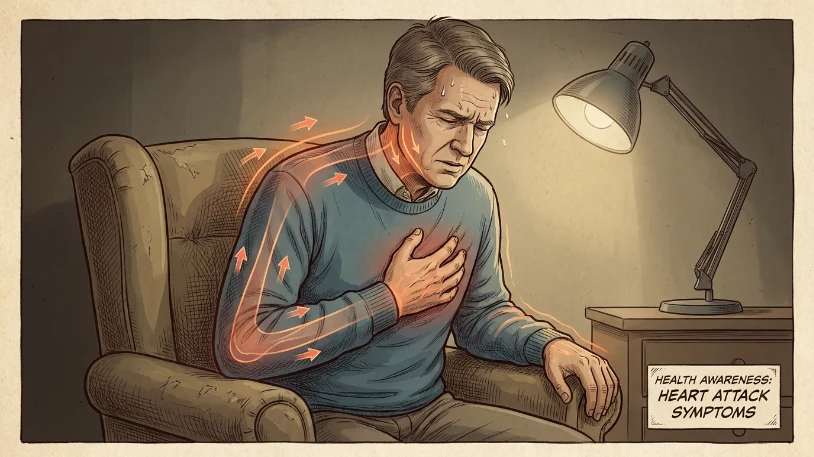
A heart attack often feels like pressure, tightness, or discomfort in the chest rather than sharp pain. Many people describe it as a heavy weight sitting on their chest. The sensation may spread to the arm, jaw, neck, or back. Other common symptoms include shortness of breath, nausea, cold sweats, dizziness, and unusual fatigue. Symptoms can vary widely, especially in women, and some people experience little to no chest pain at all.
You expect pain to be obvious. Sharp. Unmistakable.
A heart attack doesn’t always follow that script.
Sometimes it creeps in quietly. A strange pressure. A dull ache. Something feels off, yet you can’t quite explain it. Other times, it hits like a truck. Crushing. Intense. Impossible to ignore.
Here’s the truth most people miss: there is no single way a heart attack feels. And that uncertainty is exactly what makes it dangerous.
Let’s break it down in a way that actually helps you recognize it when it matters.
The Core Feeling: Chest Pain, Pressure, or Something Else?
When people ask, what does a heart attack feel like, they’re usually thinking about chest pain. That’s a good starting point, but it’s not the whole picture.
Most people don’t describe it as “pain” at first.
Instead, they say things like:
- “It felt like someone was sitting on my chest.”
- “There was a tight band wrapped around my chest.”
- “I felt pressure, not pain.”
Common Chest Sensations
| Sensation | What It Feels Like |
|---|---|
| Pressure | Heavy weight pressing down |
| Tightness | Chest feels constricted or squeezed |
| Burning | Similar to severe heartburn |
| Fullness | Uncomfortable swelling feeling |
| Mild discomfort | Easy to ignore at first |
Notice something? None of these sound dramatic. That’s the problem.
A heart attack can feel deceptively mild in the beginning. You might shrug it off as indigestion or stress. Minutes pass. Then it gets worse.
Pain That Moves: Why It Doesn’t Stay in One Place
One of the most confusing aspects of heart attack symptoms is how the discomfort spreads.
It rarely stays in your chest.
Where the Pain Can Travel
- Left arm (classic sign)
- Both arms
- Jaw
- Neck
- Upper back
- Shoulders
This happens because of shared nerve pathways. Your brain struggles to pinpoint the exact source, so it “projects” the pain to nearby areas.
Key Insight
You might feel arm pain without chest pain.
You might feel jaw discomfort and think it’s dental.
That’s why people miss it.
Shortness of Breath: The Silent Alarm
Not all symptoms scream for attention. Some whisper.
Shortness of breath is one of them.
You might notice:
- Difficulty breathing during rest
- Feeling winded after minimal activity
- A sense you can’t get enough air
Sometimes it shows up before chest discomfort. Other times, it replaces it entirely.
“It felt like I ran a marathon, but I was just sitting.”
That’s not normal. And it’s not something to ignore.
The Overlooked Symptoms People Dismiss
Here’s where things get tricky. Many heart attack symptoms don’t look like heart problems at all.
Commonly Ignored Warning Signs
- Cold sweats
Sudden sweating without exertion - Nausea or vomiting
Often mistaken for food poisoning - Dizziness or lightheadedness
Feels like you might faint - Extreme fatigue
Especially unusual or unexplained - Anxiety or unease
A sense that something is wrong
These symptoms often appear together. Not always. Sometimes just one shows up.
That’s enough.
What Does a Heart Attack Feel Like in Women?
Women experience heart attack symptoms differently more often than you might expect.
Instead of classic chest pain, many report subtle, scattered symptoms.
Typical Symptoms in Women
- Unusual fatigue (days or weeks before)
- Sleep disturbances
- Shortness of breath
- Back, neck, or jaw pain
- Nausea or indigestion-like feeling
- Mild chest discomfort instead of severe pain
Why This Matters
Women are more likely to:
- Misinterpret symptoms
- Delay seeking help
- Be misdiagnosed initially
That delay can be dangerous.
Silent Heart Attacks: When You Barely Feel Anything
Not every heart attack announces itself.
Some barely make a sound.
A silent heart attack causes damage to the heart but produces minimal or no noticeable symptoms.
What It Might Feel Like
- Mild discomfort that comes and goes
- Slight fatigue
- Brief shortness of breath
- A feeling of “something off”
Who Is at Higher Risk
- People with diabetes
- Older adults
- Those with previous heart conditions
You might not realize it happened until much later. Sometimes during a routine checkup.
Heart Attack vs Anxiety vs Heartburn
Here’s where confusion peaks.
Many people experiencing a heart attack believe they’re having:
- A panic attack
- Acid reflux
- Muscle strain
Let’s clarify.
Comparison Table
| Condition | Key Feeling | Duration | Trigger |
|---|---|---|---|
| Heart Attack | Pressure, tightness | Persistent or worsening | Can occur at rest |
| Anxiety Attack | Rapid heartbeat, fear | Peaks quickly, then fades | Stress or panic |
| Heartburn | Burning in chest | Often after eating | Food-related |
Critical Difference
A heart attack does not improve with rest.
It often gets worse.
What Happens Inside the Body
A heart attack isn’t random. It follows a clear chain reaction.
Simple Breakdown
- A coronary artery gets blocked
- Blood flow to the heart muscle drops
- Oxygen supply decreases
- Heart tissue begins to die
That lack of oxygen creates the sensations you feel.
Pressure. Tightness. Pain.
How Long Does a Heart Attack Last?
There’s no fixed timeline.
Some last minutes. Others stretch for hours.
Typical Progression
- Early discomfort
- Gradual worsening
- Peak intensity
- Persistent symptoms
Ignoring symptoms allows more damage.
When Symptoms Start: Fast vs Slow Onset
Not all heart attacks begin the same way.
Two Common Patterns
Gradual Onset
- Mild discomfort builds over time
- Symptoms fluctuate
Sudden Onset
- Intense pain appears quickly
- Immediate distress
Both are serious.
What to Do During a Heart Attack
This is where knowledge turns into action.
Immediate Steps
- Call emergency services right away
- Sit down and stay calm
- Chew aspirin (if not allergic)
- Loosen tight clothing
What Not to Do
- Don’t wait to see if it passes
- Don’t drive yourself
- Don’t ignore mild symptoms
Time lost is heart muscle lost.
Real-Life Symptom Scenarios
Sometimes examples make things clearer.
Scenario 1: Classic Symptoms
Heavy chest pressure. Pain spreading to left arm. Cold sweat. Immediate distress.
Scenario 2: Subtle Signs
Mild chest discomfort. Nausea. Fatigue. Mistaken for indigestion.
Scenario 3: No Chest Pain
Shortness of breath. Jaw pain. Dizziness. Confusing and easy to dismiss.
Who Is at Risk?
Understanding risk helps you stay alert.
Major Risk Factors
- High blood pressure
- Smoking
- Diabetes
- High cholesterol
- Obesity
- Family history
Quick Risk Table
| Risk Factor | Impact |
|---|---|
| Smoking | Damages arteries |
| Diabetes | Affects nerve signals |
| High BP | Strains heart |
| Cholesterol | Causes blockages |
Quick Symptom Checklist
Scan this fast.
Chest-Related
- Pressure
- Tightness
- Burning
Non-Chest Symptoms
- Shortness of breath
- Nausea
- Fatigue
- Dizziness
Emergency Signs
- Pain spreading to arm or jaw
- Cold sweats
- Severe discomfort
Why People Delay Getting Help
Even when symptoms appear, many hesitate.
Common Reasons
- “It’s probably nothing”
- Fear of embarrassment
- Misreading symptoms
- Waiting for it to pass
That delay costs lives.
Frequently Asked Questions
What does a heart attack feel like for most people?
Most people feel pressure, tightness, or discomfort in the chest, not sharp pain. It often feels like a heavy weight pressing down.
However, it rarely stops there. You might also notice:
- Pain spreading to the arm, jaw, or back
- Shortness of breath
- Nausea or sweating
Some describe it as “something isn’t right” rather than intense pain. That vague feeling matters.
Can a heart attack feel mild or not painful at all?
Yes, and this surprises people.
A heart attack can feel:
- Mild discomfort
- Slight chest pressure
- Unusual fatigue
- Indigestion-like sensation
These are often called mild heart attack symptoms or even silent heart attacks.
Mild doesn’t mean harmless.
Even a small blockage can cause serious damage if ignored.
What does a heart attack feel like in women?
Women often experience less obvious symptoms, which makes recognition harder.
Common signs include:
- Extreme fatigue
- Shortness of breath
- Back, neck, or jaw pain
- Nausea or dizziness
- Mild chest discomfort instead of severe pain
Many women don’t feel the “classic” crushing chest pain. Instead, symptoms feel scattered and confusing.
How do I know if it’s a heart attack or anxiety?
It’s not always easy to tell, but there are clues.
Heart Attack
- Chest pressure or tightness
- Pain spreads to other areas
- Symptoms don’t fade quickly
- Can happen at rest
Anxiety Attack
- Rapid heartbeat
- Intense fear or panic
- Symptoms peak quickly then ease
- Often linked to stress
Here’s the key point:
If you’re unsure, treat it like a heart attack. Don’t try to guess.
Can a heart attack feel like heartburn or indigestion?
Yes, very often.
A heart attack can feel like:
- Burning in the chest
- Fullness after eating
- Upper stomach discomfort
This overlap causes dangerous delays.
Difference to watch for:
- Heartburn usually improves with antacids
- Heart attack discomfort often persists or worsens
If it feels unusual or stronger than normal, don’t ignore it.
How long do heart attack symptoms last?
They can last:
- A few minutes
- Several hours
- Or come and go in waves
Symptoms often build over time, rather than disappearing.
If discomfort lasts more than a few minutes, take it seriously.
Can you have a heart attack without chest pain?
Yes. This happens more often than people think.
You might only feel:
- Shortness of breath
- Fatigue
- Nausea
- Jaw or back pain
This is more common in:
- Women
- Older adults
- People with diabetes
That’s why focusing only on chest pain is risky.
What are the early warning signs of a heart attack?
Some signs appear hours or even days before.
Look for:
- Unusual fatigue
- Sleep problems
- Mild chest discomfort
- Shortness of breath
- General feeling of unease
These early signs often get brushed off. They shouldn’t be.
Does a heart attack always happen suddenly?
No. Some are sudden. Others build slowly.
Two patterns exist:
- Gradual: symptoms develop over hours or days
- Sudden: intense symptoms hit quickly
Both are dangerous. Slow onset can be easier to ignore.
What should I do if I think I’m having a heart attack?
Act immediately. Don’t wait.
- Call emergency services right away
- Sit down and stay calm
- Chew aspirin if appropriate
- Unlock your door if possible
Do not:
- Drive yourself
- Wait for symptoms to pass
- Assume it’s something minor
Can young people have heart attacks?
Yes, although risk increases with age.
Younger people may still be affected due to:
- Smoking
- Obesity
- High stress
- Genetic factors
Symptoms feel similar, though they may be dismissed more easily.
Is left arm pain always a heart attack?
No, but it’s a classic warning sign.
Left arm pain becomes concerning when it appears with:
- Chest discomfort
- Shortness of breath
- Sweating or nausea
On its own, it may have other causes. Combined with other symptoms, it’s a red flag.
Why do people ignore heart attack symptoms?
Because symptoms often don’t match expectations.
People think:
- “It’s not painful enough”
- “I’m too young”
- “It’s just stress or food”
This hesitation delays treatment.
Can a heart attack go away on its own?
Symptoms may temporarily ease, but the problem doesn’t.
The blocked artery remains.
Damage continues unless treated.
Waiting only makes it worse.
What does a mild heart attack feel like compared to a severe one?
Mild Heart Attack
- Light chest discomfort
- Fatigue
- Subtle symptoms
Severe Heart Attack
- Intense chest pressure
- Pain spreading widely
- Severe shortness of breath
The danger lies in this:
Mild symptoms still cause real damage.
When should I call emergency services for chest pain?
Call immediately if you notice:
- Chest pressure lasting more than a few minutes
- Pain spreading to arm, jaw, or back
- Shortness of breath
- Cold sweats or nausea
Don’t wait for all symptoms to appear.
Final Thought
People search what does a heart attack feel like because they want certainty.
But heart attacks don’t offer certainty. They offer signals.
Some loud. Some quiet.
The smartest move isn’t guessing correctly.
It’s acting quickly when something feels off.

Michael Anderson is a content writer specializing in word meanings, definitions and clear explanations of modern terms and phrases.