
Last Updated on June 9, 2026
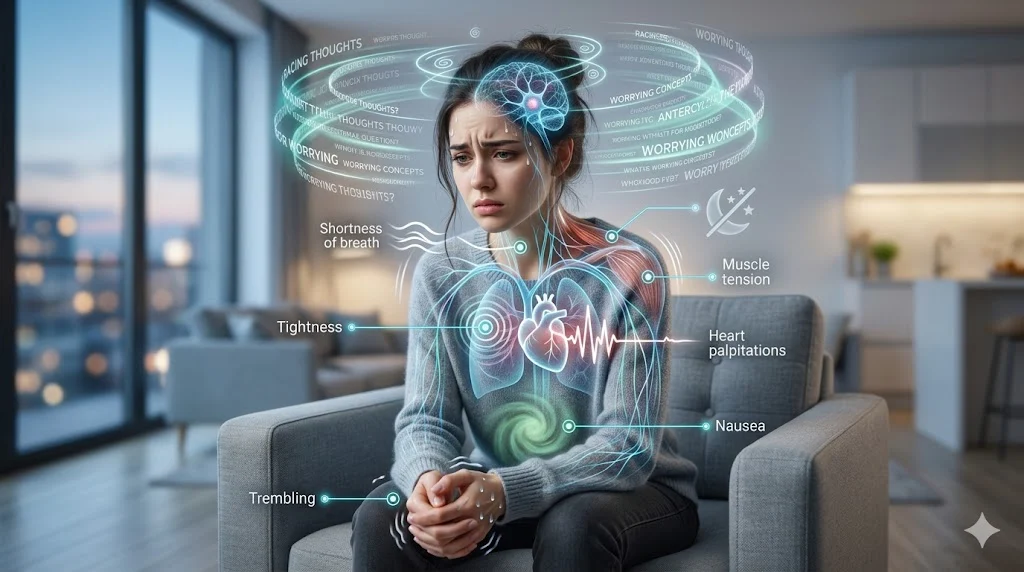
What does anxiety feel like? Anxiety often feels like a combination of constant worry, nervousness, racing thoughts, and physical discomfort. Many people experience a rapid heartbeat, chest tightness, shortness of breath, nausea, dizziness, muscle tension, restlessness, and a persistent sense of dread. Anxiety can affect the mind, body, and emotions simultaneously, ranging from mild nervousness to severe anxiety symptoms that interfere with daily life.
What Does Anxiety Feel Like?
Have you ever felt nervous before a major presentation, worried about an important phone call, or unable to stop thinking about a problem?
Most people have.
Now imagine those feelings becoming stronger, lasting longer, and appearing even when nothing dangerous is happening.
That is often what anxiety feels like.
Anxiety is much more than ordinary nervousness. It can affect how you think, how you feel emotionally, and even how your body functions. Some people experience anxiety as a constant background hum of worry. Others describe it as an intense wave of fear that seems to come from nowhere.
For many individuals, anxiety creates a confusing mix of emotional distress, physical symptoms, and overwhelming thoughts that can make everyday situations feel far more difficult than they should.
Understanding what anxiety feels like can help you recognize symptoms in yourself or someone you care about.
Understanding Anxiety and Why It Happens
Anxiety Is a Natural Human Response
Anxiety is not always a bad thing.
In fact, anxiety exists for a reason.
Thousands of years ago, humans depended on a survival system that helped them respond quickly to threats. When danger appeared, the brain released stress hormones that prepared the body to fight, flee, or protect itself.
This reaction is known as the fight-or-flight response.
When functioning properly, anxiety helps people:
- Stay alert
- Recognize danger
- Make quick decisions
- Protect themselves
- Prepare for challenges
Without anxiety, humans would have struggled to survive.
The problem begins when this protective system becomes overactive.
When Anxiety Becomes More Than Normal Stress
Everyone experiences stress and worry.
Anxiety becomes more concerning when symptoms:
- Occur frequently
- Feel difficult to control
- Last for extended periods
- Affect daily functioning
- Cause significant distress
At that point, anxiety may begin interfering with work, school, relationships, sleep, and overall well-being.
Why Anxiety Feels So Real
One reason anxiety feels so overwhelming is that the body reacts as though a genuine threat exists.
The brain cannot always distinguish between:
- A real physical danger
- An imagined future problem
- A feared possibility
- An anxious thought
As a result, the body may react strongly even when no actual danger is present.
That is why anxiety symptoms often feel surprisingly intense and convincing.
What Does Anxiety Feel Like Physically?
For many people, the physical symptoms of anxiety are the most frightening part of the experience.
Some individuals first seek medical help because they believe they have a heart condition, breathing problem, or other serious illness.
In reality, anxiety can create powerful physical sensations throughout the body.
Rapid Heartbeat and Heart Palpitations
One of the most common anxiety symptoms involves changes in heart rhythm.
People frequently describe:
- A racing heartbeat
- A pounding chest
- Fluttering sensations
- Heart palpitations
- Feeling every heartbeat
Imagine running up several flights of stairs.
Your heart beats faster because your body needs more oxygen.
Anxiety can create a similar reaction even while you’re sitting quietly.
This symptom often increases fear because many people immediately worry that something is wrong with their heart.
Chest Tightness and Chest Pain
Anxiety frequently causes sensations in the chest area.
People often report:
- Tightness
- Pressure
- Heaviness
- Squeezing feelings
- Mild chest pain
These sensations can feel alarming.
Some individuals become convinced they are experiencing a heart attack.
While chest pain should never be ignored medically, anxiety-related chest discomfort is extremely common.
The combination of muscle tension, rapid breathing, and stress hormones can create surprisingly strong sensations.
Shortness of Breath
Many people experiencing anxiety struggle with breathing changes.
Common descriptions include:
- Feeling unable to take a deep breath
- Needing to yawn repeatedly
- Feeling air hungry
- Tightness in the throat
- Breathing too quickly
Ironically, people often breathe faster during anxiety without realizing it.
This can reduce carbon dioxide levels in the blood and create additional symptoms such as dizziness and tingling sensations.
Dizziness and Feeling Lightheaded
Another common anxiety sensation is dizziness.
People often describe it as:
- Feeling faint
- Feeling detached
- Floating sensations
- Unsteadiness
- Difficulty maintaining balance
These feelings can become particularly concerning in public places.
Someone experiencing anxiety may fear they will collapse even when there is no actual medical danger.
Nausea and Stomach Discomfort
The brain and digestive system share a powerful connection.
That connection explains why anxiety frequently affects the stomach.
Common digestive symptoms include:
- Nausea
- Stomach cramps
- Butterflies in the stomach
- Loss of appetite
- Increased appetite
- Digestive discomfort
Some individuals experience anxiety almost entirely through gastrointestinal symptoms.
Before a stressful event, their stomach may react immediately.
Sweating, Shaking, and Trembling
Anxiety prepares the body for action.
As a result, many people experience:
- Sweaty palms
- Excessive sweating
- Shaking hands
- Trembling legs
- Internal vibrations
A person may feel perfectly still externally while internally feeling as though electricity is running through their body.
This sensation can feel unsettling but is a common response to elevated stress hormones.
Muscle Tension Throughout the Body
People with chronic anxiety often carry tension without realizing it.
Common areas include:
- Neck
- Shoulders
- Jaw
- Lower back
- Hands
Over time, this tension can contribute to:
- Headaches
- Jaw pain
- Back pain
- Neck stiffness
- Physical fatigue
Many people discover they are clenching their jaw or tightening their shoulders throughout the day.
Fatigue Despite Feeling Wired
One of anxiety’s strange contradictions is that it can make people feel both energized and exhausted.
The body remains on high alert.
That constant state of readiness consumes enormous amounts of energy.
As a result, people often report:
- Mental exhaustion
- Physical fatigue
- Burnout
- Low motivation
- Lack of energy
Even after a full night’s sleep, they may wake up feeling drained.
Common Physical Symptoms of Anxiety
| Physical Symptom | Common Description |
| Rapid heartbeat | Racing or pounding heart |
| Heart palpitations | Fluttering or skipped beats |
| Chest tightness | Pressure or squeezing feeling |
| Shortness of breath | Difficulty getting enough air |
| Dizziness | Feeling faint or unsteady |
| Nausea | Upset stomach or butterflies |
| Sweating | Excessive perspiration |
| Trembling | Shaking or vibrating sensations |
| Muscle tension | Tight muscles and aches |
| Fatigue | Constant exhaustion |
What Does Anxiety Feel Like Mentally?
While physical symptoms receive significant attention, anxiety often begins in the mind.
The mental experience of anxiety can be relentless.
Many people describe it as being trapped inside a never-ending cycle of worry.
Racing Thoughts
One of the most recognizable anxiety experiences involves racing thoughts.
The mind moves rapidly from one concern to another.
Examples include:
- What if I fail?
- What if something bad happens?
- What if I made a mistake?
- What if people judge me?
- What if I forgot something important?
These thoughts may arrive one after another with little pause.
People often struggle to slow them down.
Overthinking Every Situation
Anxiety has a way of turning ordinary events into complex mental puzzles.
Someone might spend hours analyzing:
- A text message
- A conversation
- An email
- A social interaction
- A work decision
What seemed insignificant to others becomes a major source of concern.
The brain searches endlessly for certainty, yet certainty rarely arrives.
Difficulty Concentrating
An anxious mind constantly scans for potential threats.
That makes concentration difficult.
Common cognitive symptoms include:
- Brain fog
- Forgetfulness
- Trouble focusing
- Poor attention span
- Reduced productivity
Reading a book, watching a movie, or completing work tasks may require significantly more effort.
Intrusive Thoughts
Intrusive thoughts are unwanted thoughts that enter the mind unexpectedly.
These thoughts often feel disturbing or uncomfortable.
Examples may involve:
- Catastrophic scenarios
- Embarrassing situations
- Fearful possibilities
- Unwanted mental images
The important thing to understand is that intrusive thoughts do not reflect a person’s character or intentions.
Anxiety simply makes the brain pay more attention to potential threats.
Constant Mental Noise
Many people describe anxiety as having a mental radio that never turns off.
Even during peaceful moments, the mind continues generating worries.
This constant mental activity creates:
- Mental exhaustion
- Difficulty relaxing
- Sleep disruption
- Emotional strain
The body may be resting, but the mind remains busy.
What Does Anxiety Feel Like Emotionally?
Anxiety affects far more than thoughts and physical sensations.
It also influences emotions in powerful ways.
The emotional symptoms of anxiety can be difficult to explain because they often involve feelings that seem disproportionate to the situation.
A Constant Sense of Unease
Many people struggle to identify a specific fear.
Instead, they experience a persistent feeling that something is wrong.
They may feel:
- Uneasy
- Uncomfortable
- Restless
- Nervous
- Tense
This sensation can linger for hours or even days.
Feeling on Edge
Anxiety often creates the feeling that danger is nearby.
Even in safe environments, the body remains alert.
People may:
- Startle easily
- Monitor their surroundings
- Feel unable to relax
- Remain mentally prepared for problems
This heightened awareness is often called hypervigilance.
Sense of Dread
One of the most powerful emotional symptoms of anxiety is a feeling of impending doom.
People frequently describe:
“I feel like something bad is about to happen, but I don’t know what.”
The feeling may appear without any logical explanation.
Nevertheless, it feels incredibly real.
Emotional Overwhelm
When anxiety becomes intense, emotions can feel impossible to manage.
People often report:
- Feeling overwhelmed
- Feeling trapped
- Feeling helpless
- Feeling emotionally drained
Even small challenges may seem enormous during periods of high anxiety.
Irritability and Frustration
Living with anxiety requires tremendous mental effort.
As emotional resources become depleted, patience often decreases.
This can result in:
- Irritability
- Frustration
- Mood swings
- Increased sensitivity
People may become upset more easily than usual.
Signs Anxiety Is Affecting Your Daily Life
Anxiety is more than a collection of symptoms.
It can influence nearly every aspect of life.
Common signs include:
- Avoiding certain situations
- Difficulty sleeping
- Constant reassurance seeking
- Reduced productivity
- Relationship strain
- Social withdrawal
- Chronic fatigue
Many people adapt to anxiety gradually and do not realize how much it affects their daily routine until symptoms become severe.
What Does Severe Anxiety Feel Like?
Not everyone experiences anxiety at the same intensity.
For some people, anxiety shows up occasionally and remains manageable. For others, it becomes so powerful that it affects nearly every part of life.
Severe anxiety symptoms often feel impossible to ignore. The mind remains locked in a state of alertness while the body reacts as though danger is always nearby.
People with severe anxiety commonly report:
- Constant worry throughout the day
- Difficulty controlling anxious thoughts
- Frequent physical symptoms
- Sleep disturbances
- Emotional exhaustion
- Fear that symptoms will never improve
- Avoidance of certain places or situations
Living in Survival Mode
Many individuals describe severe anxiety as living in “survival mode.”
Instead of feeling calm and present, they constantly scan for problems.
Their minds repeatedly ask questions such as:
- What could go wrong?
- What if something bad happens?
- What if I lose control?
- What if I cannot handle this?
Even positive experiences may become sources of worry.
A vacation becomes stressful.
A promotion becomes overwhelming.
A simple social gathering feels intimidating.
The brain becomes focused on identifying threats instead of enjoying the present moment.
Severe Anxiety Can Affect Confidence
Over time, severe anxiety can make people doubt themselves.
Tasks that once felt easy may suddenly feel challenging.
Many individuals begin questioning:
- Their decisions
- Their abilities
- Their relationships
- Their future
This ongoing uncertainty can create a cycle where anxiety generates more anxiety.
What Does an Anxiety Attack Feel Like?
Many people use the term “anxiety attack” to describe periods of intense anxiety.
Although anxiety attacks are not formally defined in diagnostic manuals, the experience is very real.
An anxiety attack often feels like anxiety that has reached an overwhelming level.
Common Anxiety Attack Symptoms
Symptoms may include:
- Rapid heartbeat
- Chest tightness
- Shortness of breath
- Sweating
- Trembling
- Nausea
- Dizziness
- Fear
- Restlessness
- Racing thoughts
Anxiety attacks usually build gradually.
For example, someone may begin worrying about an upcoming event.
As worry increases, physical symptoms appear.
The body becomes more tense.
Breathing changes.
The mind begins imagining worst-case scenarios.
Eventually, the anxiety becomes difficult to manage.
The Snowball Effect
Anxiety attacks often follow a pattern.
- A trigger appears.
- Worry increases.
- Physical symptoms develop.
- Physical symptoms create additional fear.
- Anxiety intensifies further.
This cycle can make symptoms feel overwhelming.
What Does a Panic Attack Feel Like?
A panic attack differs from ordinary anxiety because it tends to be sudden, intense, and frightening.
People experiencing a panic attack often believe something catastrophic is happening.
Some genuinely think they are:
- Having a heart attack
- Losing control
- Going laughable
- Dying
The symptoms can feel that severe.
Common Panic Attack Symptoms
A panic attack may involve:
- Extreme fear
- Intense heart palpitations
- Chest pain
- Sweating
- Shaking
- Dizziness
- Nausea
- Chills
- Tingling sensations
- Shortness of breath
Many panic attacks reach peak intensity within minutes.
The Feeling of Impending Doom
One symptom frequently reported during panic attacks is a powerful sense of impending doom.
People often say:
“I knew something terrible was about to happen.”
Even when no danger exists, the fear feels completely real.
That emotional intensity is one reason panic attacks can be so frightening.
Anxiety Attack vs Panic Attack
Although people often use these terms interchangeably, there are important differences.
| Feature | Anxiety Attack | Panic Attack |
| Onset | Usually gradual | Often sudden |
| Trigger | Often linked to stress | Can occur unexpectedly |
| Intensity | Moderate to severe | Usually very intense |
| Duration | Variable | Peaks quickly |
| Fear Level | Significant worry | Extreme fear |
| Physical Symptoms | Common | Often more severe |
Both experiences can be distressing and deserve attention.
What Does Anxiety Feel Like Every Day?
Chronic anxiety creates a very different experience than occasional nervousness.
Instead of appearing only during stressful situations, anxiety becomes part of everyday life.
Morning Anxiety
Some people wake up anxious before their day even begins.
They may immediately think about:
- Responsibilities
- Deadlines
- Finances
- Health concerns
- Family issues
Before leaving bed, their minds are already racing.
Anxiety Throughout the Day
As the day continues, anxiety may show up as:
- Overthinking decisions
- Constant worrying
- Physical tension
- Nervousness
- Difficulty concentrating
Even routine tasks may require extra effort.
Evening Anxiety
Many people notice anxiety becomes stronger in the evening.
Distractions decrease.
Quiet environments allow worries to become more noticeable.
As a result, anxious thoughts often become louder.
What Does Anxiety Feel Like at Night?
Nighttime anxiety is incredibly common.
When daily responsibilities slow down, the brain finally has room to focus on unresolved concerns.
Unfortunately, that often leads to more worrying.
Racing Thoughts Before Sleep
People with nighttime anxiety frequently experience:
- Mental replaying of conversations
- Future-focused worries
- Catastrophic thinking
- Regret about past events
Instead of falling asleep, the brain remains active.
Insomnia and Anxiety
Anxiety and insomnia often reinforce each other.
Anxiety causes difficulty sleeping.
Lack of sleep increases anxiety.
This creates a cycle that can be difficult to break.
Common sleep-related symptoms include:
- Trouble falling asleep
- Frequent waking
- Restless sleep
- Early morning awakening
- Fatigue during the day
What Does Social Anxiety Feel Like?
Social anxiety involves intense fear related to social situations.
People with social anxiety often worry about being judged, criticized, embarrassed, or rejected.
Before Social Events
Anticipation often creates significant anxiety.
Someone may spend days worrying about:
- What to say
- How they look
- Whether people will like them
- Potential mistakes
The event becomes stressful before it even begins.
During Social Situations
Physical symptoms may include:
- Blushing
- Sweating
- Shaking
- Rapid heartbeat
- Dry mouth
Mentally, individuals may become hyperaware of themselves.
They analyze every action, word, and expression.
After Social Interactions
Many people with social anxiety continue worrying after the event ends.
They replay conversations repeatedly.
Small details become sources of excessive concern.
What Does Generalized Anxiety Feel Like?
Generalized Anxiety Disorder (GAD) often involves persistent and excessive worrying about multiple areas of life.
Unlike specific fears, generalized anxiety moves from topic to topic.
Common Worry Themes
People may worry about:
- Health
- Finances
- Work
- Family
- Relationships
- Safety
- Future events
The specific concern changes, but the anxiety remains.
The Difficulty of “Just Relaxing”
Individuals with generalized anxiety often hear advice such as:
“Just stop worrying.”
Unfortunately, anxiety is rarely that simple.
The worry feels automatic.
Even when people recognize their fears may be exaggerated, they struggle to stop thinking about them.
What Does High-Functioning Anxiety Feel Like?
High-functioning anxiety is not an official diagnosis, but many people identify with the experience.
These individuals often appear successful, organized, and productive from the outside.
Internally, however, they may struggle significantly.
Common Signs of High-Functioning Anxiety
- Perfectionism
- Overworking
- Constant self-criticism
- Fear of failure
- Difficulty relaxing
- Excessive planning
Others may view them as highly capable while they privately battle chronic worry.
Success Does Not Eliminate Anxiety
Many people assume anxiety only affects those who appear overwhelmed.
In reality, highly successful individuals can experience severe anxiety while continuing to perform well professionally.
The internal experience often remains hidden.
What Does Anxiety Feel Like in Public?
Public anxiety can feel particularly challenging because symptoms become visible.
People often fear:
- Embarrassment
- Judgment
- Losing control
- Drawing attention
Common Public Anxiety Symptoms
While in public places, people may experience:
- Sweating
- Rapid heartbeat
- Shaking
- Dizziness
- Feeling trapped
- Urges to leave
Crowded environments sometimes intensify these feelings.
Hypervigilance in Public
Many individuals become highly aware of:
- Their appearance
- Their movements
- Their speech
- Other people’s reactions
This constant monitoring increases emotional stress.
What Does Anxiety Feel Like for Teenagers?
Teenagers experience anxiety differently than adults in some cases.
Academic pressure, social dynamics, identity development, and future uncertainty can all contribute.
Common Teen Anxiety Symptoms
- Excessive worrying
- Irritability
- Trouble sleeping
- Difficulty concentrating
- Avoidance behaviors
- Physical complaints
Teenagers may not always recognize their experiences as anxiety.
Instead, they might simply feel overwhelmed or stressed.
What Does Anxiety Feel Like for Adults?
Adult anxiety often becomes connected to responsibilities.
Common concerns include:
- Careers
- Parenting
- Relationships
- Financial obligations
- Health concerns
Adults frequently carry multiple responsibilities simultaneously, which can amplify anxiety symptoms.
The Hidden Nature of Adult Anxiety
Many adults continue functioning despite severe symptoms.
They go to work.
They care for families.
They complete responsibilities.
Yet internally, they may feel exhausted by constant worry and emotional strain.
Anxiety vs Stress: Understanding the Difference
People often confuse anxiety and stress.
While they overlap, they are not identical.
| Stress | Anxiety |
| Usually linked to a specific challenge | May occur without a clear cause |
| Often temporary | Can persist long-term |
| Usually resolves when the problem ends | May continue after the problem is gone |
| Response to external pressure | Response to perceived threats |
Stress may trigger anxiety, but anxiety can exist independently.
How Anxiety Affects Daily Life
Anxiety influences much more than thoughts and feelings.
It can affect nearly every area of life.
Work and Productivity
Anxiety may cause:
- Reduced concentration
- Decision paralysis
- Procrastination
- Perfectionism
- Mental fatigue
Relationships
People experiencing anxiety may struggle with:
- Communication
- Trust
- Reassurance seeking
- Emotional availability
Physical Health
Long-term anxiety may contribute to:
- Chronic fatigue
- Muscle tension
- Headaches
- Sleep disruption
- Digestive discomfort
Over time, these symptoms can significantly reduce quality of life.
How to Recognize Anxiety Symptoms
Many people experience anxiety for years before realizing what they are feeling has a name.
Because anxiety can affect the body, mind, emotions, and behavior simultaneously, symptoms often appear confusing at first.
Some individuals assume they have a physical illness.
Others believe they are simply stressed, overwhelmed, or overworked.
Recognizing anxiety symptoms early can make it easier to find effective coping strategies and support.
Common Mental Signs of Anxiety
Mental symptoms often include:
- Excessive worrying
- Racing thoughts
- Overthinking
- Catastrophic thinking
- Difficulty concentrating
- Intrusive thoughts
- Constant mental chatter
- Fear of future events
One helpful question to ask yourself is:
“Am I worrying about a real problem that exists right now, or am I worrying about what might happen in the future?”
Anxiety often focuses on possibilities rather than realities.
Common Emotional Signs of Anxiety
Emotionally, anxiety may show up as:
- Nervousness
- Restlessness
- Irritability
- Fear
- Apprehension
- Emotional distress
- Feeling overwhelmed
- Feeling emotionally exhausted
Many people struggle to explain these feelings because they seem disconnected from what is actually happening around them.
Common Physical Signs of Anxiety
Physical symptoms may include:
- Rapid heartbeat
- Heart palpitations
- Chest tightness
- Shortness of breath
- Sweating
- Trembling
- Nausea
- Dizziness
- Muscle tension
- Fatigue
When several of these symptoms occur together, anxiety becomes easier to identify.
When Anxiety May Be More Than Normal Worry
Anxiety is a normal part of life.
Everyone feels nervous, stressed, or worried from time to time.
However, anxiety may require additional attention when it begins affecting daily functioning.
Warning Signs That Anxiety Is Becoming a Problem
Consider seeking professional support if anxiety:
- Occurs most days
- Interferes with work or school
- Damages relationships
- Causes sleep problems
- Leads to avoidance behaviors
- Creates significant distress
- Feels impossible to control
The goal is not to eliminate all anxiety.
The goal is to prevent anxiety from controlling your life.
Anxiety Disorders vs Everyday Anxiety
| Everyday Anxiety | Anxiety Disorder |
| Temporary worry | Persistent worry |
| Linked to specific situations | Often widespread |
| Usually manageable | Difficult to control |
| Doesn’t significantly affect life | Interferes with daily activities |
| Resolves naturally | May continue for months or years |
Anxiety disorders involve more than occasional nervousness.
They often require targeted strategies and, in some cases, professional treatment.
Why Anxiety Creates Such Powerful Physical Symptoms
One of the most frustrating aspects of anxiety is how real the physical symptoms feel.
Many people wonder:
- Can anxiety really cause chest pain?
- Can anxiety cause nausea?
- Can anxiety make me dizzy?
- Can anxiety make me feel sick?
The answer is yes.
The Fight-or-Flight Response Explained
When the brain detects a threat, it activates a survival system designed to protect you.
This response causes:
- Increased heart rate
- Faster breathing
- Muscle tension
- Increased alertness
- Stress hormone release
Thousands of years ago, these changes helped humans escape danger.
Today, anxiety can activate the same system even when no physical threat exists.
Anxiety Is a Whole-Body Experience
Anxiety doesn’t stay in the mind.
It affects:
- The cardiovascular system
- The respiratory system
- The digestive system
- The nervous system
- The muscular system
That is why anxiety can create such a wide variety of symptoms.
Coping With Anxiety: Practical Strategies That Help
Although anxiety can feel overwhelming, many people successfully manage their symptoms using proven techniques.
No single solution works for everyone.
However, combining multiple strategies often produces the best results.
Learn to Identify Anxiety Triggers
Triggers vary from person to person.
Common anxiety triggers include:
- Financial stress
- Health concerns
- Work pressure
- Relationship difficulties
- Major life changes
- Lack of sleep
- Excessive caffeine
Tracking symptoms in a journal can help identify patterns.
Once triggers become clearer, they become easier to manage.
Challenge Anxious Thoughts
Anxiety often convinces people that worst-case scenarios are likely.
A useful approach involves asking:
- What evidence supports this fear?
- What evidence contradicts it?
- Am I assuming the worst?
- What is the most realistic outcome?
This process helps reduce catastrophic thinking.
Focus on What You Can Control
Anxiety frequently focuses on uncertainty.
Unfortunately, uncertainty is part of life.
Instead of attempting to control everything, it helps to focus on actions within your control.
For example:
| Outside Your Control | Within Your Control |
| Other people’s opinions | Your actions |
| Unexpected events | Your preparation |
| The future | Today’s choices |
| Global events | Personal habits |
This shift often reduces feelings of helplessness.
Breathing Techniques for Anxiety Relief
Breathing exercises can help calm the nervous system.
When anxiety increases, breathing often becomes shallow and rapid.
Slowing the breath can signal safety to the brain.
Simple Breathing Exercise
Try this pattern:
- Inhale through your nose for 4 seconds.
- Hold for 4 seconds.
- Exhale slowly for 6 seconds.
- Repeat for several minutes.
The goal is not perfection.
The goal is simply slowing the body’s stress response.
Why Breathing Helps
Slow breathing may:
- Reduce physical tension
- Lower heart rate
- Improve focus
- Decrease feelings of panic
- Promote relaxation
Many people notice improvement within minutes.
How Physical Activity Helps Anxiety
Movement is one of the most effective natural anxiety-management tools available.
Physical activity helps the body release tension and process stress hormones more efficiently.
Benefits of Exercise for Anxiety
Regular movement may:
- Improve mood
- Reduce muscle tension
- Improve sleep quality
- Increase confidence
- Support emotional regulation
You do not need intense workouts to experience benefits.
Walking, cycling, swimming, stretching, and yoga can all help.
The Connection Between Movement and Mental Health
People often think anxiety is purely mental.
In reality, anxiety is deeply connected to the body.
Movement helps address both physical and psychological symptoms simultaneously.
Mindfulness and Anxiety Management
Anxiety usually focuses on the future.
Mindfulness focuses on the present.
That simple shift can be powerful.
What Mindfulness Really Means
Mindfulness is the practice of paying attention to the present moment without judgment.
Examples include:
- Noticing your breathing
- Observing thoughts without reacting
- Paying attention to physical sensations
- Focusing fully on current activities
Why Mindfulness Helps Anxiety
Anxiety says:
“What if something bad happens later?”
Mindfulness responds:
“What is happening right now?”
This approach helps reduce excessive future-focused thinking.
The Role of Therapy in Anxiety Treatment
Therapy remains one of the most effective treatments for anxiety disorders.
A trained mental health professional can help identify patterns that contribute to anxiety.
Benefits of Therapy
Therapy may help individuals:
- Understand anxiety triggers
- Develop coping skills
- Challenge unhelpful thoughts
- Improve emotional regulation
- Build confidence
Many people experience significant improvement through structured therapeutic approaches.
Seeking Help Is a Strength
Some people avoid treatment because they believe they should manage anxiety alone.
In reality, seeking support demonstrates self-awareness and courage.
Just as people seek help for physical health concerns, mental health deserves attention as well.
Lifestyle Habits That May Reduce Anxiety
Small daily habits often have a surprisingly large impact on anxiety levels.
Prioritize Sleep
Sleep and anxiety have a close relationship.
Poor sleep can increase:
- Irritability
- Stress
- Emotional sensitivity
- Difficulty concentrating
Aim for consistent sleep schedules whenever possible.
Reduce Excessive Stimulants
Some individuals find that large amounts of caffeine increase:
- Nervousness
- Jitters
- Heart palpitations
- Anxiety sensations
Monitoring caffeine intake may be helpful.
Maintain Healthy Routines
Consistency creates predictability.
Predictability often helps reduce anxiety.
Helpful habits include:
- Regular meals
- Physical activity
- Consistent sleep schedules
- Time outdoors
- Social connection
Small improvements accumulate over time.
Frequently Asked Questions
What are the symptoms of anxiety?
Common anxiety symptoms include excessive worrying, racing thoughts, restlessness, nervousness, rapid heartbeat, chest tightness, shortness of breath, dizziness, nausea, muscle tension, fatigue, and sleep difficulties.
How can you tell if you have anxiety?
You may be experiencing anxiety if persistent worry, physical symptoms, nervousness, or emotional distress regularly interfere with daily activities, relationships, work, or sleep.
What does anxiety feel like physically?
Physical anxiety symptoms often include heart palpitations, rapid heartbeat, chest tightness, shortness of breath, sweating, shaking, nausea, dizziness, headaches, and muscle tension.
What does anxiety feel like mentally?
Mental symptoms commonly include racing thoughts, overthinking, intrusive thoughts, excessive worrying, difficulty concentrating, and fear about future events.
What does anxiety feel like emotionally?
Emotionally, anxiety often feels like nervousness, fear, dread, overwhelm, irritability, emotional exhaustion, and a persistent sense that something is wrong.
Can anxiety cause physical symptoms?
Yes. Anxiety can create real physical symptoms throughout the body because the fight-or-flight response affects multiple systems, including the heart, lungs, muscles, digestive system, and nervous system.
Why does anxiety feel so intense?
Anxiety activates the body’s survival response. Even when no immediate threat exists, the brain may trigger physical and emotional reactions designed to protect you from danger.
What does high-functioning anxiety feel like?
High-functioning anxiety often involves chronic worry, perfectionism, overthinking, self-criticism, and difficulty relaxing while still maintaining outward success and productivity.
Can anxiety make you feel sick?
Yes. Anxiety can contribute to nausea, stomach discomfort, digestive issues, fatigue, dizziness, headaches, and other physical symptoms.
How long can anxiety symptoms last?
The duration varies. Some symptoms last minutes, while others may continue for hours, days, or longer depending on stress levels, triggers, coping strategies, and overall mental health.
Conclusion
What does anxiety feel like?
The answer depends on the individual, but most people describe anxiety as a combination of physical discomfort, emotional distress, and persistent mental worry.
It may feel like a racing heart before a presentation.
It may feel like lying awake at night unable to stop overthinking.
It may feel like a sense of dread that appears without warning.
It may feel like exhaustion from carrying invisible stress every day.
Anxiety can be mild, moderate, or severe. It can affect adults, teenagers, students, professionals, parents, and retirees alike.
Although anxiety often feels overwhelming in the moment, it does not have to define a person’s life. Understanding anxiety symptoms, identifying triggers, practicing effective coping mechanisms, and seeking support when necessary can make a meaningful difference.
The more you understand what anxiety feels like, the better equipped you are to recognize it, manage it, and move toward greater calm, resilience, and emotional well-being.

Michael Anderson is a content writer specializing in word meanings, definitions and clear explanations of modern terms and phrases.