
Last Updated on June 9, 2026
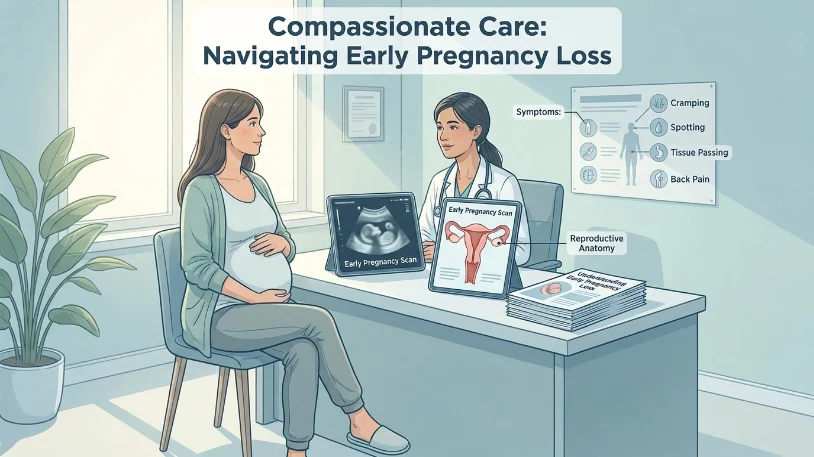
What does a miscarriage look like? A miscarriage often begins with vaginal bleeding, spotting, cramping, and the passage of blood clots or pregnancy tissue. The appearance varies depending on how far the pregnancy has progressed. Early miscarriages may resemble a heavy period with clotting, while later miscarriages can involve larger clots, recognizable gestational tissue, and stronger cramping. Symptoms may include pelvic pain, lower back pain, bleeding that becomes heavier over time, and the loss of pregnancy symptoms. Any suspected miscarriage should be evaluated by a healthcare professional.
What Does a Miscarriage Look Like?
Experiencing unexpected bleeding during pregnancy can be frightening. One of the first questions many people ask is, “What does a miscarriage look like?” The answer depends on several factors, including how many weeks pregnant you are, the type of miscarriage, and whether pregnancy tissue has begun to pass.
A miscarriage, also called pregnancy loss or spontaneous abortion, occurs when a pregnancy ends before 20 weeks. Most miscarriages happen during the first trimester, particularly before 13 weeks of pregnancy.
The physical appearance of a miscarriage can vary dramatically. Some people experience light spotting followed by heavier bleeding. Others pass large blood clots, pregnancy tissue, or a gestational sac. In some cases, there may be very few visible symptoms at all.
Understanding what miscarriage bleeding, tissue, and clots can look like may help you recognize warning signs and know when to seek medical care.
What Does a Miscarriage Look Like in General?
Many people expect a miscarriage to look the same in every case. It doesn’t.
Some miscarriages resemble a heavy menstrual period. Others involve noticeable tissue passage and significant cramping. The appearance often changes based on gestational age.
Common Physical Signs of a Miscarriage
A miscarriage may involve:
- Vaginal bleeding
- Spotting that becomes heavier
- Bright red blood
- Dark red blood
- Brown discharge
- Blood clots
- Gray or pink tissue
- Pregnancy tissue passage
- Pelvic cramping
- Lower back pain
- Abdominal pain
- Sudden loss of pregnancy symptoms
For some individuals, symptoms develop gradually. For others, they begin suddenly and progress within hours.
What Comes Out During a Miscarriage?
Several types of material may pass from the uterus during a miscarriage.
These can include:
| Material | Appearance |
| Blood | Bright red, dark red, or brown |
| Blood clots | Jelly-like, soft, dark red masses |
| Uterine lining | Thick, fleshy tissue |
| Pregnancy tissue | Gray, white, pink, or translucent tissue |
| Gestational sac | Small fluid-filled sac |
| Embryonic tissue | May be visible in later first-trimester miscarriages |
The amount and appearance depend heavily on pregnancy stage.
Why Every Miscarriage Looks Different
No two miscarriages are exactly alike.
Several factors influence miscarriage appearance:
- Gestational age
- Hormone levels
- Size of the gestational sac
- Whether tissue passes naturally
- Type of miscarriage
- Individual anatomy
A miscarriage at five weeks often looks very different from a miscarriage at ten weeks.
Early Miscarriage Signs and Symptoms
Most miscarriages occur during the first trimester.
Because fetal development is still very early, the miscarriage may look more like a heavy menstrual period than many people expect.
Early Miscarriage Signs
Common early miscarriage signs include:
- Vaginal spotting
- Increasing bleeding
- Cramping
- Lower abdominal pressure
- Back pain
- Passage of clots
- Decreasing pregnancy symptoms
However, spotting alone does not always indicate pregnancy loss.
Many healthy pregnancies involve some degree of spotting.
Miscarriage Symptoms Versus Normal Pregnancy Symptoms
Some symptoms overlap with normal pregnancy experiences.
The table below highlights important differences.
| Symptom | Normal Pregnancy | Possible Miscarriage |
| Mild spotting | Sometimes | Possible |
| Heavy bleeding | Rare | Common |
| Large clots | Uncommon | Common |
| Severe cramps | Rare | Common |
| Tissue passage | No | Yes |
| Loss of pregnancy symptoms | Not typical | Possible |
If heavy bleeding or tissue passage occurs, medical evaluation is important.
Pregnancy Loss Symptoms That Need Immediate Attention
Seek urgent medical care if you experience:
- Soaking multiple pads per hour
- Severe abdominal pain
- Dizziness
- Fainting
- Fever
- Chills
- Severe weakness
- Shoulder pain
These symptoms may indicate complications requiring emergency treatment.
What Does an Early Miscarriage Look Like?
Many internet searches focus on what does an early miscarriage look like because most pregnancy losses happen before ten weeks.
In the earliest weeks, the embryo is very small. As a result, many people never see recognizable fetal tissue.
Instead, they notice:
- Heavy bleeding
- Clots
- Thick tissue
- Cramping
- Increased discharge
The miscarriage often resembles an unusually heavy menstrual cycle.
Miscarriage Bleeding Appearance
Miscarriage bleeding may begin as:
- Pink spotting
- Brown spotting
- Light red bleeding
Over time, it often becomes:
- Bright red
- Heavier than a period
- Accompanied by clots
Some individuals report bleeding that starts lightly and suddenly becomes intense.
Others experience intermittent bleeding for days.
Miscarriage Blood Clots
One of the most commonly searched questions is:
“What does a miscarriage blood clot look like?”
Miscarriage clots often appear:
- Dark red
- Maroon
- Jelly-like
- Soft
- Irregularly shaped
They can range from tiny specks to masses several inches across.
Larger clots often occur as the uterus expels pregnancy tissue.
Miscarriage Tissue Versus Blood Clot
Many people struggle to distinguish tissue from blood clots.
Here are some common differences.
| Feature | Blood Clot | Pregnancy Tissue |
| Texture | Gel-like | Firm or fleshy |
| Color | Dark red | Gray, pink, white |
| Shape | Irregular | May have structure |
| Consistency | Soft | Thicker |
| Appearance | Similar to menstrual clots | May appear membranous |
Pregnancy tissue often looks different from ordinary menstrual material.
It may appear thicker, lighter in color, or more fibrous.
What Does a Miscarriage Look Like at 5 Weeks?
A miscarriage at five weeks is often difficult to distinguish from a heavy period.
At this stage:
- The embryo remains microscopic
- The gestational sac is tiny
- Most visible material consists of blood and uterine lining
Typical Appearance at 5 Weeks
Many people report:
- Bright red bleeding
- Menstrual-like cramps
- Small clots
- Tissue fragments
- Heavy flow
Recognizable pregnancy structures are uncommon.
Because implantation occurred recently, tissue passage may be subtle.
Miscarriage at 5 Weeks Versus a Period
The differences can be surprisingly small.
Signs suggesting miscarriage may include:
- Positive pregnancy test beforehand
- Larger clots
- Stronger cramping
- More bleeding than normal
- Sudden loss of pregnancy symptoms
Without testing, some very early miscarriages may be mistaken for late menstrual periods.
Chemical Pregnancy and Very Early Miscarriage
A chemical pregnancy represents one of the earliest forms of pregnancy loss.
It occurs shortly after implantation.
Common signs include:
- Positive pregnancy test
- Followed by bleeding
- Cramping
- Menstrual-like flow
Many chemical pregnancies happen before ultrasound can confirm a gestational sac.
What Does a Miscarriage Look Like at 6 Weeks?
By six weeks, pregnancy structures have grown slightly larger.
As a result, tissue passage may become more noticeable.
Common Symptoms at 6 Weeks
Many individuals experience:
- Moderate to heavy bleeding
- Cramping
- Lower back pain
- Blood clots
- Passage of tissue
Symptoms may develop over hours or several days.
What Does a Miscarriage at 6 Weeks Look Like?
Pregnancy tissue may appear:
- Grayish
- Pink
- White
- Translucent
Some people notice small sac-like structures.
Others see only bleeding and clotting.
Gestational Sac Appearance at 6 Weeks
The gestational sac remains relatively small.
When visible, it may appear:
- Round
- Translucent
- White or gray
- Fluid-filled
Not everyone recognizes it when it passes.
In many cases, tissue mixes with blood and clots.
What Does a Miscarriage Look Like at 7 Weeks?
At seven weeks, pregnancy development advances significantly compared to five or six weeks.
This means miscarriage tissue may become easier to identify.
Common Signs of Miscarriage at 7 Weeks
Symptoms frequently include:
- Heavy bleeding
- Cramping waves
- Blood clots
- Tissue passage
- Pelvic pressure
Some people describe contractions similar to very strong menstrual cramps.
Tissue Appearance at 7 Weeks
Pregnancy tissue may appear:
- Pinkish-gray
- Whitish
- Fleshy
- Membranous
The gestational sac may be more recognizable than in earlier miscarriages.
Because every miscarriage differs, appearance varies substantially between individuals.
Miscarriage Timeline at 7 Weeks
Many miscarriages follow a pattern:
- Spotting begins.
- Bleeding increases.
- Cramping intensifies.
- Tissue passes.
- Bleeding gradually decreases.
However, timelines can vary from hours to several weeks.
What Does a Miscarriage Look Like at 8 Weeks?
By eight weeks, pregnancy tissue becomes larger and more developed than in earlier losses. Because of this, many people notice tissue that looks different from ordinary menstrual blood clots.
Bleeding often becomes heavier than a normal period. Cramping may also feel more intense as the uterus contracts to expel pregnancy tissue.
Common Miscarriage Symptoms at 8 Weeks
Symptoms frequently include:
- Moderate to heavy bleeding
- Bright red blood
- Dark red blood clots
- Pelvic cramping
- Lower back pain
- Passage of tissue
- Reduced pregnancy symptoms
Many people describe waves of cramping that come and go rather than constant discomfort.
What Does a Miscarriage at 8 Weeks Look Like?
At eight weeks, you may see:
- Blood clots ranging from small to large
- Gray or pink tissue
- Thick uterine lining
- Membrane-like material
- A visible gestational sac
The gestational sac may appear as a small translucent structure surrounded by blood and tissue.
In some cases, pregnancy tissue remains difficult to identify because it mixes with blood clots.
Miscarriage Blood Clot Size at 8 Weeks
Blood clots during miscarriage vary considerably.
Some may be:
- Pea-sized
- Grape-sized
- Golf ball-sized
- Larger than a lemon
Large clots can be alarming. However, they commonly occur during pregnancy loss because the uterus sheds both blood and pregnancy-related tissue.
What Does a Miscarriage Look Like at 9 Weeks?
A miscarriage at nine weeks often involves more noticeable tissue passage because pregnancy development has progressed further.
The uterus must expel a larger amount of tissue than it would during a miscarriage at five or six weeks.
Symptoms of Miscarriage at 9 Weeks
Common symptoms include:
- Heavy bleeding
- Significant cramping
- Pelvic pressure
- Passage of blood clots
- Passage of pregnancy tissue
- Lower back pain
Some individuals experience symptoms that resemble labor contractions.
Pregnancy Tissue Appearance at 9 Weeks
Pregnancy tissue may look:
- Gray
- White
- Pink
- Deep red
- Membranous
The tissue often appears firmer than ordinary menstrual clots.
Some people report seeing structures that appear sac-like or distinctly different from normal period material.
How Long Does a 9-Week Miscarriage Last?
The most intense phase often lasts:
- Several hours
- One full day
- Occasionally longer
Lighter bleeding may continue for:
- One week
- Two weeks
- Sometimes slightly longer
Recovery timelines vary depending on whether all tissue passes naturally.
What Does a Miscarriage Look Like at 10 Weeks?
A miscarriage at ten weeks typically involves more visible pregnancy tissue than earlier losses.
At this stage, the gestational sac has grown considerably. The uterus may require stronger contractions to complete the miscarriage.
Common Symptoms at 10 Weeks
Many people experience:
- Heavy vaginal bleeding
- Intense cramping
- Large blood clots
- Passage of tissue
- Pelvic pressure
- Lower back pain
Symptoms can feel physically and emotionally overwhelming.
What Does a Miscarriage at 10 Weeks Look Like?
Visible findings may include:
- Large blood clots
- Thick tissue
- Gray or pink pregnancy tissue
- Gestational sac structures
- Membranous material
The miscarriage often appears very different from a menstrual period due to the amount of tissue involved.
Why Miscarriages Look Different at 10 Weeks
Several developmental changes occur by ten weeks.
These include:
- Larger gestational sac
- More developed placenta
- Increased blood supply
- Greater amount of uterine tissue
As a result, the physical appearance becomes more noticeable than in very early pregnancy loss.
What Does Miscarriage Tissue Look Like?
One of the most searched questions about pregnancy loss is:
“What does miscarriage tissue look like?”
The answer depends largely on gestational age.
Common Characteristics of Miscarriage Tissue
Pregnancy tissue may appear:
- Gray
- White
- Pink
- Translucent
- Stringy
- Membranous
- Fleshy
Unlike blood clots, tissue often has more structure and firmness.
Passing Tissue During Miscarriage
Many people describe passed tissue as:
- Thick
- Sponge-like
- Fibrous
- Soft but solid
Some pieces may resemble skin or membranes.
Others may appear as small sacs.
Miscarriage Tissue Versus Menstrual Tissue
| Feature | Menstrual Tissue | Miscarriage Tissue |
| Thickness | Thin | Often thicker |
| Color | Dark red | Gray, pink, white |
| Structure | Irregular | More organized |
| Appearance | Blood-rich | Membranous |
| Consistency | Soft | Often firmer |
These differences are not always obvious.
Only a medical examination can confirm whether tissue is pregnancy-related.
What Does a Gestational Sac Look Like During Miscarriage?
The gestational sac is one of the earliest structures that forms during pregnancy.
When passed during miscarriage, it may look different from surrounding blood clots.
Common Gestational Sac Appearance
A gestational sac may appear:
- Round
- Oval
- Clear
- Grayish
- White
- Fluid-filled
In early pregnancy, it is often quite small.
As pregnancy progresses, the sac becomes larger and easier to recognize.
Why Many People Never Notice the Sac
Several factors make identification difficult:
- Heavy bleeding
- Clot formation
- Tissue fragmentation
- Small sac size
Many miscarriages occur without the individual ever noticing a distinct gestational sac.
What Do Miscarriage Blood Clots Look Like?
Blood clots are among the most common miscarriage symptoms.
They form when blood pools and coagulates inside the uterus before leaving the body.
Common Blood Clot Characteristics
Miscarriage clots often appear:
- Dark red
- Deep maroon
- Blackish red
- Gel-like
- Jelly-like
Their size varies dramatically.
Small Versus Large Clots
| Clot Size | Typical Appearance |
| Small | Pea-sized |
| Moderate | Grape-sized |
| Large | Golf ball-sized |
| Very Large | Lemon-sized or larger |
Larger clots frequently accompany heavier bleeding and tissue passage.
Are Large Clots Always Dangerous?
Not necessarily.
Large clots commonly occur during miscarriage.
However, emergency care may be needed if heavy bleeding continues or causes dizziness, weakness, or fainting.
Types of Miscarriage and How They Look
Not every miscarriage unfolds the same way.
Healthcare providers classify miscarriage into several categories.
Each type has unique symptoms and appearances.
Threatened Miscarriage
A threatened miscarriage occurs when bleeding develops but the pregnancy may still continue.
Common signs include:
- Spotting
- Light bleeding
- Mild cramping
The cervix usually remains closed.
Pregnancy tissue does not pass.
Complete Miscarriage
A complete miscarriage occurs when all pregnancy tissue leaves the uterus.
Symptoms often include:
- Heavy bleeding initially
- Passage of tissue
- Cramping
- Gradual symptom improvement
What Does a Complete Miscarriage Look Like?
Most individuals notice:
- Significant bleeding
- Clots
- Tissue passage
- Rapid reduction in symptoms afterward
Once tissue passes completely, bleeding generally decreases.
Incomplete Miscarriage
An incomplete miscarriage happens when some tissue remains inside the uterus.
Symptoms often include:
- Continued bleeding
- Persistent cramping
- Ongoing pain
- Tissue passage that seems incomplete
What Does an Incomplete Miscarriage Look Like?
Signs may include:
- Recurrent bleeding
- Repeated clot passage
- Continuing pelvic discomfort
Medical treatment may be necessary to remove retained tissue.
Missed Miscarriage
A missed miscarriage differs from other forms of pregnancy loss.
The pregnancy stops developing but tissue remains in the uterus.
What Does a Missed Miscarriage Look Like?
Often, there is little or no visible bleeding.
Symptoms may include:
- Loss of pregnancy symptoms
- Reduced breast tenderness
- No fetal heartbeat on ultrasound
Many people discover a missed miscarriage during a routine prenatal appointment.
Miscarriage Bleeding vs Period Bleeding
One of the most common questions is whether a miscarriage can look like a period.
The answer is yes.
Especially during very early pregnancy loss.
Similarities Between a Miscarriage and a Period
Both may involve:
- Bleeding
- Cramping
- Blood clots
- Fatigue
This overlap can make early miscarriage difficult to identify.
Key Differences
| Feature | Period | Miscarriage |
| Positive pregnancy test | No | Usually yes |
| Tissue passage | Rare | Common |
| Large clots | Less common | More common |
| Heavy bleeding | Moderate | Often heavier |
| Pregnancy symptoms beforehand | No | Yes |
Can a Miscarriage Look Like a Heavy Period?
Absolutely.
Many miscarriages during the fifth or sixth week resemble unusually heavy menstrual cycles.
This is especially true for chemical pregnancies and very early pregnancy losses.
Miscarriage Cramping and Pain
Cramping occurs because the uterus contracts to expel tissue.
The intensity varies widely.
What Miscarriage Pain Feels Like
People commonly describe:
- Strong menstrual cramps
- Pelvic pressure
- Lower abdominal pain
- Back pain
- Contraction-like waves
Pain often peaks while tissue is passing.
When Pain Becomes Concerning
Seek medical attention if pain becomes:
- Severe
- Unmanageable
- Localized to one side
- Associated with fainting
These symptoms may indicate complications such as ectopic pregnancy.
What Does a Miscarriage Look Like at 8 Weeks?
By eight weeks, pregnancy tissue becomes larger and more developed than in earlier losses. Because of this, many people notice tissue that looks different from ordinary menstrual blood clots.
Bleeding often becomes heavier than a normal period. Cramping may also feel more intense as the uterus contracts to expel pregnancy tissue.
Common Miscarriage Symptoms at 8 Weeks
Symptoms frequently include:
- Moderate to heavy bleeding
- Bright red blood
- Dark red blood clots
- Pelvic cramping
- Lower back pain
- Passage of tissue
- Reduced pregnancy symptoms
Many people describe waves of cramping that come and go rather than constant discomfort.
What Does a Miscarriage at 8 Weeks Look Like?
At eight weeks, you may see:
- Blood clots ranging from small to large
- Gray or pink tissue
- Thick uterine lining
- Membrane-like material
- A visible gestational sac
The gestational sac may appear as a small translucent structure surrounded by blood and tissue.
In some cases, pregnancy tissue remains difficult to identify because it mixes with blood clots.
Miscarriage Blood Clot Size at 8 Weeks
Blood clots during miscarriage vary considerably.
Some may be:
- Pea-sized
- Grape-sized
- Golf ball-sized
- Larger than a lemon
Large clots can be alarming. However, they commonly occur during pregnancy loss because the uterus sheds both blood and pregnancy-related tissue.
What Does a Miscarriage Look Like at 9 Weeks?
A miscarriage at nine weeks often involves more noticeable tissue passage because pregnancy development has progressed further.
The uterus must expel a larger amount of tissue than it would during a miscarriage at five or six weeks.
Symptoms of Miscarriage at 9 Weeks
Common symptoms include:
- Heavy bleeding
- Significant cramping
- Pelvic pressure
- Passage of blood clots
- Passage of pregnancy tissue
- Lower back pain
Some individuals experience symptoms that resemble labor contractions.
Pregnancy Tissue Appearance at 9 Weeks
Pregnancy tissue may look:
- Gray
- White
- Pink
- Deep red
- Membranous
The tissue often appears firmer than ordinary menstrual clots.
Some people report seeing structures that appear sac-like or distinctly different from normal period material.
How Long Does a 9-Week Miscarriage Last?
The most intense phase often lasts:
- Several hours
- One full day
- Occasionally longer
Lighter bleeding may continue for:
- One week
- Two weeks
- Sometimes slightly longer
Recovery timelines vary depending on whether all tissue passes naturally.
What Does a Miscarriage Look Like at 10 Weeks?
A miscarriage at ten weeks typically involves more visible pregnancy tissue than earlier losses.
At this stage, the gestational sac has grown considerably. The uterus may require stronger contractions to complete the miscarriage.
Common Symptoms at 10 Weeks
Many people experience:
- Heavy vaginal bleeding
- Intense cramping
- Large blood clots
- Passage of tissue
- Pelvic pressure
- Lower back pain
Symptoms can feel physically and emotionally overwhelming.
What Does a Miscarriage at 10 Weeks Look Like?
Visible findings may include:
- Large blood clots
- Thick tissue
- Gray or pink pregnancy tissue
- Gestational sac structures
- Membranous material
The miscarriage often appears very different from a menstrual period due to the amount of tissue involved.
Why Miscarriages Look Different at 10 Weeks
Several developmental changes occur by ten weeks.
These include:
- Larger gestational sac
- More developed placenta
- Increased blood supply
- Greater amount of uterine tissue
As a result, the physical appearance becomes more noticeable than in very early pregnancy loss.
What Does Miscarriage Tissue Look Like?
One of the most searched questions about pregnancy loss is:
“What does miscarriage tissue look like?”
The answer depends largely on gestational age.
Common Characteristics of Miscarriage Tissue
Pregnancy tissue may appear:
- Gray
- White
- Pink
- Translucent
- Stringy
- Membranous
- Fleshy
Unlike blood clots, tissue often has more structure and firmness.
Passing Tissue During Miscarriage
Many people describe passed tissue as:
- Thick
- Sponge-like
- Fibrous
- Soft but solid
Some pieces may resemble skin or membranes.
Others may appear as small sacs.
Miscarriage Tissue Versus Menstrual Tissue
| Feature | Menstrual Tissue | Miscarriage Tissue |
| Thickness | Thin | Often thicker |
| Color | Dark red | Gray, pink, white |
| Structure | Irregular | More organized |
| Appearance | Blood-rich | Membranous |
| Consistency | Soft | Often firmer |
These differences are not always obvious.
Only a medical examination can confirm whether tissue is pregnancy-related.
What Does a Gestational Sac Look Like During Miscarriage?
The gestational sac is one of the earliest structures that forms during pregnancy.
When passed during miscarriage, it may look different from surrounding blood clots.
Common Gestational Sac Appearance
A gestational sac may appear:
- Round
- Oval
- Clear
- Grayish
- White
- Fluid-filled
In early pregnancy, it is often quite small.
As pregnancy progresses, the sac becomes larger and easier to recognize.
Why Many People Never Notice the Sac
Several factors make identification difficult:
- Heavy bleeding
- Clot formation
- Tissue fragmentation
- Small sac size
Many miscarriages occur without the individual ever noticing a distinct gestational sac.
What Do Miscarriage Blood Clots Look Like?
Blood clots are among the most common miscarriage symptoms.
They form when blood pools and coagulates inside the uterus before leaving the body.
Common Blood Clot Characteristics
Miscarriage clots often appear:
- Dark red
- Deep maroon
- Blackish red
- Gel-like
- Jelly-like
Their size varies dramatically.
Small Versus Large Clots
| Clot Size | Typical Appearance |
| Small | Pea-sized |
| Moderate | Grape-sized |
| Large | Golf ball-sized |
| Very Large | Lemon-sized or larger |
Larger clots frequently accompany heavier bleeding and tissue passage.
Are Large Clots Always Dangerous?
Not necessarily.
Large clots commonly occur during miscarriage.
However, emergency care may be needed if heavy bleeding continues or causes dizziness, weakness, or fainting.
Types of Miscarriage and How They Look
Not every miscarriage unfolds the same way.
Healthcare providers classify miscarriage into several categories.
Each type has unique symptoms and appearances.
Threatened Miscarriage
A threatened miscarriage occurs when bleeding develops but the pregnancy may still continue.
Common signs include:
- Spotting
- Light bleeding
- Mild cramping
The cervix usually remains closed.
Pregnancy tissue does not pass.
Complete Miscarriage
A complete miscarriage occurs when all pregnancy tissue leaves the uterus.
Symptoms often include:
- Heavy bleeding initially
- Passage of tissue
- Cramping
- Gradual symptom improvement
What Does a Complete Miscarriage Look Like?
Most individuals notice:
- Significant bleeding
- Clots
- Tissue passage
- Rapid reduction in symptoms afterward
Once tissue passes completely, bleeding generally decreases.
Incomplete Miscarriage
An incomplete miscarriage happens when some tissue remains inside the uterus.
Symptoms often include:
- Continued bleeding
- Persistent cramping
- Ongoing pain
- Tissue passage that seems incomplete
What Does an Incomplete Miscarriage Look Like?
Signs may include:
- Recurrent bleeding
- Repeated clot passage
- Continuing pelvic discomfort
Medical treatment may be necessary to remove retained tissue.
Missed Miscarriage
A missed miscarriage differs from other forms of pregnancy loss.
The pregnancy stops developing but tissue remains in the uterus.
What Does a Missed Miscarriage Look Like?
Often, there is little or no visible bleeding.
Symptoms may include:
- Loss of pregnancy symptoms
- Reduced breast tenderness
- No fetal heartbeat on ultrasound
Many people discover a missed miscarriage during a routine prenatal appointment.
Miscarriage Bleeding vs Period Bleeding
One of the most common questions is whether a miscarriage can look like a period.
The answer is yes.
Especially during very early pregnancy loss.
Similarities Between a Miscarriage and a Period
Both may involve:
- Bleeding
- Cramping
- Blood clots
- Fatigue
This overlap can make early miscarriage difficult to identify.
Key Differences
| Feature | Period | Miscarriage |
| Positive pregnancy test | No | Usually yes |
| Tissue passage | Rare | Common |
| Large clots | Less common | More common |
| Heavy bleeding | Moderate | Often heavier |
| Pregnancy symptoms beforehand | No | Yes |
Can a Miscarriage Look Like a Heavy Period?
Absolutely.
Many miscarriages during the fifth or sixth week resemble unusually heavy menstrual cycles.
This is especially true for chemical pregnancies and very early pregnancy losses.
Miscarriage Cramping and Pain
Cramping occurs because the uterus contracts to expel tissue.
The intensity varies widely.
What Miscarriage Pain Feels Like
People commonly describe:
- Strong menstrual cramps
- Pelvic pressure
- Lower abdominal pain
- Back pain
- Contraction-like waves
Pain often peaks while tissue is passing.
When Pain Becomes Concerning
Seek medical attention if pain becomes:
- Severe
- Unmanageable
- Localized to one side
- Associated with fainting
These symptoms may indicate complications such as ectopic pregnancy.
What Does a Miscarriage Look Like at 8 Weeks?
By eight weeks, pregnancy tissue becomes larger and more developed than in earlier losses. Because of this, many people notice tissue that looks different from ordinary menstrual blood clots.
Bleeding often becomes heavier than a normal period. Cramping may also feel more intense as the uterus contracts to expel pregnancy tissue.
Common Miscarriage Symptoms at 8 Weeks
Symptoms frequently include:
- Moderate to heavy bleeding
- Bright red blood
- Dark red blood clots
- Pelvic cramping
- Lower back pain
- Passage of tissue
- Reduced pregnancy symptoms
Many people describe waves of cramping that come and go rather than constant discomfort.
What Does a Miscarriage at 8 Weeks Look Like?
At eight weeks, you may see:
- Blood clots ranging from small to large
- Gray or pink tissue
- Thick uterine lining
- Membrane-like material
- A visible gestational sac
The gestational sac may appear as a small translucent structure surrounded by blood and tissue.
In some cases, pregnancy tissue remains difficult to identify because it mixes with blood clots.
Miscarriage Blood Clot Size at 8 Weeks
Blood clots during miscarriage vary considerably.
Some may be:
- Pea-sized
- Grape-sized
- Golf ball-sized
- Larger than a lemon
Large clots can be alarming. However, they commonly occur during pregnancy loss because the uterus sheds both blood and pregnancy-related tissue.
What Does a Miscarriage Look Like at 9 Weeks?
A miscarriage at nine weeks often involves more noticeable tissue passage because pregnancy development has progressed further.
The uterus must expel a larger amount of tissue than it would during a miscarriage at five or six weeks.
Symptoms of Miscarriage at 9 Weeks
Common symptoms include:
- Heavy bleeding
- Significant cramping
- Pelvic pressure
- Passage of blood clots
- Passage of pregnancy tissue
- Lower back pain
Some individuals experience symptoms that resemble labor contractions.
Pregnancy Tissue Appearance at 9 Weeks
Pregnancy tissue may look:
- Gray
- White
- Pink
- Deep red
- Membranous
The tissue often appears firmer than ordinary menstrual clots.
Some people report seeing structures that appear sac-like or distinctly different from normal period material.
How Long Does a 9-Week Miscarriage Last?
The most intense phase often lasts:
- Several hours
- One full day
- Occasionally longer
Lighter bleeding may continue for:
- One week
- Two weeks
- Sometimes slightly longer
Recovery timelines vary depending on whether all tissue passes naturally.
What Does a Miscarriage Look Like at 10 Weeks?
A miscarriage at ten weeks typically involves more visible pregnancy tissue than earlier losses.
At this stage, the gestational sac has grown considerably. The uterus may require stronger contractions to complete the miscarriage.
Common Symptoms at 10 Weeks
Many people experience:
- Heavy vaginal bleeding
- Intense cramping
- Large blood clots
- Passage of tissue
- Pelvic pressure
- Lower back pain
Symptoms can feel physically and emotionally overwhelming.
What Does a Miscarriage at 10 Weeks Look Like?
Visible findings may include:
- Large blood clots
- Thick tissue
- Gray or pink pregnancy tissue
- Gestational sac structures
- Membranous material
The miscarriage often appears very different from a menstrual period due to the amount of tissue involved.
Why Miscarriages Look Different at 10 Weeks
Several developmental changes occur by ten weeks.
These include:
- Larger gestational sac
- More developed placenta
- Increased blood supply
- Greater amount of uterine tissue
As a result, the physical appearance becomes more noticeable than in very early pregnancy loss.
What Does Miscarriage Tissue Look Like?
One of the most searched questions about pregnancy loss is:
“What does miscarriage tissue look like?”
The answer depends largely on gestational age.
Common Characteristics of Miscarriage Tissue
Pregnancy tissue may appear:
- Gray
- White
- Pink
- Translucent
- Stringy
- Membranous
- Fleshy
Unlike blood clots, tissue often has more structure and firmness.
Passing Tissue During Miscarriage
Many people describe passed tissue as:
- Thick
- Sponge-like
- Fibrous
- Soft but solid
Some pieces may resemble skin or membranes.
Others may appear as small sacs.
Miscarriage Tissue Versus Menstrual Tissue
| Feature | Menstrual Tissue | Miscarriage Tissue |
| Thickness | Thin | Often thicker |
| Color | Dark red | Gray, pink, white |
| Structure | Irregular | More organized |
| Appearance | Blood-rich | Membranous |
| Consistency | Soft | Often firmer |
These differences are not always obvious.
Only a medical examination can confirm whether tissue is pregnancy-related.
What Does a Gestational Sac Look Like During Miscarriage?
The gestational sac is one of the earliest structures that forms during pregnancy.
When passed during miscarriage, it may look different from surrounding blood clots.
Common Gestational Sac Appearance
A gestational sac may appear:
- Round
- Oval
- Clear
- Grayish
- White
- Fluid-filled
In early pregnancy, it is often quite small.
As pregnancy progresses, the sac becomes larger and easier to recognize.
Why Many People Never Notice the Sac
Several factors make identification difficult:
- Heavy bleeding
- Clot formation
- Tissue fragmentation
- Small sac size
Many miscarriages occur without the individual ever noticing a distinct gestational sac.
What Do Miscarriage Blood Clots Look Like?
Blood clots are among the most common miscarriage symptoms.
They form when blood pools and coagulates inside the uterus before leaving the body.
Common Blood Clot Characteristics
Miscarriage clots often appear:
- Dark red
- Deep maroon
- Blackish red
- Gel-like
- Jelly-like
Their size varies dramatically.
Small Versus Large Clots
| Clot Size | Typical Appearance |
| Small | Pea-sized |
| Moderate | Grape-sized |
| Large | Golf ball-sized |
| Very Large | Lemon-sized or larger |
Larger clots frequently accompany heavier bleeding and tissue passage.
Are Large Clots Always Dangerous?
Not necessarily.
Large clots commonly occur during miscarriage.
However, emergency care may be needed if heavy bleeding continues or causes dizziness, weakness, or fainting.
Types of Miscarriage and How They Look
Not every miscarriage unfolds the same way.
Healthcare providers classify miscarriage into several categories.
Each type has unique symptoms and appearances.
Threatened Miscarriage
A threatened miscarriage occurs when bleeding develops but the pregnancy may still continue.
Common signs include:
- Spotting
- Light bleeding
- Mild cramping
The cervix usually remains closed.
Pregnancy tissue does not pass.
Complete Miscarriage
A complete miscarriage occurs when all pregnancy tissue leaves the uterus.
Symptoms often include:
- Heavy bleeding initially
- Passage of tissue
- Cramping
- Gradual symptom improvement
What Does a Complete Miscarriage Look Like?
Most individuals notice:
- Significant bleeding
- Clots
- Tissue passage
- Rapid reduction in symptoms afterward
Once tissue passes completely, bleeding generally decreases.
Incomplete Miscarriage
An incomplete miscarriage happens when some tissue remains inside the uterus.
Symptoms often include:
- Continued bleeding
- Persistent cramping
- Ongoing pain
- Tissue passage that seems incomplete
What Does an Incomplete Miscarriage Look Like?
Signs may include:
- Recurrent bleeding
- Repeated clot passage
- Continuing pelvic discomfort
Medical treatment may be necessary to remove retained tissue.
Missed Miscarriage
A missed miscarriage differs from other forms of pregnancy loss.
The pregnancy stops developing but tissue remains in the uterus.
What Does a Missed Miscarriage Look Like?
Often, there is little or no visible bleeding.
Symptoms may include:
- Loss of pregnancy symptoms
- Reduced breast tenderness
- No fetal heartbeat on ultrasound
Many people discover a missed miscarriage during a routine prenatal appointment.
Miscarriage Bleeding vs Period Bleeding
One of the most common questions is whether a miscarriage can look like a period.
The answer is yes.
Especially during very early pregnancy loss.
Similarities Between a Miscarriage and a Period
Both may involve:
- Bleeding
- Cramping
- Blood clots
- Fatigue
This overlap can make early miscarriage difficult to identify.
Key Differences
| Feature | Period | Miscarriage |
| Positive pregnancy test | No | Usually yes |
| Tissue passage | Rare | Common |
| Large clots | Less common | More common |
| Heavy bleeding | Moderate | Often heavier |
| Pregnancy symptoms beforehand | No | Yes |
Can a Miscarriage Look Like a Heavy Period?
Absolutely.
Many miscarriages during the fifth or sixth week resemble unusually heavy menstrual cycles.
This is especially true for chemical pregnancies and very early pregnancy losses.
Miscarriage Cramping and Pain
Cramping occurs because the uterus contracts to expel tissue.
The intensity varies widely.
What Miscarriage Pain Feels Like
People commonly describe:
- Strong menstrual cramps
- Pelvic pressure
- Lower abdominal pain
- Back pain
- Contraction-like waves
Pain often peaks while tissue is passing.
When Pain Becomes Concerning
Seek medical attention if pain becomes:
- Severe
- Unmanageable
- Localized to one side
- Associated with fainting
These symptoms may indicate complications such as ectopic pregnancy.
How Can You Tell If You’re Having a Miscarriage?
Many people wonder whether their symptoms indicate a miscarriage or another pregnancy-related condition.
While only a healthcare professional can confirm a pregnancy loss, certain symptoms increase suspicion.
Common Signs of Pregnancy Loss
The most frequently reported signs include:
- Vaginal bleeding
- Increasing bleeding over time
- Blood clots
- Passage of tissue
- Pelvic cramping
- Lower back pain
- Sudden loss of pregnancy symptoms
- Decreased breast tenderness
- Reduced pregnancy-related nausea
Some miscarriages happen quickly. Others develop over several days or even weeks.
Symptoms That Do Not Always Mean Miscarriage
It’s important to remember that some symptoms can occur during healthy pregnancies.
These include:
- Light spotting
- Mild cramping
- Brown discharge
- Temporary changes in pregnancy symptoms
Because symptoms overlap, medical evaluation remains essential whenever pregnancy loss is suspected.
Miscarriage Without Bleeding
Many people assume bleeding always occurs during miscarriage.
That isn’t always true.
A missed miscarriage can occur without obvious bleeding or pain.
What Happens During a Missed Miscarriage?
In a missed miscarriage:
- The embryo or fetus stops developing.
- Pregnancy tissue remains in the uterus.
- The body may not immediately recognize the loss.
As a result, symptoms can be minimal.
Signs of a Missed Miscarriage
Possible symptoms include:
- Loss of pregnancy symptoms
- Reduced nausea
- Reduced breast tenderness
- No fetal heartbeat on ultrasound
- Slower uterine growth
Some individuals experience no symptoms at all.
Many missed miscarriages are discovered during routine prenatal ultrasounds.
How Doctors Diagnose a Miscarriage
Symptoms alone cannot always confirm pregnancy loss.
Healthcare providers use several tools to make an accurate diagnosis.
Ultrasound Examination
Ultrasound is often the most important diagnostic test.
It helps evaluate:
- Gestational sac development
- Embryo growth
- Fetal heartbeat
- Remaining tissue within the uterus
Ultrasound Signs of Miscarriage
Potential findings include:
- Empty gestational sac
- No fetal heartbeat
- Lack of expected growth
- Retained tissue
- Irregular pregnancy structures
These findings help determine whether a miscarriage has occurred.
Human Chorionic Gonadotropin (hCG) Testing
Healthcare providers may also monitor hCG levels.
Normally, hCG rises during early pregnancy.
A miscarriage may cause:
- Falling hCG levels
- Plateauing hCG levels
- Slower-than-expected increases
Serial blood tests help clarify uncertain situations.
Pelvic Examination
A pelvic examination may reveal:
- Cervical dilation
- Active bleeding
- Tissue passage
- Retained pregnancy tissue
Combined with ultrasound findings, this helps guide treatment decisions.
What Happens After a Miscarriage?
The physical recovery process varies from person to person.
Some individuals recover within days.
Others need several weeks.
Immediate Physical Changes
Following a miscarriage, many people experience:
- Continued light bleeding
- Mild cramping
- Fatigue
- Hormonal fluctuations
These symptoms typically improve gradually.
Miscarriage Recovery Symptoms
Common recovery symptoms include:
- Spotting
- Mild pelvic discomfort
- Emotional distress
- Breast tenderness changes
- Temporary mood changes
Most symptoms decrease steadily over time.
How Long Does Miscarriage Bleeding Last?
Bleeding duration depends on:
- Pregnancy stage
- Type of miscarriage
- Treatment method
- Individual health factors
Typical Miscarriage Bleeding Timeline
| Stage | Common Duration |
| Heavy bleeding | Several hours to several days |
| Moderate bleeding | Several days |
| Spotting | One to two weeks |
| Complete recovery | Two to six weeks |
Some people stop bleeding quickly.
Others continue spotting for several weeks.
When Bleeding Should Improve
Bleeding generally becomes:
- Heavy initially
- Progressively lighter
- Spotting only
- Completely resolved
If bleeding becomes heavier instead of lighter, medical evaluation is necessary.
Miscarriage Treatment Options
Treatment depends on the type of miscarriage and whether tissue remains in the uterus.
Expectant Management
Expectant management means allowing the miscarriage to occur naturally.
Benefits include:
- No surgery
- No medication
- Natural completion
However, it may take days or weeks.
Medical Management
Medication may help the uterus expel retained tissue.
Benefits include:
- Faster completion
- Reduced need for surgery
- High effectiveness
Healthcare providers determine whether this option is appropriate.
Surgical Management
A procedure called dilation and curettage (D&C) may be recommended.
A D&C removes remaining pregnancy tissue from the uterus.
Reasons for a D&C include:
- Heavy bleeding
- Infection risk
- Retained tissue
- Incomplete miscarriage
Many individuals recover quickly following the procedure.
Miscarriage Aftercare
Proper aftercare supports physical recovery and reduces complications.
Physical Recovery Tips
Healthcare providers commonly recommend:
- Adequate rest
- Hydration
- Nutritious meals
- Monitoring bleeding
- Avoiding strenuous activity initially
Recovery should progress gradually.
Signs Recovery Is Going Well
Positive signs include:
- Decreasing bleeding
- Less cramping
- Improved energy
- No fever
- No worsening symptoms
Most individuals notice steady improvement over time.
Emotional Recovery After Pregnancy Loss
Pregnancy loss affects more than the body.
It can also affect emotional well-being.
Common Emotional Responses
People may experience:
- Sadness
- Grief
- Anger
- Confusion
- Anxiety
- Guilt
- Shock
Every emotional response is valid.
There is no single “correct” way to feel after a miscarriage.
Why Emotional Healing Takes Time
Pregnancy often creates hopes, expectations, and future plans.
When a loss occurs, emotional recovery may take longer than physical healing.
Many people find support through:
- Family
- Friends
- Counselors
- Support groups
- Healthcare providers
Seeking support is a healthy and normal part of recovery.
When Should You Go to the Hospital for a Miscarriage?
Some symptoms require immediate medical attention.
Emergency Warning Signs
Seek emergency care if you experience:
- Severe bleeding
- Passing extremely large clots continuously
- Fainting
- Severe dizziness
- Difficulty breathing
- High fever
- Chills
- Severe abdominal pain
- One-sided pelvic pain
- Shoulder pain
These symptoms may indicate complications requiring urgent treatment.
Heavy Bleeding Warning
Contact a healthcare provider immediately if you:
- Soak through multiple sanitary pads per hour
- Feel weak or lightheaded
- Notice worsening bleeding
Rapid evaluation helps prevent serious complications.
Frequently Asked Questions
What does a miscarriage look like?
A miscarriage often involves vaginal bleeding, cramping, blood clots, and pregnancy tissue passage. The appearance varies depending on gestational age and the type of miscarriage.
What does miscarriage tissue look like?
Miscarriage tissue often appears gray, white, pink, fleshy, membranous, or translucent. It usually looks different from ordinary menstrual blood clots.
What does an early miscarriage look like?
An early miscarriage frequently resembles a heavy menstrual period with increased bleeding, cramping, and clotting. Recognizable pregnancy tissue may not always be visible.
What color is miscarriage bleeding?
Miscarriage bleeding may appear:
- Bright red
- Dark red
- Brown
- Pink
Color often changes throughout the miscarriage process.
What do miscarriage blood clots look like?
Miscarriage blood clots are commonly:
- Dark red
- Maroon
- Jelly-like
- Irregularly shaped
Their size ranges from very small to quite large.
Can a miscarriage look like a period?
Yes. Many early miscarriages, particularly at five or six weeks, look very similar to heavy menstrual periods.
What does a miscarriage at 6 weeks look like?
A miscarriage at six weeks often includes:
- Bleeding
- Cramping
- Small blood clots
- Tissue fragments
- Possible gestational sac passage
What does a miscarriage at 8 weeks look like?
At eight weeks, people may notice:
- Larger blood clots
- More tissue passage
- Heavier bleeding
- Stronger cramping
What does a miscarriage at 10 weeks look like?
At ten weeks, miscarriage symptoms often involve:
- Significant bleeding
- Larger tissue passage
- More visible gestational structures
- Strong cramping
How much bleeding occurs during a miscarriage?
Bleeding ranges from light spotting to heavy bleeding with clot passage. The amount varies significantly between individuals.
How long does a miscarriage last?
The most intense symptoms often occur over several hours or days. Lighter bleeding may continue for one to two weeks or longer.
What symptoms accompany a miscarriage?
Common symptoms include:
- Vaginal bleeding
- Cramping
- Blood clots
- Tissue passage
- Pelvic pain
- Lower back pain
- Loss of pregnancy symptoms
What is the difference between miscarriage bleeding and period bleeding?
Miscarriage bleeding is often heavier, more clot-filled, and accompanied by tissue passage. It also occurs after a positive pregnancy test.
Key Facts About Miscarriage Appearance
| Fact | Details |
| Most miscarriages occur in the first trimester | Before 13 weeks |
| Bleeding is the most common symptom | Often starts as spotting |
| Blood clots are common | Size varies greatly |
| Tissue appearance varies | Depends on gestational age |
| Early miscarriages may resemble periods | Especially before 6 weeks |
| Later miscarriages involve more tissue | Due to pregnancy growth |
| Missed miscarriages may have no bleeding | Often found on ultrasound |
| Medical evaluation is important | Symptoms alone cannot confirm miscarriage |
Final Thoughts
Understanding what does a miscarriage look like can help reduce uncertainty during a frightening and emotional experience. Miscarriage appearance varies considerably from one pregnancy loss to another. Some miscarriages resemble a heavy period with bleeding and clotting, while others involve noticeable pregnancy tissue, a gestational sac, and intense cramping.
The most common miscarriage symptoms include vaginal bleeding, pelvic pain, blood clots, tissue passage, and pregnancy symptom changes. Early pregnancy losses often look very different from miscarriages that occur later in the first trimester.
Because miscarriage symptoms can overlap with other pregnancy conditions, including healthy pregnancies and ectopic pregnancies, professional medical evaluation remains essential. Prompt care helps confirm the diagnosis, identify complications, and ensure the safest path toward physical and emotional recovery.

Michael Anderson is a content writer specializing in word meanings, definitions and clear explanations of modern terms and phrases.