
Last Updated on June 9, 2026
Vitamin C (ascorbic acid) is an essential nutrient that the body cannot produce on its own. It functions as a powerful antioxidant, supports immune system health, aids in tissue repair, and enhances the absorption of iron from plant-based foods.
Vitamin C doesn’t just “help your immune system.” That’s an oversimplified story people repeat without thinking.
In reality, vitamin C works like a behind-the-scenes engineer inside your body. It builds structure, protects cells, speeds up healing, and even helps your body absorb other nutrients.
You won’t feel it working minute by minute. But remove it, and the cracks show fast.
Let’s break it down in a simple, science-backed way so you actually understand what it does and why it matters.
What Is Vitamin C and Why Your Body Depends on It
Vitamin C, also called ascorbic acid, is a water-soluble essential vitamin. Your body cannot produce it. You also can’t store large amounts of it.
That means one thing: you must consume it daily through food.
Unlike fat-soluble vitamins that stay in your body for weeks, vitamin C moves through your system quickly. Whatever your body doesn’t use gets flushed out.
Key facts about vitamin C
- Water-soluble nutrient
- Essential for humans
- Not stored in large amounts
- Found mostly in fruits and vegetables
- Sensitive to heat and light
Think of it like fuel you refill every day, not a tank you fill once a month.
What Does Vitamin C Do in the Body? Core Functions Explained
Vitamin C plays multiple roles at the same time. That’s what makes it essential for overall health.
It supports structure, defense, and repair across different systems.
Vitamin C and Collagen Production (Skin, Bones, and Tissue Strength)
One of vitamin C’s most important jobs is helping your body produce collagen.
Collagen is the most abundant protein in your body. It holds your skin, bones, blood vessels, and connective tissues together.
Without enough vitamin C, collagen becomes weak and unstable.
What collagen affects
- Skin firmness and elasticity
- Joint strength
- Blood vessel integrity
- Wound healing speed
How vitamin C helps
It activates enzymes that stabilize collagen fibers during formation.
What happens if levels drop
- Slow wound healing
- Fragile skin
- Bleeding gums
- Weak connective tissue
In simple terms, vitamin C helps your body stay structurally strong from the inside out.
Vitamin C as a Powerful Antioxidant
Your body constantly faces damage from free radicals. These unstable molecules come from pollution, UV rays, smoking, and even normal metabolism.
This damage is called oxidative stress, and over time it can harm cells.
Vitamin C helps neutralize these free radicals.
What antioxidant protection means
- Reduces cell damage
- Protects DNA and proteins
- Slows oxidative stress
- Supports long-term cellular health
Simple analogy
Free radicals are like sparks in a dry forest. Vitamin C acts like a fire extinguisher before things spread.
This role makes vitamin C important for long-term aging and disease prevention support.
Vitamin C and Immune System Support
Vitamin C doesn’t “boost” immunity like magic. Instead, it supports how your immune system actually works.
It helps immune cells function properly and respond faster when your body detects infection.
How it supports immunity
- Improves white blood cell function
- Enhances skin barrier defense
- Helps immune cells reach infection sites
- Reduces severity and duration of illness in some cases
Important reality check
Research shows vitamin C may slightly reduce cold duration by around 8–14%, but it does not prevent colds completely.
Simple way to understand it
Your immune system is the defense team. Vitamin C helps them stay equipped and responsive.
Vitamin C and Iron Absorption (Energy and Blood Health)
Iron is essential for oxygen transport in your blood. But plant-based iron (non-heme iron) is harder for your body to absorb.
Vitamin C improves this process significantly.
How it works
It converts iron into a form your body absorbs more easily.
Best food pairings
- Spinach + lemon juice
- Lentils + tomatoes
- Chickpeas + bell peppers
Why it matters
Better iron absorption helps prevent fatigue and supports healthy red blood cell production.
Vitamin C and Wound Healing Process
Healing isn’t just closing a cut. It involves rebuilding tissue, forming new blood vessels, and repairing damaged skin.
Vitamin C plays a central role in all these steps.
What it does during healing
- Supports collagen formation
- Speeds up tissue repair
- Reduces inflammation in healing areas
- Helps skin regenerate properly
What deficiency looks like
- Slow healing cuts
- Bruises that last longer
- Weak skin repair
Think of vitamin C as construction material delivery during body repair work.
Vitamin C Deficiency: Symptoms and Risks
Vitamin C deficiency doesn’t appear overnight. It builds gradually.
But once levels drop too low, the effects become serious.
Early symptoms
- Fatigue
- Weakness
- Irritability
- Dry skin
Moderate deficiency signs
- Easy bruising
- Joint pain
- Slow healing wounds
Severe deficiency (Scurvy)
Scurvy is the extreme form of vitamin C deficiency.
Symptoms include
- Bleeding gums
- Tooth loss
- Severe fatigue
- Poor wound healing
- Internal bleeding in severe cases
Scurvy is rare today but still appears in people with extremely poor diets.
Who is most at risk?
- Smokers (higher oxidative stress)
- People with poor fruit and vegetable intake
- Individuals with absorption disorders
- Elderly people with limited diets
Daily Vitamin C Requirement (How Much You Really Need)
Your body needs vitamin C daily because it doesn’t store it.
Recommended intake
| Group | Daily Requirement |
| Adult men | 90 mg/day |
| Adult women | 75 mg/day |
| Pregnant women | 85 mg/day |
| Breastfeeding women | 120 mg/day |
Smokers need more
Add about 35 mg/day due to increased oxidative stress.
Can you take too much?
Yes, but only from supplements in most cases.
High intake may cause:
- Stomach discomfort
- Diarrhea
- Increased kidney stone risk in sensitive individuals
Food sources rarely cause overdose issues.
Best Natural Sources of Vitamin C
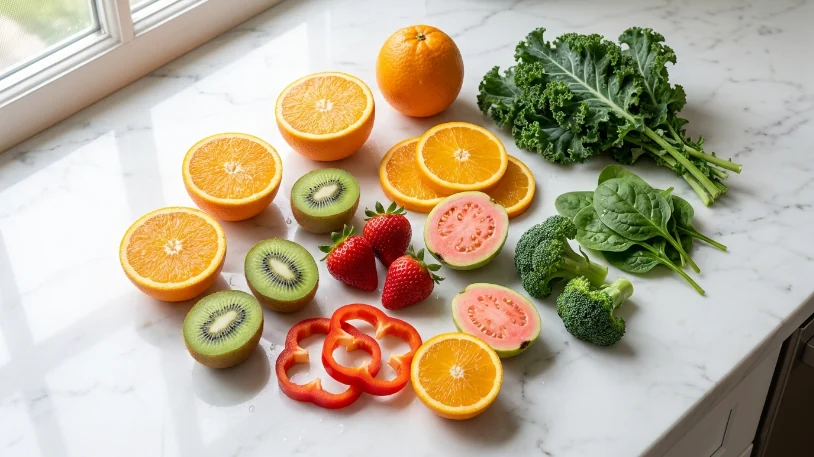
Whole foods remain the best way to get vitamin C.
Top fruits rich in vitamin C
| Food | Vitamin C Content |
| Guava | Extremely high (~200 mg+) |
| Kiwi | High (~90 mg) |
| Strawberries | Moderate (~60 mg) |
| Oranges | Moderate (~50 mg) |
Guava actually outranks oranges by a large margin.
Top vegetables rich in vitamin C
| Food | Vitamin C Content |
| Red bell pepper | Very high (~120 mg) |
| Broccoli | High (~80 mg) |
| Brussels sprouts | High (~85 mg) |
| Spinach | Moderate |
Important tip
Heat reduces vitamin C. Light steaming preserves more nutrients than boiling.
Vitamin C Supplements: Are They Necessary?
Food should always come first. But supplements can help in specific situations.
When supplements help
- Low dietary intake
- Medical deficiency
- Increased stress or illness recovery
- Smokers with higher requirements
Common supplement types
- Ascorbic acid (standard form)
- Buffered vitamin C (gentler on stomach)
- Liposomal vitamin C (enhanced absorption claims)
Reality check
More is not always better. Your body uses what it needs and removes the rest.
Common Myths About Vitamin C
Myth: It prevents colds completely
Truth: It may shorten duration but does not prevent infection.
Myth: More vitamin C equals stronger immunity
Truth: Your body has a limit on what it uses.
Myth: Only citrus fruits matter
Truth: Bell peppers and guava contain even more vitamin C.
Myth: Supplements replace food
Truth: Whole foods provide broader nutrition benefits.
How to Increase Vitamin C Intake Naturally
Small habits make a big difference.
Simple daily habits
- Add lemon to water or meals
- Eat kiwi or oranges as snacks
- Include bell peppers in salads
- Eat raw vegetables when possible
Example daily plan
- Breakfast: Kiwi + eggs
- Lunch: Salad with lemon dressing and bell peppers
- Snack: Orange
- Dinner: Broccoli stir-fry
Final Thoughts
Vitamin C is not just a cold-fighting nutrient. It is a structural, protective, and functional vitamin your body depends on daily.
It supports:
- Collagen formation
- Immune system function
- Antioxidant protection
- Iron absorption
- Tissue repair and healing
You don’t need extreme doses. You need consistency.
Eat it daily, and your body quietly takes care of the rest.

Sophia Bennett is a professional writer focused on explaining word meanings, expressions and everyday language in a simple and engaging way.