
Last Updated on June 9, 2026
FOMO means “Fear of Missing Out.” It describes the anxious feeling that others are having better experiences, opportunities, or moments without you. This feeling often comes from social comparison, especially on social media, and can influence decisions, mood, and behavior in everyday life.
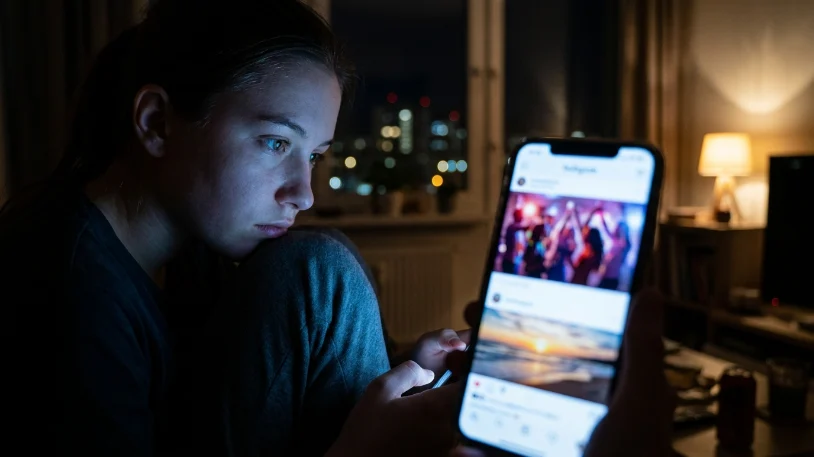
You’ve probably felt it before. You’re scrolling through your phone. Someone’s at a party. Another person just landed in Bali. A friend got invited somewhere you didn’t.
And suddenly, something shifts.
That feeling has a name. FOMO.
FOMO stands for “Fear of Missing Out.” It’s the uneasy, sometimes overwhelming sense that something better is happening somewhere else and you’re not part of it.
It’s not just curiosity. It’s emotional. It pulls you in. It makes you question your choices.
At its core, FOMO is about comparison, connection, and perceived loss.
FOMO Meaning in Depth: More Than Just Missing Out
Let’s go deeper. Because the simple definition doesn’t tell the whole story.
FOMO isn’t just about events. It’s about opportunity, belonging, and identity.
Expanded Definition
FOMO is the psychological response triggered when you believe others are experiencing rewarding moments without you, leading to anxiety, dissatisfaction, or urgency to participate.
Key Elements of FOMO
- Perception — You think others are having a better experience
- Comparison — You measure your life against theirs
- Emotional reaction — You feel left out, anxious, or pressured
The Origin of FOMO: Where Did the Term Come From?
The phrase didn’t just appear overnight.
The term “FOMO” gained traction in the early 2000s. It became widely used as social media platforms grew. As connectivity increased, so did visibility into other people’s lives.
Evolution Timeline
| Era | What Changed | Impact on FOMO |
|---|---|---|
| Pre-2000 | Limited communication | Minimal comparison |
| Early 2000s | Internet forums, texting | Awareness increased |
| 2010–2020 | Social media boom | FOMO skyrocketed |
| 2020–2026 | AI algorithms, short-form content | FOMO intensified |
Today, FOMO is not occasional. It’s constant and algorithm-driven.
What Causes FOMO? The Real Psychological Triggers
FOMO doesn’t come out of nowhere. It’s rooted in human psychology.
Social Comparison: The Core Driver
Humans naturally compare themselves to others. It’s how we understand our place in the world.
Social media amplifies this instinct.
You don’t see real life. You see highlight reels.
Dopamine Loops and Instant Rewards
Every notification feels like a tiny reward.
- Likes
- Messages
- Updates
These create a dopamine cycle, making you crave more engagement.
When you’re not part of something, your brain notices the absence.
Scarcity and Urgency
Limited-time offers. Exclusive invites. Trending experiences.
They all trigger one thought:
“If I don’t act now, I’ll miss out forever.”
That urgency fuels FOMO.
Need for Belonging
Humans are social by nature.
We want to feel included. Accepted. Valued.
FOMO taps directly into the fear of being excluded.
Real-Life Examples of FOMO You’ll Recognize Instantly
FOMO shows up everywhere. Not just online.
Everyday Scenarios
- Watching friends hang out without you
- Seeing vacation photos online
- Missing a major event or concert
- Not investing in a trending opportunity
- Skipping a social gathering
Digital Examples
- Scrolling endlessly through social media
- Checking stories repeatedly
- Feeling pressure to respond instantly
Signs You’re Experiencing FOMO (Be Honest With Yourself)
FOMO often hides in plain sight.
Common Symptoms
- You check your phone constantly
- You feel restless when offline
- You struggle to enjoy quiet moments
- You say “yes” even when you’re tired
- You compare your life to others frequently
Quick Self-Check
If you often think:
- “Everyone else is doing better than me”
- “I should be there too”
- “I’m falling behind”
You’re likely dealing with FOMO.
Why FOMO Feels So Powerful (The Science Explained Simply)
FOMO isn’t weakness. It’s biology.
Your Brain on FOMO
- The brain seeks rewards
- It avoids social rejection
- It prioritizes belonging
When you see others enjoying something, your brain reacts as if you’re losing out.
Cognitive Bias at Play
Your brain assumes:
- Others are happier
- Their lives are better
- You’re missing something important
In reality, you’re comparing your behind-the-scenes to someone else’s highlight reel.
The Impact of FOMO on Your Life
FOMO doesn’t just stay in your head. It shapes your actions.
Mental Health Effects
- Increased anxiety
- Lower self-esteem
- Constant dissatisfaction
Decision-Making Problems
You start making choices based on fear, not logic.
- Saying yes to everything
- Jumping into trends blindly
- Struggling to commit
Financial Consequences
FOMO often leads to spending.
- Buying things you don’t need
- Investing impulsively
- Chasing trends without research
FOMO vs FOBO vs JOMO: What’s the Difference?
These terms often get mixed up. Let’s clear it up.
| Term | Meaning | Core Emotion | Outcome |
|---|---|---|---|
| FOMO | Fear of Missing Out | Anxiety | Overcommitment |
| FOBO | Fear of Better Options | Indecision | Delayed action |
| JOMO | Joy of Missing Out | Contentment | Peace of mind |
Is FOMO Always Bad? The Surprising Truth
FOMO isn’t entirely negative.
Positive Side of FOMO
- Encourages exploration
- Pushes you to try new things
- Keeps you socially connected
But Here’s the Catch
FOMO becomes harmful when it:
- Drives impulsive behavior
- Creates stress
- Replaces intentional choices
How to Overcome FOMO (Practical Strategies That Work)
You don’t need to eliminate FOMO completely. You need to manage it.
Shift Your Perspective
Not everything you see is real.
Remind yourself:
- People share highlights, not struggles
- You’re not seeing the full picture
Limit Social Media Exposure
Small changes make a big difference.
- Set daily limits
- Turn off non-essential notifications
- Take regular breaks
Practice Gratitude Daily
Focus on what you already have.
Try this simple habit:
- Write down 3 things you’re grateful for each day
Learn to Say No Without Guilt
Every “yes” has a cost.
Protect your:
- Time
- Energy
- Focus
Be Present in the Moment
FOMO pulls you away from now.
Mindfulness brings you back.
How Social Media Fuels FOMO (And Why It’s Designed That Way)
Social platforms aren’t neutral. They’re engineered for engagement.
What Drives FOMO Online
- Highlighted best moments
- Endless scrolling
- Viral trends
- Algorithmic personalization
Result
You feel like everyone is constantly doing something exciting.
Even when they’re not.
FOMO in 2026: What’s Changed?
FOMO is evolving fast.
Modern Trends
- AI-curated feeds
- Short-form content dominance
- Virtual experiences and digital events
New Pressure
You’re expected to stay updated. Always.
Miss something? It feels like you’re falling behind.
How to Turn FOMO Into JOMO (Joy of Missing Out)
This is where things change.
Practical Shifts
- Choose intentional experiences
- Focus on quality over quantity
- Embrace downtime
Mindset Transformation
Instead of thinking:
“I’m missing out”
Think:
“I’m choosing what matters”
That shift changes everything.
FAQs
What does FOMO mean in texting?
It means “Fear of Missing Out.” People use it to describe feeling left out of events, conversations, or trends.
Is FOMO a mental health condition?
No. It’s a common emotional response. However, intense FOMO can contribute to anxiety.
Why do I feel FOMO all the time?
Constant exposure to social media, comparison, and fear of missing opportunities can trigger it repeatedly.
How do I stop FOMO quickly?
Pause. Step away from social media. Focus on what you’re doing right now.
Final Thoughts
Here’s the truth most people overlook.
You can’t do everything. You can’t be everywhere.
And that’s okay.
FOMO makes it feel like you’re losing something. But in reality, you’re making choices.
Every choice shapes your life. So instead of chasing everything, choose what actually matters.
That’s not missing out. That’s living on purpose.

Michael Anderson is a content writer specializing in word meanings, definitions and clear explanations of modern terms and phrases.