
Last Updated on May 15, 2026
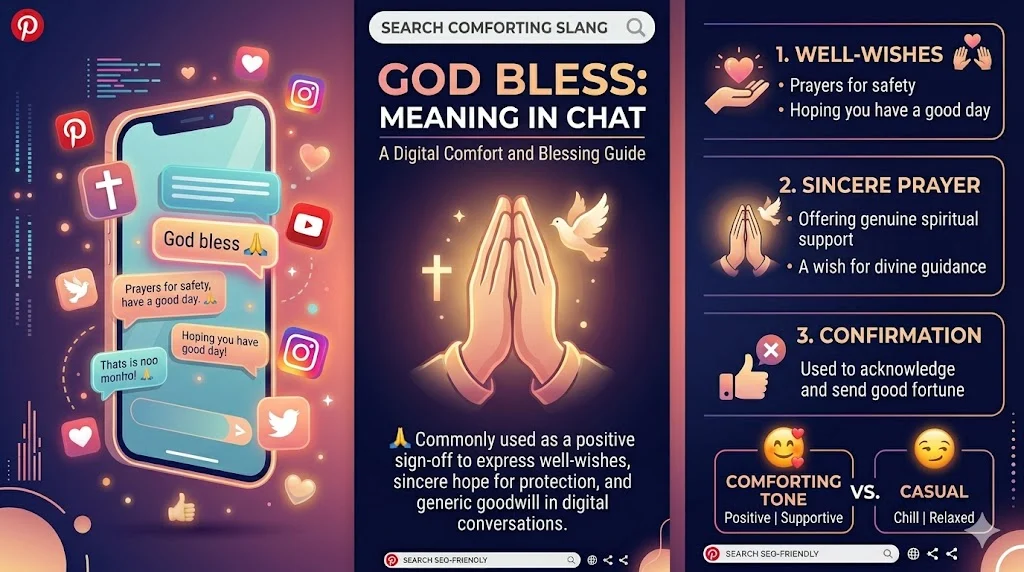
“God bless” in chat is a phrase used to express kindness, gratitude, care, sympathy, or goodwill toward someone. It often means “may good things happen to you,” “thank you,” or “I wish you well.” Depending on the tone and context, it can sound sincere, comforting, respectful, or occasionally sarcastic.
Example:
- “Thanks for helping me today. God bless 🙏”
- Meaning: Deep appreciation and warm wishes.
In today’s digital world, short messages can carry deep emotions. One phrase that often appears in chats, comments, texts, and social media conversations is “God bless.” But what does it actually mean in chat? Is it always sincere? Can it sound sarcastic? And when should you use it?
Whether you saw someone reply with “God bless 🙏” after a conversation or received it in a text message, understanding the tone and context behind this phrase matters more than you might think.
What Does “God Bless” Mean in Online Chat?
The phrase “God bless” is commonly used in texting, social media, messaging apps, and comment sections to communicate positive feelings toward another person.
People usually use it when they want to:
- Show gratitude
- Offer prayers or support
- Express sympathy
- End a conversation warmly
- Wish someone well
- Respond emotionally to kindness
Unlike slang abbreviations such as “LOL” or “BRB,” “God bless” carries emotional and sometimes spiritual meaning. However, not everyone uses it religiously. Many people simply use it as a polite or heartfelt expression.
Origin of the Phrase “God Bless”
The expression comes from religious traditions, especially Christianity, where blessing someone means asking for divine protection, favor, or peace.
Historically:
- People used “God bless you” after sneezing.
- Religious leaders used blessings in prayers and ceremonies.
- Families and communities used it to show care and goodwill.
Over time, the phrase became part of everyday language—even among people who are not deeply religious.
Today, online communication has shortened the phrase:
- “God bless”
- “GB”
- “Bless you”
- “Blessings 🙏”
These versions appear frequently in:
- Facebook comments
- TikTok captions
- WhatsApp chats
- Instagram replies
- YouTube comments
- Text messages
Why Is “God Bless” So Popular in Chat?
The phrase remains popular because it feels:
- Warm
- Respectful
- Human
- Supportive
- Emotional
In fast-moving online conversations, simple phrases that express empathy stand out.
For example:
- “Hope your surgery goes well. God bless.”
- “You donated food to strangers? God bless you.”
- “Thank you for your kindness. God bless 🙏”
These messages instantly create emotional connection.
Common Meanings of “God Bless” in Chat
The meaning changes depending on context, tone, punctuation, and relationship between speakers.
1. Genuine Kindness or Gratitude
This is the most common meaning.
Example:
“You stayed late to help me finish the project. God bless you!”
Tone:
- Warm
- Appreciative
- Sincere
Meaning:
- “Thank you deeply.”
- “I truly appreciate you.”
2. Prayer or Spiritual Support
Sometimes people use it literally as a blessing or prayer.
Example:
“I’m praying for your family. God bless.”
Tone:
- Compassionate
- Caring
- Spiritual
Meaning:
- “May God protect and help you.”
3. Sympathy or Comfort
The phrase is often used during difficult situations.
Example:
“Sorry for your loss. God bless your family.”
Tone:
- Gentle
- Supportive
- Respectful
Meaning:
- Offering emotional comfort.
4. Friendly Goodbye
Some people use “God bless” as a warm conversation ending.
Example:
“Take care and stay safe. God bless!”
Tone:
- Friendly
- Positive
- Respectful
Meaning:
- “Wishing you well.”
5. Sarcastic or Dismissive Meaning
In rare cases, the phrase can sound passive-aggressive or sarcastic.
Example:
“Well God bless your heart.”
Tone:
- Mocking
- Condescending
- Indirect criticism
Meaning:
- “You don’t understand.”
- “That was foolish.”
This usage is especially common in certain regional cultures or online arguments.
“God Bless” Tone Guide in Chat
Here’s how tone changes the meaning.
| Phrase Example | Likely Tone | Meaning |
|---|---|---|
| “God bless you 🙏” | Warm/Friendly | Genuine care |
| “God bless!!” | Emotional/Excited | Strong appreciation |
| “God bless your soul” | Deeply emotional | Sympathy or gratitude |
| “God bless lol” | Casual/Ironic | Light humor or sarcasm |
| “God bless your heart” | Potentially passive-aggressive | Indirect criticism |
| “Thank you, God bless” | Respectful | Appreciation |
| “God bless ❤️” | Affectionate | Loving support |
How People Use “God Bless” on Social Media
The phrase appears everywhere online, especially during emotional or meaningful moments.
On Facebook
Often used in:
- Prayer posts
- Charity stories
- Family updates
- Sympathy comments
Example:
“Your mom raised a wonderful family. God bless you all.”
On TikTok
Usually appears in:
- Emotional story comments
- Inspirational videos
- Kindness-related content
Example:
“This made me cry. God bless this family.”
On Instagram
Used in:
- Appreciation comments
- Supportive replies
- Faith-related captions
Example:
“Beautiful message. God bless 🙏”
In Text Messages
Common during:
- Illness
- Stressful situations
- Gratitude moments
Example:
“Thank you for checking on me. God bless you.”
Is “God Bless” Always Religious?
No. While the phrase has religious origins, many people use it casually or culturally without strong religious intent.
Some users mean:
- “Take care”
- “Best wishes”
- “Thank you”
- “Sending positivity”
Others use it spiritually and sincerely as an actual blessing.
The meaning depends on:
- Context
- Relationship
- Culture
- Tone
- Emojis
- Conversation topic
Emoji Meanings With “God Bless”
Emojis can completely change the emotional tone.
| Emoji | Meaning With “God Bless” |
|---|---|
| 🙏 | Prayer, gratitude, sincerity |
| ❤️ | Love and emotional warmth |
| 😊 | Friendly kindness |
| 😢 | Sympathy or sadness |
| ✨ | Positivity and hope |
| 😭 | Emotional appreciation |
| 😂 | Possible joking or sarcasm |
Example:
- “God bless 🙏” = sincere
- “God bless 😂” = playful or sarcastic
Examples of “God Bless” in Real Chat Conversations
Friendly Example
Person A: “I dropped off groceries for your family.”
Person B: “Thank you so much. God bless you 🙏”
Meaning:
- Genuine appreciation
Supportive Example
Person A: “I’m nervous about my surgery tomorrow.”
Person B: “Everything will be okay. God bless.”
Meaning:
- Comfort and emotional support
Casual Example
Person A: “I finally passed my driving test!”
Person B: “Congrats!! God bless 🎉”
Meaning:
- Happiness and positivity
Sarcastic Example
Person A: “I microwaved metal by accident.”
Person B: “God bless you 😂”
Meaning:
- Light teasing
Comparison: “God Bless” vs Similar Chat Phrases
“God Bless” vs “Bless You”
| Phrase | Meaning | Common Usage |
|---|---|---|
| God bless | Warm wish or prayer | Gratitude, sympathy, support |
| Bless you | Traditionally after sneezing | Casual politeness |
“God Bless” vs “Take Care”
| Phrase | Tone | Religious? |
|---|---|---|
| God bless | Emotional/spiritual | Sometimes |
| Take care | Neutral/friendly | No |
“God Bless” vs “Sending Prayers”
| Phrase | Main Focus |
|---|---|
| God bless | General goodwill |
| Sending prayers | Active prayer/support |
“God Bless” vs “Stay Blessed”
| Phrase | Meaning |
|---|---|
| God bless | Wish for blessings |
| Stay blessed | Hope blessings continue |
Alternate Meanings of “God Bless”
Although usually positive, the phrase may have alternate interpretations.
1. Southern Expression
In some Southern American culture, “Bless your heart” or “God bless your heart” may politely criticize someone.
Example:
“Oh honey, God bless your heart.”
Possible hidden meaning:
- “You’re clueless.”
- “That was silly.”
2. Political or Patriotic Usage
Some people say:
- “God bless America”
- “God bless our troops”
This use expresses patriotism rather than direct personal blessing.
3. Internet Irony
Online communities sometimes use “God bless” jokingly after bizarre or chaotic posts.
Example:
“You ate pizza with orange juice? God bless.”
Meaning:
- “That’s wild.”
When Should You Use “God Bless” in Chat?
Appropriate Situations
Use it when:
- Someone helped you
- You want to comfort someone
- You’re expressing gratitude
- Someone is struggling emotionally
- Ending a heartfelt conversation
Situations to Avoid
Avoid using it when:
- Talking to someone uncomfortable with religious language
- In formal business communication
- During heated arguments
- When sarcasm could be misunderstood
Professional or Polite Alternatives to “God Bless”
Sometimes you may want a less religious or more neutral option.
| Alternative | Best For |
|---|---|
| Take care | Casual/professional chats |
| Wishing you well | Professional warmth |
| Stay safe | Supportive conversations |
| Best wishes | Formal messages |
| Sending positive thoughts | Neutral emotional support |
| Appreciate it deeply | Gratitude |
| Hope everything goes well | Encouragement |
How to Respond to “God Bless”
Not sure what to say back? Here are common replies.
Friendly Responses
- “Thank you so much!”
- “God bless you too 🙏”
- “I appreciate that.”
- “That means a lot.”
Neutral Responses
- “Thank you.”
- “Take care as well.”
- “Much appreciated.”
Professional Responses
- “Thank you for your kind words.”
- “Wishing you the best too.”
Is “God Bless” Positive or Negative?
Most of the time, it is strongly positive.
However, context matters.
Usually Positive
- Gratitude
- Compassion
- Support
- Encouragement
Occasionally Negative
- Mocking tone
- Passive-aggressive comments
- Online sarcasm
A good rule:
If the conversation feels emotional or caring, “God bless” is probably sincere.
Psychological Impact of Warm Phrases Like “God Bless”
Even short supportive phrases can create emotional comfort online.
Why people respond positively:
- It feels personal
- It shows empathy
- It softens conversations
- It creates emotional connection
- It adds humanity to digital communication
In a world of quick texts and short comments, emotionally warm language often stands out more than long explanations.
FAQs
1. What does “God bless” mean in texting?
It usually means the sender wishes you well, appreciates you, or wants to offer kindness and support.
2. Is “God bless” religious?
Sometimes. It has religious origins, but many people use it casually as a warm expression.
3. Can “God bless” be sarcastic?
Yes, depending on tone and context. It may occasionally sound dismissive or mocking online.
4. What does “God bless you 🙏” mean?
It typically expresses sincere gratitude, prayer, or emotional support.
5. Is it okay to say “God bless” to friends?
Yes, especially in caring or supportive conversations.
6. What is a non-religious alternative to “God bless”?
You can say:
- “Take care”
- “Best wishes”
- “Wishing you well”
- “Sending positive thoughts”
7. Why do people say “God bless” after helping someone?
It’s a way to show appreciation and goodwill toward another person.
8. What does “God bless your heart” mean?
It can be sincere, but in some cultures it may also politely criticize or mock someone.
Conclusion
The phrase “God bless” remains one of the most heartfelt expressions used in digital communication. In chats, texts, and social media conversations, it usually conveys kindness, gratitude, sympathy, encouragement, or emotional support.
While its roots are religious, modern online usage is often broader and more cultural than spiritual. Tone, emojis, punctuation, and context all shape the meaning.
- Usually positive and caring
- Often expresses gratitude or support
- Can occasionally sound sarcastic
- Common in texting and social media
- Best used in warm or emotional conversations
If you’re unsure how it’s meant, look at the surrounding conversation and the relationship between the people chatting. Most of the time, a simple “God bless 🙏” is just someone trying to spread kindness online.

Sophia Bennett is a professional writer focused on explaining word meanings, expressions and everyday language in a simple and engaging way.