
Last Updated on June 9, 2026
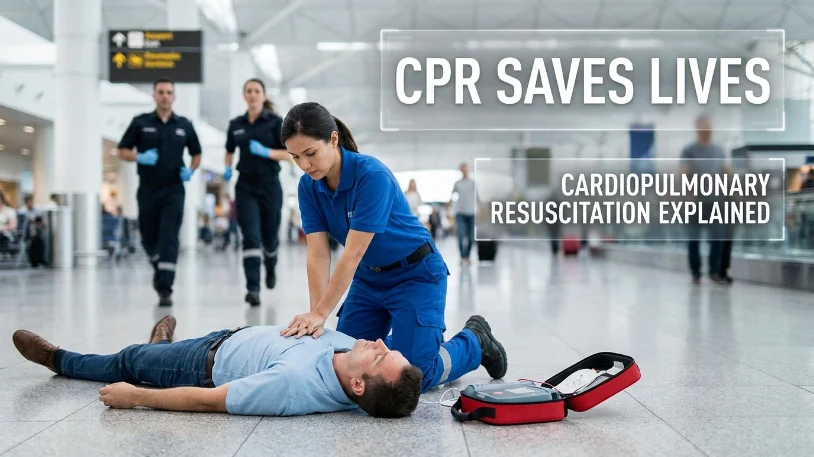
CPR stands for Cardiopulmonary Resuscitation. It is an emergency life-saving technique used when someone’s heart stops beating or they stop breathing normally. CPR combines chest compressions and, when appropriate, rescue breaths to keep blood and oxygen flowing to the brain and other vital organs until professional medical help arrives.
What Does CPR Stand For?
Every year, thousands of people experience sudden medical emergencies where immediate action makes the difference between life and death. In many of these situations, one simple skill can dramatically improve survival chances: CPR.
So, what does CPR stand for?
CPR stands for Cardiopulmonary Resuscitation.
The CPR acronym consists of three important medical terms:
| Letter | Meaning | Explanation |
| C | Cardio | Related to the heart |
| P | Pulmonary | Related to the lungs |
| R | Resuscitation | Restoring life or vital functions |
Together, these words describe a life-saving technique designed to help maintain circulation and oxygen delivery when a person’s heart or breathing stops.
Although many people know the CPR abbreviation, fewer understand how it works or why it remains one of the most important emergency response skills in the world.
What Is the Full Meaning of CPR?
CPR Full Form Explained
The CPR full form is Cardiopulmonary Resuscitation.
Let’s break down each word.
Cardio
The word cardio comes from the Greek word kardia, meaning heart.
The heart acts as the body’s pump. It pushes oxygen-rich blood throughout the body. When the heart stops functioning properly, vital organs quickly begin to suffer from oxygen deprivation.
Pulmonary
Pulmonary refers to the lungs.
The lungs bring oxygen into the bloodstream and remove carbon dioxide from the body. Without oxygen, brain cells begin dying within minutes.
Resuscitation
Resuscitation means restoring life or reviving someone from apparent death or unconsciousness.
In emergency medicine, resuscitation focuses on maintaining critical body functions until normal circulation and breathing return.
What Does CPR Stand for in Medical Terms?
In healthcare and emergency medicine, CPR refers to a structured procedure used to support circulation and breathing during:
- Cardiac arrest
- Sudden cardiac arrest
- Drowning emergencies
- Choking incidents
- Electrocution injuries
- Drug overdoses
- Severe trauma situations
Medical professionals, first responders, and trained bystanders all use CPR as part of emergency medical care.
Simple CPR Definition for Beginners
A simple CPR definition is:
CPR is a life-saving technique that uses chest compressions and rescue breaths to keep blood and oxygen moving through the body when a person’s heart or breathing has stopped.
This simple action can buy precious time until emergency services arrive.
What Is CPR and Why Is It Important?
Understanding Cardiopulmonary Resuscitation
Cardiopulmonary resuscitation is not designed to cure the underlying problem immediately.
Instead, CPR acts as a temporary support system.
Think of it like manually keeping a vehicle moving until a mechanic can repair the engine. The body still needs advanced medical treatment, yet CPR helps prevent immediate death by preserving blood flow.
Why CPR Saves Lives
The human brain depends on a constant oxygen supply.
When blood flow stops:
- Brain injury may begin within minutes.
- Organ damage progresses rapidly.
- Survival chances decrease every minute.
- Permanent disability becomes more likely.
CPR helps slow this process by manually circulating blood throughout the body.
The Critical First Minutes After Heart Stoppage
The first few minutes following cardiac arrest often determine the outcome.
Without intervention:
| Time After Cardiac Arrest | Possible Effect |
| 0-1 minute | Heart stops pumping effectively |
| 1-3 minutes | Oxygen supply begins falling |
| 4-6 minutes | Brain injury risk increases |
| 6-10 minutes | Severe neurological damage possible |
| 10+ minutes | Survival becomes much less likely |
Immediate CPR helps bridge the gap until professional medical care arrives.
The Role of Bystander CPR
Many cardiac arrests occur outside hospitals.
They often happen:
- At home
- At work
- During sports activities
- In shopping centers
- In public places
In these situations, family members, coworkers, or nearby strangers become the first responders.
Bystander CPR frequently provides the victim’s best chance of survival before emergency personnel arrive.
How Does CPR Work?
The Science Behind Chest Compressions
The heart normally pumps blood through a rhythmic contraction process.
When cardiac arrest occurs, that pumping action stops.
Chest compressions temporarily replace the heart’s pumping function.
Each compression pushes blood toward:
- The brain
- The lungs
- The heart muscle
- Other vital organs
Although compressions cannot fully replicate normal heart function, they provide enough circulation to keep tissues alive longer.
Maintaining Blood Flow to Vital Organs
Blood carries essential nutrients and oxygen.
Without circulation:
- Cells stop functioning.
- Organs begin failing.
- Permanent damage develops quickly.
CPR creates artificial circulation that helps preserve organ function until advanced treatment becomes available.
Oxygen Delivery During Emergencies
Rescue breaths add oxygen to the lungs.
That oxygen enters the bloodstream and supports vital organs.
Modern CPR guidelines often emphasize chest compressions because maintaining circulation remains the immediate priority.
However, rescue breathing still plays an important role in many emergency situations.
Why Brain Damage Can Occur Without CPR
The brain consumes enormous amounts of oxygen.
Even though it represents only a small portion of body weight, it requires a significant share of total blood flow.
Without oxygen:
- Brain cells begin dying rapidly.
- Memory loss can occur.
- Cognitive impairment becomes possible.
- Permanent disability may result.
CPR helps delay this damage.
How CPR Improves Survival Chances
Several factors influence survival:
- Time until CPR begins
- CPR quality
- AED availability
- Underlying medical condition
- Emergency response time
The sooner CPR starts, the greater the chance of preserving brain function and survival.
When Should CPR Be Performed?
Recognizing Cardiac Arrest
Cardiac arrest occurs when the heart suddenly stops pumping blood effectively.
It differs from a heart attack.
A heart attack involves reduced blood flow to part of the heart muscle. Cardiac arrest involves the heart stopping its pumping function.
Signs Someone May Need CPR
Common warning signs include:
- Sudden collapse
- Unresponsiveness
- No normal breathing
- Absence of movement
- Lack of responsiveness to shouting
These signs require immediate action.
Unresponsiveness and Lack of Normal Breathing
If a person:
- Does not respond when spoken to
- Does not respond to gentle shaking
- Is not breathing normally
Emergency services should be contacted immediately.
CPR may be necessary.
Gasping Versus Normal Breathing
Agonal gasping can confuse bystanders.
Gasping may look like breathing. However, it often occurs during cardiac arrest and should not be mistaken for normal breathing.
Occasional gasps do not mean the person is receiving adequate oxygen.
Situations Where CPR May Be Needed
CPR may become necessary after:
- Sudden cardiac arrest
- Drowning incidents
- Severe choking episodes
- Electrical injuries
- Drug overdoses
- Respiratory failure
- Certain traumatic injuries
Recognizing these emergencies quickly can save valuable time.
What Are the Basic CPR Steps?
Check for Safety
Before helping, make sure the area is safe.
Potential dangers may include:
- Traffic
- Fire
- Electrical hazards
- Water hazards
- Falling objects
Your safety matters too.
Assess Responsiveness
Try to wake the person.
You can:
- Speak loudly
- Tap their shoulder
- Ask if they are okay
No response may indicate a serious emergency.
Call Emergency Services
Contact emergency responders immediately.
If others are nearby:
- Assign someone to call
- Request an AED
- Begin CPR without delay
Begin Chest Compressions
Chest compressions form the foundation of modern CPR.
Key principles include:
- Push hard
- Push fast
- Allow full chest recoil
- Minimize interruptions
Open the Airway
Opening the airway helps improve airflow.
A properly positioned airway can make rescue breathing more effective.
Provide Rescue Breaths
When trained and appropriate, rescue breaths help deliver oxygen to the lungs.
Many CPR protocols combine compressions with rescue breathing.
Continue Until Help Arrives
Continue CPR until:
- Emergency personnel take over
- The person shows signs of life
- An AED directs otherwise
- The scene becomes unsafe
Persistence can save lives.
Adult CPR Explained
Adult CPR Compression Technique
Adult CPR forms the foundation of most CPR training programs because adults account for a large percentage of out-of-hospital cardiac arrest cases.
When performing adult CPR, chest compressions are the most critical component. The goal is simple: keep blood circulating until professional medical help arrives.
Effective compressions require:
- Firm, steady pressure
- Minimal interruptions
- Correct hand placement
- Proper compression depth
- Consistent rhythm
Many instructors compare the rhythm to the beat of a fast-paced song. Maintaining a steady pace helps ensure adequate blood flow.
Correct Hand Placement
Hand placement significantly affects CPR effectiveness.
For adult CPR:
- Place the heel of one hand in the center of the chest.
- Position the second hand on top of the first.
- Interlock your fingers.
- Keep your arms straight.
- Position your shoulders directly above your hands.
This alignment allows you to use your body weight rather than relying solely on arm strength.
Compression Depth and Rate
Proper depth and speed matter.
| CPR Component | Recommendation |
| Compression Depth | About 2 inches (5 cm) |
| Compression Rate | 100–120 compressions per minute |
| Hand Position | Center of chest |
| Chest Recoil | Complete recoil after each compression |
Compressions that are too shallow may not generate enough blood flow.
Compressions that are too slow can reduce circulation to vital organs.
Rescue Breathing for Adults
Traditional CPR often combines compressions with rescue breaths.
The general sequence includes:
- 30 chest compressions
- 2 rescue breaths
- Repeat the cycle
Rescue breaths help deliver oxygen into the lungs while compressions circulate oxygenated blood throughout the body.
Common Adult CPR Mistakes
Even trained individuals sometimes make errors during stressful emergencies.
Common mistakes include:
- Compressing too slowly
- Compressing too lightly
- Interrupting compressions frequently
- Incorrect hand placement
- Failing to allow full chest recoil
- Delaying CPR while checking for a pulse
Avoiding these mistakes improves the effectiveness of CPR.
Child CPR Explained
Differences Between Adult and Child CPR
Children are not simply smaller adults.
Their bodies function differently, which means CPR techniques require adjustments.
Several factors distinguish child CPR:
- Smaller body size
- Different causes of cardiac arrest
- More frequent respiratory emergencies
- Reduced compression force requirements
Understanding these differences helps rescuers provide appropriate care.
Child Compression Technique
For most children, rescuers use one or two hands depending on the child’s size.
The goal remains the same:
- Maintain circulation
- Support oxygen delivery
- Preserve organ function
Because children have smaller chests, excessive force can increase injury risk.
Rescue Breaths for Children
Respiratory problems often contribute to pediatric emergencies.
As a result, rescue breathing plays an especially important role in child CPR.
Potential causes include:
- Drowning
- Choking
- Severe asthma attacks
- Respiratory infections
- Airway obstruction
In these situations, oxygen support becomes particularly important.
Special Considerations for Pediatric Emergencies
Children may experience cardiac arrest for different reasons than adults.
Common pediatric causes include:
- Respiratory failure
- Congenital heart conditions
- Severe infections
- Trauma
- Drowning incidents
Because breathing problems frequently contribute to emergencies involving children, rapid recognition and intervention remain essential.
Infant CPR Explained
Infant CPR Overview
Infant CPR requires additional modifications due to an infant’s delicate anatomy.
Infants under one year old have:
- Smaller airways
- More fragile bones
- Different chest structures
- Faster heart rates
These differences require specialized techniques.
Proper Finger Placement
Unlike adult CPR, infant CPR often uses fingers rather than full hands.
Rescuers typically place fingers on the center of the chest just below the nipple line.
This method allows controlled compressions while reducing injury risk.
Compression Depth for Infants
Compression depth should equal approximately one-third of the chest’s depth.
The objective remains consistent:
- Support circulation
- Deliver oxygen
- Protect vital organs
Excessive force can cause harm, so proper technique matters.
Rescue Breathing for Babies
Infants depend heavily on oxygen.
For this reason, rescue breaths often play a major role during infant resuscitation.
Many infant emergencies result from:
- Choking
- Suffocation
- Respiratory illness
- Drowning
- Sudden medical complications
Providing oxygen support may significantly improve outcomes.
Important Infant CPR Precautions
When helping an infant:
- Handle gently
- Use age-appropriate techniques
- Avoid excessive compression force
- Maintain proper head positioning
- Monitor airway alignment carefully
Specialized training helps caregivers develop confidence when responding to infant emergencies.
What Is Hands-Only CPR?
Hands-Only CPR Meaning
Hands-only CPR, sometimes called compression-only CPR, focuses exclusively on chest compressions.
No rescue breaths are provided.
The rescuer continuously performs chest compressions until professional help arrives.
This approach makes CPR easier for untrained bystanders.
When Compression-Only CPR Is Recommended
Hands-only CPR is often recommended when:
- The rescuer lacks formal training
- Rescue breathing is not possible
- The emergency involves an adult sudden cardiac arrest
- Immediate action is necessary
In many public emergencies, chest compressions alone can provide critical support.
Advantages of Hands-Only CPR
Several benefits make compression-only CPR attractive for bystanders.
Simpler to Learn
Many people feel more comfortable learning chest compressions than full CPR.
Faster Response
Bystanders can begin compressions immediately.
Increased Participation
Some individuals hesitate to provide mouth-to-mouth ventilation.
Hands-only CPR removes this barrier.
Effective During Early Cardiac Arrest
For many adult cardiac arrest victims, compression-only CPR provides meaningful circulation during the first critical minutes.
Limitations of Compression-Only CPR
Hands-only CPR is valuable, yet it has limitations.
Certain emergencies still benefit from rescue breathing.
Examples include:
- Drowning incidents
- Infant emergencies
- Child emergencies
- Respiratory failure
- Drug overdose situations
Oxygen support becomes increasingly important in these cases.
CPR for Untrained Bystanders
One of the biggest barriers to CPR intervention is fear.
People worry about:
- Doing something wrong
- Causing injury
- Legal consequences
- Lack of training
The reality is simple:
Taking action is often better than doing nothing during cardiac arrest.
Hands-only CPR empowers more people to help during emergencies.
CPR and AED: How They Work Together
What Is an Automated External Defibrillator?
An Automated External Defibrillator (AED) is a portable device designed to analyze heart rhythms and deliver an electrical shock when appropriate.
AEDs appear in:
- Airports
- Schools
- Sports facilities
- Shopping centers
- Office buildings
- Public venues
They have become a crucial part of emergency preparedness programs worldwide.
Understanding Defibrillation
Defibrillation involves delivering a controlled electrical shock to the heart.
The shock can help restore a normal heart rhythm in specific cardiac arrest situations.
An AED determines whether a shock is appropriate.
This automation allows non-medical individuals to use the device safely.
When to Use an AED
Use an AED when:
- A person collapses suddenly
- They are unresponsive
- They are not breathing normally
- Cardiac arrest is suspected
The AED provides step-by-step voice instructions.
Step-by-Step AED Use
Most AEDs follow a similar process.
- Turn on the AED.
- Follow voice prompts.
- Attach electrode pads.
- Allow rhythm analysis.
- Deliver a shock if instructed.
- Resume CPR immediately afterward.
The device guides users throughout the process.
CPR Before and After AED Shocks
CPR and AED use work together.
CPR maintains circulation.
The AED addresses abnormal heart rhythms.
Together they create a powerful emergency response strategy.
| Function | CPR | AED |
| Maintains Blood Flow | Yes | No |
| Provides Oxygen Circulation | Yes | No |
| Analyzes Heart Rhythm | No | Yes |
| Delivers Electrical Shock | No | Yes |
| Supports Survival | Yes | Yes |
Public Access Defibrillation Programs
Many communities now place AEDs in public locations.
Benefits include:
- Faster intervention
- Improved survival rates
- Increased community preparedness
- Enhanced emergency response
The combination of bystander CPR and AED availability has transformed cardiac arrest outcomes in many regions.
CPR Training and Certification
Why CPR Training Matters
Although anyone can attempt CPR, formal training provides valuable skills and confidence.
Training teaches:
- Proper technique
- Emergency assessment
- AED use
- Rescue breathing
- Team-based response
Knowledge reduces hesitation during emergencies.
What Happens During CPR Classes?
Most CPR courses include:
- Classroom instruction
- Demonstrations
- Hands-on practice
- Scenario training
- Skills assessment
Participants learn how to respond calmly and effectively.
CPR Certification Requirements
Certification programs vary by organization and profession.
Many courses cover:
- Adult CPR
- Child CPR
- Infant CPR
- AED operation
- Emergency response procedures
Successful participants receive certification documentation.
CPR Renewal and Recertification
CPR skills can decline over time.
For this reason, many certifications require periodic renewal.
Benefits of recertification include:
- Updated guidelines
- Skill refreshment
- Increased confidence
- Improved technique
Regular practice helps maintain readiness.
Workplace CPR Training
Many employers encourage CPR education.
Industries that frequently require CPR certification include:
- Healthcare
- Education
- Childcare
- Public safety
- Fitness
- Hospitality
Workplace preparedness strengthens community resilience.
CPR Skills for Parents, Teachers, and Caregivers
Certain groups benefit especially from CPR training.
These include:
- Parents
- Grandparents
- Babysitters
- Teachers
- Coaches
- Caregivers
Medical emergencies can occur anywhere. Preparation often makes a critical difference.
CPR Statistics and Survival Rates
Cardiac Arrest Facts Everyone Should Know
Cardiac arrest remains one of the most serious medical emergencies worldwide.
Unlike many health conditions that develop gradually, cardiac arrest often occurs without warning. A person may appear healthy one moment and collapse the next.
Several important facts highlight why CPR matters:
- Cardiac arrest can happen at any age.
- Most out-of-hospital cardiac arrests occur at home.
- Immediate intervention greatly improves survival chances.
- Delayed treatment reduces the likelihood of recovery.
- Bystanders often become the first line of defense.
These facts emphasize a simple reality: knowing CPR can save a life.
Survival Rate Improvements With CPR
Every minute counts during cardiac arrest.
Without intervention, survival chances decline rapidly because the brain and organs stop receiving oxygen-rich blood.
The chain of survival generally includes:
- Early recognition
- Immediate emergency response activation
- Rapid CPR
- Early AED use
- Advanced medical care
When bystanders perform CPR quickly, they help maintain circulation until professional responders arrive.
Importance of Immediate Action
Waiting for emergency personnel without providing assistance can waste valuable minutes.
Think of CPR as a bridge.
The bridge does not solve the underlying medical emergency. However, it helps keep the victim alive until advanced treatment becomes available.
Immediate action can:
- Preserve brain function
- Support organ health
- Increase survival potential
- Improve recovery outcomes
Community CPR Programs
Communities that promote CPR education often create stronger emergency response networks.
Examples include:
- School CPR programs
- Workplace training initiatives
- Public AED placement
- Community health campaigns
- Sports organization training
When more people know CPR, more lives can potentially be saved.
Real-World Impact of CPR Training
CPR training creates confidence.
People who understand CPR often feel more prepared to respond during emergencies.
Benefits of widespread CPR education include:
| Benefit | Impact |
| Increased Preparedness | More people can respond quickly |
| Faster Intervention | Reduced delays in treatment |
| Improved Community Safety | Better emergency outcomes |
| Greater Public Awareness | More people recognize cardiac arrest |
| Enhanced Survival Opportunities | Victims receive earlier assistance |
A trained community becomes a safer community.
Common Myths About CPR
Myth: Only Healthcare Workers Can Perform CPR
This is one of the most common misconceptions.
Many people believe CPR belongs exclusively to doctors, nurses, or paramedics.
In reality, ordinary citizens frequently perform life-saving CPR before emergency responders arrive.
Anyone can learn CPR.
Many successful rescues begin with a family member, coworker, friend, or stranger taking action.
Myth: CPR Restarts the Heart
Movies often create unrealistic expectations.
People see dramatic scenes where CPR instantly revives someone.
Real life works differently.
CPR primarily helps circulate blood and oxygen. It does not usually restart the heart by itself.
Instead, CPR helps preserve vital organ function until advanced treatment becomes available.
Myth: CPR Always Includes Mouth-to-Mouth Breathing
Modern CPR guidance has evolved.
Hands-only CPR has become a widely accepted option for adult sudden cardiac arrest.
This means chest compressions alone can provide valuable assistance.
While rescue breathing remains important in certain situations, mouth-to-mouth ventilation is not always required.
Myth: You Can Hurt Someone by Doing CPR
Some people hesitate because they fear causing injury.
The truth is that effective chest compressions can occasionally cause:
- Rib fractures
- Bruising
- Chest soreness
However, during cardiac arrest, the alternative is far more serious.
Without intervention, the victim faces a life-threatening emergency.
Myth: CPR Guarantees Survival
CPR significantly improves survival opportunities.
However, no emergency treatment guarantees a positive outcome.
Several factors influence recovery:
- Underlying medical condition
- Time before CPR begins
- AED availability
- Emergency response time
- Overall health status
Even when survival is not achieved, CPR still provides the victim with the best possible chance.
CPR Versus First Aid
Understanding the Difference
Many people confuse CPR and first aid.
Although they often work together, they are not the same thing.
| CPR | First Aid |
| Used during life-threatening emergencies | Used for many injuries and illnesses |
| Focuses on circulation and breathing | Focuses on immediate care and stabilization |
| Commonly used during cardiac arrest | Used for cuts, burns, fractures, and more |
| Supports life functions | Prevents conditions from worsening |
Understanding this distinction helps people choose the appropriate response.
When First Aid Is Enough
First aid alone may be sufficient for:
- Minor burns
- Small cuts
- Sprains
- Nosebleeds
- Minor allergic reactions
These situations generally do not involve loss of breathing or circulation.
When CPR Becomes Necessary
CPR becomes necessary when vital functions stop.
Examples include:
- Cardiac arrest
- Respiratory arrest
- Severe drowning emergencies
- Major airway obstruction
- Certain overdose situations
These emergencies require immediate life-support techniques.
How CPR Fits Into Basic Life Support (BLS)
Basic Life Support (BLS) is a broader emergency care framework.
CPR represents one component of BLS.
Basic Life Support may include:
- CPR
- AED use
- Airway management
- Emergency assessment
- Team-based response
Healthcare professionals often receive more advanced BLS training than the general public.
Frequently Asked Questions
What Does CPR Stand for and How Does It Work?
CPR stands for Cardiopulmonary Resuscitation.
It works by using chest compressions and, when appropriate, rescue breaths to maintain blood circulation and oxygen delivery during cardiac arrest or respiratory emergencies.
What Does CPR Mean in First Aid?
Within first aid and emergency response, CPR refers to a life-saving procedure that supports breathing and circulation when normal body functions stop.
It is one of the most important emergency interventions available.
What Does CPR Stand for in Healthcare?
In healthcare settings, CPR stands for Cardiopulmonary Resuscitation.
Medical professionals use CPR as part of emergency medicine, critical care, emergency response systems, and resuscitation efforts.
What Is the Full Meaning of CPR?
The full meaning of CPR is:
Cardiopulmonary Resuscitation
- Cardio = Heart
- Pulmonary = Lungs
- Resuscitation = Revival or restoration of vital functions
Why Is CPR Important?
CPR is important because it helps:
- Maintain blood circulation
- Deliver oxygen to the brain
- Preserve organ function
- Improve survival chances
- Buy time until professional treatment arrives
Without intervention, irreversible damage can occur quickly.
When Should CPR Be Performed?
CPR should be considered when someone:
- Becomes unresponsive
- Stops breathing normally
- Experiences suspected cardiac arrest
- Suffers respiratory arrest
Rapid recognition remains essential.
How Long Should CPR Be Performed?
Continue CPR until:
- Emergency personnel arrive
- The person shows signs of recovery
- An AED directs otherwise
- The environment becomes unsafe
Consistency and persistence matter.
Who Can Perform CPR?
Anyone can perform CPR.
Formal training helps improve effectiveness, yet untrained bystanders can still provide hands-only CPR during emergencies.
Quick action often matters more than perfect technique.
What Is Hands-Only CPR?
Hands-only CPR involves continuous chest compressions without rescue breaths.
It serves as a practical option for many adult sudden cardiac arrest emergencies.
What Is the Difference Between CPR and BLS?
CPR is a specific life-saving technique.
Basic Life Support (BLS) is a broader emergency care system that includes CPR, AED use, airway management, and emergency response procedures.
Is CPR Required Before Using an AED?
CPR and AED use often occur together.
Chest compressions help maintain circulation while the AED analyzes the heart rhythm and provides defibrillation when necessary.
Can CPR Be Performed Without Certification?
Yes.
Certification improves confidence and technique, yet anyone witnessing a cardiac arrest emergency can attempt CPR.
Immediate action can save valuable time.
How Often Should CPR Skills Be Refreshed?
Regular practice helps maintain competence.
Many people choose refresher training every few years to stay current with CPR guidelines and recommendations.
Key CPR Facts Everyone Should Remember
The Most Important CPR Takeaways
If you remember only a few facts about CPR, remember these:
- CPR stands for Cardiopulmonary Resuscitation.
- CPR helps maintain blood circulation during cardiac arrest.
- Early intervention improves survival chances.
- Hands-only CPR is better than doing nothing.
- AEDs and CPR work together.
- Anyone can learn CPR.
- Immediate action matters.
Emergency Response Checklist
During a suspected cardiac arrest emergency:
✓ Ensure scene safety
✓ Check responsiveness
✓ Call emergency services
✓ Request an AED
✓ Begin chest compressions
✓ Follow AED instructions
✓ Continue CPR until help arrives
This simple checklist can guide decision-making during stressful situations.
Life-Saving Actions That Make a Difference
Many emergency rescues share a common theme.
Someone chose to act.
They did not wait for perfect conditions.
They did not assume someone else would help.
Instead, they recognized an emergency and responded.
That willingness to take action often becomes the most important factor in an emergency response.
Conclusion
Understanding CPR Can Save a Life
The question “What does CPR stand for?” may sound simple, yet the answer carries enormous significance.
CPR stands for Cardiopulmonary Resuscitation, a life-saving technique that supports circulation and oxygen delivery when a person’s heart stops beating or breathing stops normally.
Far more than just a medical acronym, CPR represents one of the most valuable emergency response skills a person can learn.
Whether performed by a healthcare professional, trained first responder, parent, teacher, coworker, or bystander, CPR provides critical support during life-threatening emergencies.
Why Learning CPR Is One of the Most Valuable Skills You Can Have
Emergencies rarely happen at convenient times.
They can occur:
- At home
- At school
- At work
- During sports activities
- While traveling
- In public places
Knowing CPR means you can respond confidently when seconds matter most.
The CPR meaning extends beyond its medical definition. It represents preparedness, quick thinking, and the ability to help preserve life during some of the most challenging moments a person may face.
When someone asks, “What does CPR stand for?”, the answer is straightforward:
CPR stands for Cardiopulmonary Resuscitation.
What that answer represents, however, is far more powerful a proven life-saving technique that continues to help people around the world every single day.

Sophia Bennett is a professional writer focused on explaining word meanings, expressions and everyday language in a simple and engaging way.