
Last Updated on June 8, 2026
Retinol has earned a reputation as one of the most effective skincare ingredients ever studied. Dermatologists recommend it for acne, wrinkles, uneven skin tone, enlarged pores, and many other common skin concerns. Despite its popularity, many people still ask the same question:
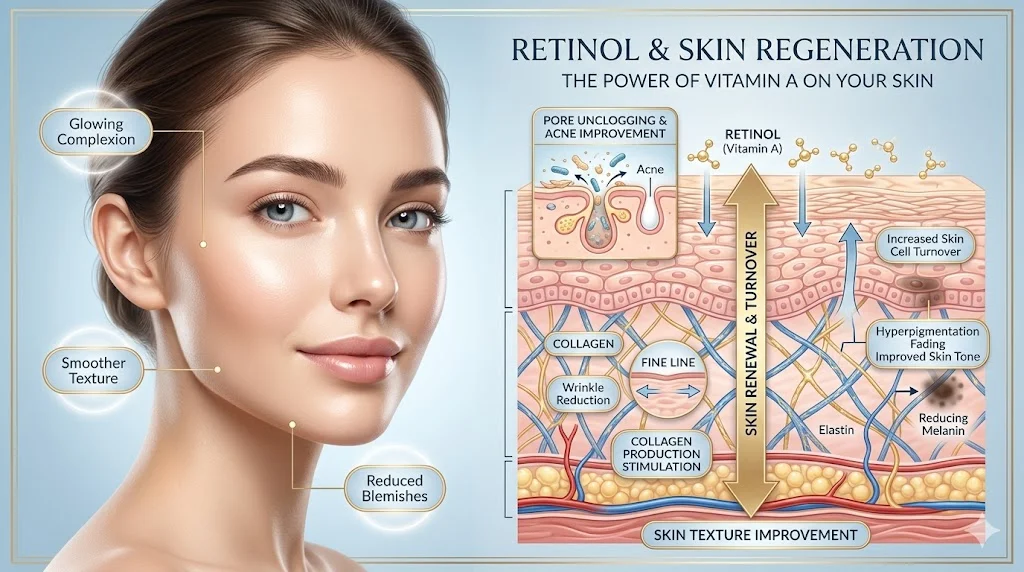
The short answer is simple. Retinol speeds up skin cell turnover, stimulates collagen production, unclogs pores, and improves overall skin quality. These effects help create smoother, clearer, firmer, and younger-looking skin over time.
However, the real story goes much deeper.
Understanding exactly how retinol works can help you use it correctly, avoid common mistakes, and achieve better results.
What Does Retinol Do for Your Skin?
Retinol is a derivative of Vitamin A that works beneath the skin’s surface to improve cellular function.
Its primary benefits include:
- Reducing fine lines and wrinkles
- Increasing collagen production
- Improving skin texture
- Treating acne and clogged pores
- Fading dark spots
- Correcting uneven skin tone
- Reducing signs of sun damage
- Improving skin elasticity
- Supporting long-term skin rejuvenation
Unlike ingredients that simply moisturize the skin, retinol changes how skin cells behave. That is why many experts consider it the gold standard of anti-aging skincare.
What Is Retinol?
Retinol belongs to a family of compounds called retinoids.
Retinoids are Vitamin A derivatives that help regulate skin cell growth and renewal. Retinol is available without a prescription and appears in many serums, creams, and anti-aging treatments.
Types of Retinoids
| Retinoid Type | Strength | Availability |
| Retinyl Palmitate | Mild | Over-the-counter |
| Retinol | Moderate | Over-the-counter |
| Retinaldehyde | Stronger | Over-the-counter |
| Adapalene | Strong | OTC in some countries |
| Tretinoin | Very Strong | Prescription |
Retinol must undergo several conversion steps inside the skin before becoming active. This process makes it gentler than prescription retinoids while still delivering significant benefits.
How Does Retinol Work?
Retinol works by communicating directly with skin cells.
After application, enzymes convert retinol into retinoic acid, the biologically active form that influences cellular behavior.
Increased Skin Cell Turnover
Healthy young skin naturally renews itself every few weeks.
As people age, this renewal process slows down.
Retinol accelerates epidermal turnover by encouraging old skin cells to shed more efficiently while stimulating new cells to emerge.
This process helps:
- Brighten dull skin
- Smooth rough patches
- Improve texture
- Reduce congestion
Stimulates Collagen Production
Collagen acts like the framework that keeps skin firm and resilient.
Aging gradually decreases collagen production.
Retinol helps stimulate collagen synthesis within the dermis, which may improve:
- Fine lines
- Wrinkles
- Skin firmness
- Elasticity
- Overall skin density
Prevents Pore Blockages
Retinol also helps keep pores clear.
By reducing dead skin buildup, it minimizes the formation of:
- Blackheads
- Whiteheads
- Comedones
- Inflammatory acne lesions
This makes retinol highly valuable for acne-prone skin.
What Does Retinol Do for Wrinkles?
One of retinol’s most researched benefits involves wrinkle reduction.
Wrinkles form due to several factors:
- Natural aging
- Collagen loss
- Repeated facial expressions
- Sun exposure
- Environmental stress
Retinol targets multiple causes simultaneously.
Fine Lines vs Deep Wrinkles
Retinol works best on:
- Fine lines
- Early wrinkles
- Mild to moderate photoaging
Deep wrinkles often improve but may require additional treatments for dramatic results.
Why Retinol Helps Aging Skin
Retinol supports:
- New collagen formation
- Improved skin thickness
- Better moisture retention
- Enhanced skin elasticity
These improvements create a smoother appearance and reduce visible signs of aging.
What Does Retinol Do for Acne?
Acne develops when pores become clogged with oil, dead skin cells, and bacteria.
Retinol addresses one of acne’s main causes: blocked pores.
Benefits for Acne-Prone Skin
Retinol can help:
- Reduce blackheads
- Decrease whiteheads
- Prevent future breakouts
- Improve skin clarity
- Minimize pore congestion
Many dermatologists recommend retinoids as a cornerstone of acne treatment.
Does Retinol Help Hormonal Acne?
Retinol cannot directly regulate hormones.
However, it can reduce the clogged pores and inflammation that often accompany hormonal breakouts.
Does Retinol Help Acne Scars?
The answer depends on the type of scar.
Post-Acne Marks
Retinol can significantly improve:
- Red marks
- Brown spots
- Post-inflammatory hyperpigmentation
Textural Scars
Retinol may improve mild textural scars by stimulating collagen production.
Severe acne scars usually require additional procedures such as:
- Microneedling
- Laser treatments
- Chemical peels
Can Retinol Fade Dark Spots?
Yes.
Retinol helps reduce hyperpigmentation by accelerating skin renewal.
Types of Pigmentation It May Improve
- Sun spots
- Age spots
- Post-acne marks
- Uneven skin tone
- Mild melasma symptoms
As pigmented cells shed more quickly, discoloration gradually becomes less visible.
Retinol Benefits at a Glance
| Benefit | How Retinol Helps |
| Wrinkles | Stimulates collagen |
| Fine Lines | Improves skin structure |
| Acne | Unclogs pores |
| Dark Spots | Accelerates cell turnover |
| Texture | Smooths rough skin |
| Elasticity | Supports collagen production |
| Pores | Improves appearance |
| Tone | Promotes even complexion |
| Sun Damage | Encourages skin renewal |
What Happens When You Start Using Retinol?
Many people expect immediate results.
Retinol does not work overnight.
The skin must adapt to increased cellular activity.
The Retinol Adjustment Period
Common early effects include:
- Mild redness
- Dryness
- Flaking
- Tightness
- Temporary irritation
These symptoms often improve as skin develops tolerance.
Retinol Purging
Some users experience an initial breakout phase known as purging.
This occurs because retinol accelerates the movement of existing clogged pores to the surface.
Purging usually resolves within several weeks.
How Long Does Retinol Take to Work?
Results vary based on:
- Skin type
- Product strength
- Consistency
- Individual biology
Typical Timeline
| Time Period | Expected Changes |
| 2-4 Weeks | Initial adjustment |
| 4-8 Weeks | Improved texture |
| 8-12 Weeks | Fewer breakouts |
| 3-6 Months | Reduced pigmentation |
| 6-12 Months | Improved wrinkles and firmness |
Consistency matters more than strength.
How Often Should You Use Retinol?
Beginners should introduce retinol gradually.
Beginner Schedule
Week 1-2:
- Twice weekly
Week 3-4:
- Three times weekly
Week 5+:
- Every other night
Eventually many users tolerate nightly application.
Signs You’re Using Too Much
Watch for:
- Persistent redness
- Burning sensations
- Excessive peeling
- Severe dryness
If these occur, reduce frequency.
How to Use Retinol Correctly
Applying retinol properly can improve results and reduce irritation.
Simple Retinol Routine
- Cleanse skin gently.
- Allow skin to dry completely.
- Apply a pea-sized amount.
- Follow with moisturizer.
- Use sunscreen every morning.
The Sandwich Method
Many beginners benefit from this approach:
- Moisturizer
- Retinol
- Moisturizer
This technique reduces irritation without eliminating benefits.
What Should Not Be Used With Retinol?
Some ingredients may increase irritation when combined improperly.
Use Caution With
- Strong glycolic acid treatments
- High-strength salicylic acid
- Aggressive exfoliants
- Harsh scrubs
Better Pairing Strategy
Alternate active ingredients on different nights if irritation develops.
Ingredients That Work Well With Retinol
Certain ingredients complement retinol beautifully.
Hyaluronic Acid
Benefits:
- Hydration
- Plumping
- Moisture retention
Niacinamide
Benefits:
- Barrier support
- Reduced irritation
- Improved skin tone
Ceramides
Benefits:
- Strengthen skin barrier
- Reduce dryness
- Improve comfort
Peptides
Benefits:
- Support skin repair
- Complement anti-aging goals
Retinol for Different Skin Types
Oily Skin
Retinol helps manage excess oil and pore congestion.
Dry Skin
Pair retinol with rich moisturizers and barrier-supporting ingredients.
Sensitive Skin
Start with low concentrations and limited frequency.
Mature Skin
Retinol remains one of the most effective anti-aging ingredients available.
Retinol Concentrations Explained
0.1% Retinol
Best for:
- Sensitive skin
- First-time users
0.3% Retinol
Best for:
- Beginners seeking visible results
0.5% Retinol
Best for:
- Intermediate users
1% Retinol
Best for:
- Experienced retinol users
Higher strength does not always mean better results.
Consistent use often matters more.
Retinol vs Other Retinoids
Retinol vs Retinaldehyde
Retinaldehyde converts more efficiently and works faster.
Retinol vs Tretinoin
Tretinoin is prescription-strength and generally produces stronger results.
Retinol vs Adapalene
Adapalene is often preferred specifically for acne treatment.
Retinol vs Retinyl Palmitate
Retinyl palmitate is milder but less potent.
Who Should Use Retinol?
Retinol may benefit people concerned about:
- Fine lines
- Wrinkles
- Acne
- Dark spots
- Uneven texture
- Enlarged pores
- Photoaging
- Preventative aging
Who Should Avoid Retinol?
Retinol may not suit everyone.
Consult a healthcare professional if you have:
- Extremely sensitive skin
- Certain inflammatory skin conditions
- Pregnancy-related concerns
Frequently Asked Questions
What does retinol actually do?
Retinol increases skin cell turnover, boosts collagen production, unclogs pores, and improves overall skin appearance.
Is retinol good for your skin?
For many people, yes. It remains one of the most researched and effective skincare ingredients available.
Can I use retinol every day?
Many users eventually tolerate daily use, but beginners should start slowly.
Does retinol remove wrinkles?
Retinol can significantly reduce the appearance of fine lines and wrinkles. Deep wrinkles may improve but rarely disappear completely.
Can retinol tighten skin?
Retinol may improve firmness by supporting collagen production and skin structure.
Does retinol help acne?
Yes. Retinol helps prevent clogged pores and supports clearer skin.
Can retinol lighten dark spots?
Yes. Consistent use often improves hyperpigmentation and uneven skin tone.
Should I use retinol at night?
Yes. Most retinol products are designed for nighttime use.
Final Verdict
If there were a skincare hall of fame, retinol would sit near the top.
Few ingredients offer such a broad range of scientifically supported benefits. From wrinkle reduction and collagen stimulation to acne treatment and pigmentation correction, retinol addresses multiple skin concerns through one powerful mechanism: improved cellular renewal.
The key to success is patience.
Retinol rewards consistency rather than speed. While you may notice smoother skin within weeks, the most impressive improvements often appear after several months of regular use.
For people seeking clearer, firmer, brighter, and healthier-looking skin, retinol remains one of the most effective tools available in modern skincare.

Sophia Bennett is a professional writer focused on explaining word meanings, expressions and everyday language in a simple and engaging way.