Last Updated on June 9, 2026
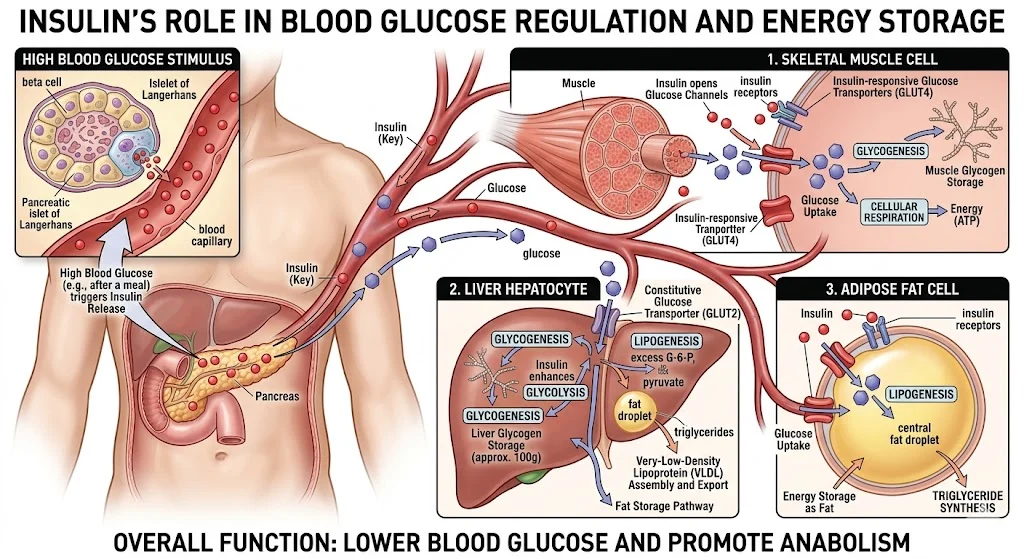
Produced by the pancreas, insulin is a vital hormone that unlocks your cells to absorb glucose from food for energy. It also lowers blood sugar levels by signaling the liver to store any leftover glucose for future use.
Insulin is one of those hormones you hear about often, especially when blood sugar or diabetes comes up. But most explanations stop at “it lowers blood sugar,” which barely scratches the surface.
In reality, insulin controls how your body uses energy after you eat. It decides whether glucose gets burned, stored, or converted into fat. It also acts as a master switch for metabolism.
So when you ask what does insulin do, you are really asking how your body manages survival-level energy balance every single day.
Let’s break it down clearly, step by step, without confusion.
Insulin Function in the Body: The Core Role Explained
Insulin is a peptide hormone made by the beta cells in the pancreas. Its main job is simple in theory but powerful in effect:
Insulin moves glucose from the blood into cells and keeps blood sugar stable.
But that single sentence hides a massive biological system underneath.
When you eat, your body breaks food into glucose. That glucose enters your bloodstream and raises blood sugar levels. The pancreas immediately responds by releasing insulin.
From that moment, insulin starts working across your entire body.
How insulin works in real life (simple breakdown)
Think of insulin as a delivery manager.
- Glucose is the fuel
- Bloodstream is the highway
- Cells are factories
- Insulin is the delivery truck dispatcher
Without insulin, fuel stays stuck in traffic. With insulin, everything flows.
How Insulin Is Produced in the Body
The pancreas sits behind your stomach. Inside it are tiny clusters of cells called islets of Langerhans. Within these islets are beta cells.
These beta cells constantly monitor blood glucose levels.
Step-by-step insulin production
- You eat food
- Carbohydrates turn into glucose
- Blood glucose rises
- Beta cells detect the increase
- Insulin is released into the bloodstream
This happens within minutes of eating.
Insulin and Blood Sugar Regulation (The Most Important Job)
Your brain and organs depend on glucose. But too much glucose in the blood becomes toxic over time.
So the body keeps blood sugar within a tight range:
| State | Blood Glucose Level |
| Normal fasting | 70–99 mg/dL |
| After eating | Below 140 mg/dL |
| Low blood sugar | Below 70 mg/dL |
| High blood sugar | Above 180 mg/dL |
Insulin keeps these numbers balanced.
What insulin does after you eat
After a meal, insulin:
- Lowers blood glucose
- Helps cells absorb glucose
- Stores extra glucose for later use
- Prevents glucose toxicity in the bloodstream
Without insulin, glucose would remain in the blood and slowly damage tissues.
How Insulin Works Step by Step Inside the Body
This is the actual biological process happening inside you right now after eating:
Step 1: Digestion creates glucose
Carbohydrates break down into glucose molecules.
Step 2: Glucose enters bloodstream
Blood sugar rises sharply.
Step 3: Pancreas releases insulin
Beta cells detect the change and respond.
Step 4: Insulin binds to receptors
Insulin attaches to receptors on:
- Muscle cells
- Fat cells
- Liver cells
Step 5: Glucose enters cells
Transport channels open, allowing glucose inside.
Step 6: Energy or storage happens
Glucose is used or stored depending on need.
Insulin and Glucose Uptake in Cells
Cells cannot absorb glucose without help. Insulin activates glucose transporters (especially GLUT-4).
Once activated:
- Muscle cells absorb glucose for energy
- Fat cells store glucose as fat
- Liver cells store glucose as glycogen
This is why insulin is often called a “key hormone.”
Insulin Purpose: Why Your Body Cannot Live Without It
Insulin is not optional. It is essential for life.
Main purposes of insulin
- Controls blood glucose levels
- Supports energy production
- Stores excess energy
- Prevents metabolic imbalance
- Regulates fat storage and breakdown
- Supports protein synthesis and muscle repair
Without insulin, cells starve even when glucose is high in the blood.
That is why untreated type 1 diabetes is life-threatening.
Insulin and Energy Storage: The Body’s Backup System
Your body is designed for survival, not constant food availability.
Insulin helps store energy for later.
Two main storage forms
Glycogen storage
- Stored in liver and muscles
- Used for short-term energy
Fat storage
- Stored in adipose tissue
- Used for long-term energy
When glycogen is full, excess glucose becomes fat.
Insulin and the Liver: The Control Center
The liver plays a major role in glucose regulation.
When insulin is high:
- Liver stops releasing glucose
- Stores glucose as glycogen
- Prevents blood sugar spikes
When insulin is low:
- Liver releases stored glucose
- Blood sugar rises
This balance keeps you alive during fasting.
Insulin Resistance: When the System Breaks Down
Insulin resistance happens when cells stop responding properly to insulin.
What happens next
- Pancreas produces more insulin
- Cells absorb less glucose
- Blood sugar stays high
- Fat storage increases
- Energy levels drop
Over time, this can lead to type 2 diabetes.
Type 1 vs Type 2 Diabetes (Insulin Dysfunction Explained)
Type 1 diabetes
- Immune system destroys beta cells
- No insulin is produced
- Requires external insulin
Type 2 diabetes
- Insulin is produced
- Cells become resistant
- Eventually insulin production may decline
Both conditions involve disrupted insulin function but in different ways.
Insulin Spike After Eating (What Really Happens)
After meals, insulin rises sharply.
This is normal and necessary.
Effects of insulin spike
- Rapid glucose absorption
- Energy availability
- Fat storage activation if excess calories exist
However, repeated high spikes from poor diet can lead to insulin resistance.
Hypoglycemia and Hyperglycemia: Insulin Imbalance Effects
Hypoglycemia (low blood sugar)
Causes:
- Too much insulin
- Skipping meals
- Excess physical activity
Symptoms:
- Dizziness
- Sweating
- Confusion
- Weakness
Hyperglycemia (high blood sugar)
Causes:
- Low insulin activity
- Insulin resistance
- High sugar intake
Symptoms:
- Fatigue
- Frequent urination
- Excess thirst
- Blurred vision
Insulin and Metabolism: The Master Switch
Insulin controls multiple metabolic pathways.
Carbohydrate metabolism
- Converts glucose into energy or glycogen
Fat metabolism
- Promotes fat storage
- Reduces fat breakdown
Protein metabolism
- Helps muscle growth
- Reduces muscle breakdown
This is why insulin is often called a “storage hormone.”
Insulin Sensitivity: Why It Matters
Insulin sensitivity determines how well your body responds to insulin.
High insulin sensitivity
- Efficient glucose uptake
- Stable energy
- Lower diabetes risk
Low insulin sensitivity
- Poor glucose uptake
- Higher insulin levels needed
- Increased disease risk
Insulin Receptors: The Lock and Key System
Insulin works only when it binds to receptors on cells.
- Insulin = key
- Receptor = lock
- Cell = door
If the lock stops working properly, glucose cannot enter efficiently.
Key Facts About Insulin Function
- Produced in the pancreas
- Released after meals
- Controls blood glucose levels
- Regulates fat storage
- Essential for energy metabolism
- Works across muscle, liver, and fat tissues
Insulin Function in the Body Explained Clearly
Insulin is a hormone produced by beta cells in the pancreas. It enters the bloodstream after you eat and controls how glucose moves through your body.
Its main function is simple:
Insulin helps move glucose from the blood into cells where it is used or stored.
But the process behind this is far more powerful and complex.
How Insulin Works in the Body
Here is what happens step by step:
- You eat carbohydrates
- Food breaks into glucose
- Blood sugar rises
- Pancreas releases insulin
- Insulin attaches to cell receptors
- Glucose enters cells
- Blood sugar returns to normal
This process repeats every time you eat.
Insulin and Blood Sugar Regulation
Your body needs blood sugar to stay within a safe range.
| Condition | Blood Glucose Level |
| Normal fasting | 70–99 mg/dL |
| After eating | Below 140 mg/dL |
| Hypoglycemia | Below 70 mg/dL |
| Hyperglycemia | Above 180 mg/dL |
Insulin keeps these levels balanced by removing excess glucose from the blood.
Role of Insulin in Energy Storage
Insulin does not only lower blood sugar. It also decides how energy is stored.
Two main storage forms:
Glycogen (short-term storage)
- Stored in liver and muscles
- Used for quick energy
Fat (long-term storage)
- Stored in fat tissue
- Used when food is not available
When glycogen is full, excess glucose becomes fat.
Insulin and Metabolism Control
Insulin acts as a metabolic switch in your body.
Carbohydrate metabolism
- Converts glucose into energy or glycogen
Fat metabolism
- Promotes fat storage
- Reduces fat breakdown
Protein metabolism
- Supports muscle growth
- Reduces muscle breakdown
This is why insulin is often called a storage hormone.
Insulin Resistance Explained
Insulin resistance happens when cells stop responding properly to insulin.
What happens:
- Pancreas produces more insulin
- Cells absorb less glucose
- Blood sugar stays high
- Fat storage increases
- Energy levels drop
Over time, this can lead to type 2 diabetes.
Insulin and the Liver Function
The liver plays a major role in glucose control.
When insulin is high:
- Liver stores glucose as glycogen
- Stops releasing glucose into blood
When insulin is low:
- Liver releases stored glucose
- Blood sugar rises
This keeps energy stable during fasting.
Insulin Spike After Eating
After meals, insulin rises quickly.
Effects:
- Rapid glucose absorption
- Energy availability
- Storage of excess energy
Repeated high spikes from poor diet can stress the system and reduce insulin sensitivity over time.
Hypoglycemia vs Hyperglycemia
Hypoglycemia (low blood sugar)
Causes:
- Too much insulin
- Skipping meals
Symptoms:
- Weakness
- Sweating
- Confusion
Hyperglycemia (high blood sugar)
Causes:
- Low insulin activity
- Insulin resistance
Symptoms:
- Thirst
- Fatigue
- Frequent urination
Insulin Receptors: The Lock and Key System
Insulin works only when it binds to receptors on cells.
- Insulin = key
- Receptor = lock
- Cell = door
If the lock stops working, glucose cannot enter cells properly.
FAQs
What is the main function of insulin?
The main function of insulin is to lower blood glucose levels by helping cells absorb glucose from the bloodstream.
Why does insulin increase after eating?
Insulin increases after eating because carbohydrates break into glucose, raising blood sugar. The pancreas releases insulin to control it.
What happens if insulin is too high?
High insulin levels can lead to fat storage, weight gain, and over time may contribute to insulin resistance.
What happens if insulin is too low?
Low insulin causes blood sugar to rise dangerously, leading to hyperglycemia and serious complications like diabetes symptoms.
Can you live without insulin?
No. Insulin is essential for survival. Without it, cells cannot use glucose for energy, which leads to life-threatening conditions.
Is insulin only related to sugar?
No. Insulin also affects fat storage, protein metabolism, and overall energy balance in the body.
What is insulin resistance in simple terms?
It is when body cells stop responding properly to insulin, causing blood sugar to remain high.
Does insulin store fat?
Yes. When energy intake is high, insulin helps convert excess glucose into fat for long-term storage.
Conclusion
Insulin is not just a blood sugar hormone. It is the body’s master energy regulator.
Every time you eat, insulin decides what happens next:
- Whether glucose becomes energy
- Whether it gets stored as glycogen
- Or whether it turns into fat
When insulin works properly, your body stays balanced, energized, and stable. When it fails, metabolism breaks down and long-term health problems begin.
Understanding insulin gives you a clear window into how your body survives, adapts, and manages energy every second of the day.

Sophia Bennett is a professional writer focused on explaining word meanings, expressions and everyday language in a simple and engaging way.