
Last Updated on June 8, 2026
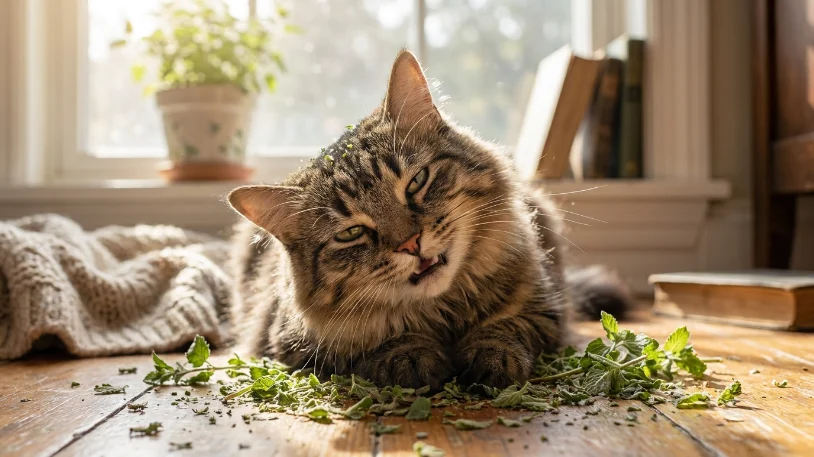
Catnip affects cats through a chemical called nepetalactone found in the plant Nepeta cataria. When cats sniff catnip, it binds to receptors in their nose and triggers a temporary behavioral response that can include excitement, rolling, rubbing, purring, or playful aggression. The effects usually last 5–15 minutes and then fade as the cat becomes temporarily desensitized. Not all cats respond because sensitivity is genetic, and kittens under six months often show no reaction. Catnip is generally safe and is used for enrichment, stress relief, and play stimulation in adult cats.
Catnip looks harmless. It is just a leafy green plant sitting in your garden or a toy. But for many cats, it acts like a switch that flips their entire mood. One minute they are calm. The next they are rolling, rubbing, jumping, or zoning out like they have entered their own tiny world of joy.
So what does catnip do to cats exactly?
The short answer: it triggers a temporary, brain-based behavioral reaction caused by a natural chemical called nepetalactone.
But the real story goes much deeper. Catnip doesn’t affect every cat. It doesn’t work the same way every time. And it doesn’t even affect kittens in the same way it affects adults.
Let’s break it all down in a clear, science-backed, and easy to understand way.
Understanding Catnip and Why It Matters for Cats
Catnip, also known as Nepeta cataria, is a herb from the mint family. It grows naturally in Europe, Asia, and parts of North America. Humans barely notice it, but cats react strongly to it.
At the center of this reaction is a chemical called nepetalactone. This compound is found in the leaves, stems, and seeds of the plant.
When a cat interacts with catnip, something fascinating happens. The chemical enters the nasal tissue and triggers sensory neurons. These neurons send signals to the brain that mimic certain feline pheromones.
Think of it like this:
Catnip doesn’t “drug” the cat. Instead, it “tricks” the brain into thinking something emotionally important is happening.
This is why the reaction feels so dramatic.
The Science Behind Catnip Response in Cats
When cats smell catnip, nepetalactone binds to olfactory receptors inside their nose. These receptors activate a sensory pathway that leads to the brain’s amygdala and hypothalamus.
These regions control:
- Emotion
- Pleasure response
- Aggression
- Hunting behavior
- Sexual-like behavioral cues
The result is a short burst of altered behavior that looks like excitement or euphoria.
But here’s the key detail most people miss:
Catnip does not affect all cats the same way because the response depends on genetics.
Roughly:
- 50% to 70% of cats respond strongly
- The rest show little to no reaction
So if your cat ignores catnip, it is not broken. It simply lacks the genetic sensitivity.
What Catnip Does to Cats Behaviorally
When catnip “works,” the changes in behavior are usually very noticeable. But they can vary from cat to cat.
Some cats become hyper and playful. Others become calm and dreamy. A few even become slightly aggressive or overstimulated.
Let’s break down the most common catnip behavior in cats.
Excitement and Playful Behavior
Many cats respond with bursts of energy. You might see:
- Sudden running or jumping
- Pouncing on invisible objects
- Chasing imaginary prey
- Aggressive play with toys
This is not random. Catnip activates hunting-related brain circuits.
It is almost like your cat is briefly entering “hunt mode” without real prey.
Rolling, Rubbing, and Face Pressing
One of the most iconic catnip reactions is rolling on the floor.
Cats often:
- Rub their face into the plant or toy
- Roll back and forth repeatedly
- Press their cheeks into catnip
This behavior helps spread the scent across their body. It may also mimic territorial marking behavior.
Vocalization and Purring
Some cats become vocal. You might hear:
- Soft meows
- Chirps
- Low growls (in overstimulated cats)
Others start purring intensely while rubbing against surfaces.
This combination shows a mix of excitement and emotional stimulation.
Relaxation and Calm States
Not all reactions are hyperactive. Some cats become:
- Drowsy
- Calm
- Less anxious
This calming response is especially useful for indoor cats experiencing stress.
Why Cats Like Catnip
Cats do not “like” catnip in the human sense. Instead, their brain reacts to it in a way that feels rewarding.
The chemical nepetalactone mimics natural feline pheromones linked to:
- Mating behavior
- Social bonding
- Territory marking
So when cats interact with catnip, they experience a harmless version of instinct-driven emotional stimulation.
In simple terms:
Catnip taps into ancient feline instincts.
That is why it feels so powerful.
How Long Catnip Affects Cats
The effects of catnip are temporary.
Typical timeline:
- Onset: 1–5 minutes after exposure
- Peak reaction: 5–15 minutes
- Recovery: 30–120 minutes of no sensitivity
After exposure, cats enter a short “refractory period.” During this time, they will not respond to catnip again immediately.
This is why catnip is best used in moderation.
What Happens When Cats Eat Catnip
Here’s where things get interesting.
Cats can either:
- sniff catnip
- or eat catnip
The effects are completely different.
If a cat smells catnip:
- Behavioral stimulation
- Excitement or calmness
- Temporary euphoria-like response
If a cat eats catnip:
- Mild sedative effect
- Digestive response
- Possible calmness or sleepiness
Eating catnip does not create the same “high” as sniffing it. Instead, it often works more like a mild calming herb.
In small amounts, it is safe.
In large amounts, it may cause:
- Mild stomach upset
- Soft stool
- Temporary discomfort
But there is no evidence of serious toxicity.
Is Catnip Safe for Cats?
Yes, catnip is generally safe for cats.
Veterinary research shows:
- No addictive properties
- No toxic buildup
- No long-term damage with normal use
However, moderation matters.
Too much catnip can lead to:
- Overstimulation
- Temporary aggression
- Mild digestive upset if eaten
Think of it like caffeine for humans, except weaker and non-addictive.
Catnip and Kittens
One of the most common questions is:
Can kittens have catnip?
The answer is mostly no for behavioral effects.
Kittens under 6 months usually do not respond because:
- Their sensory receptors are not fully developed
- Their brain response pathways are still maturing
Some kittens may show mild curiosity, but no strong reaction.
Adult sensitivity develops later in life.
Catnip Genetics and Why Some Cats Don’t React
Not all cats are wired for catnip.
The sensitivity is inherited genetically. If a cat lacks the specific receptor response, catnip will do nothing.
Key points:
- Sensitivity is inherited from parents
- It is not learned behavior
- It does not develop later if missing
This explains why two cats in the same house may react completely differently.
Forms of Catnip and How They Work
Catnip is not just one product. It comes in multiple forms.
Fresh Catnip
- Strongest natural form
- Contains highest oil concentration
- Best for sniffing or rubbing
Dried Catnip
- Most common form
- Used in toys and sprinkling
- Slightly less potent than fresh
Catnip Spray
- Extract-based liquid form
- Convenient for toys and scratching posts
- Lower potency but easy to use
Catnip Toys
- Filled with dried catnip
- Combines scent and play stimulation
- Long-lasting engagement tool
Each form works slightly differently but uses the same core compound.
Benefits of Catnip for Cats
Catnip is more than just entertainment. It has real behavioral benefits.
Indoor Enrichment
Indoor cats often lack stimulation. Catnip helps by:
- Encouraging movement
- Reducing boredom
- Activating natural instincts
Stress Relief
Some cats become calmer after exposure, which may help during:
- Vet visits
- Travel
- Environmental changes
Training Aid
Catnip can reinforce behaviors like:
- Using scratching posts
- Playing with toys instead of furniture
- Engaging in activity
Catnip Behavior Patterns Explained
Catnip does not create random behavior. It follows instinctual patterns.
Common sequence:
- Sniffing and alertness
- Head rubbing and rolling
- Play bursts or relaxation
- Gradual decline
- Temporary shutdown period
This cycle repeats only after recovery.
Why Catnip Doesn’t Work on Some Cats
There are several reasons:
- Genetic insensitivity
- Age (kittens)
- Overexposure leading to reduced response
- Low-quality catnip products
If your cat ignores catnip, try:
- Silver vine
- Valerian root
- Tatarian honeysuckle
These alternatives often trigger similar responses.
Silver Vine vs Catnip
Silver vine is often more powerful than catnip.
Comparison:
| Feature | Catnip | Silver Vine |
| Response rate | 50–70% | 80–90% |
| Strength | Moderate | Strong |
| Availability | Common | Less common |
| Safety | Safe | Safe |
Many cats that ignore catnip still respond to silver vine.
How Often Can Cats Have Catnip?
Moderation is important.
Recommended usage:
- 2–3 times per week
- 10–15 minute sessions
Overuse may reduce sensitivity over time.
Think of it like a “special treat,” not a daily habit.
Catnip Side Effects and Myths
Let’s clear up common misconceptions.
Myth: Catnip is addictive
False. There is no evidence of addiction.
Myth: Cats can overdose
False. There is no toxic overdose threshold in normal use.
Myth: All cats love catnip
False. Genetic variation changes everything.
Mild side effects may include:
- Temporary hyperactivity
- Mild digestive upset
- Short-term aggression in rare cases
Catnip and Feline Health
Catnip does not damage organs or brain function.
In fact, it supports:
- Physical activity
- Mental stimulation
- Emotional balance
Veterinary behaviorists often recommend it as part of enrichment programs for indoor cats.
Indoor Cats and Catnip Enrichment
Indoor cats benefit the most from catnip because they lack environmental stimulation.
You can use it to:
- Encourage exercise
- Reduce stress behavior
- Prevent boredom-related aggression
Example setup:
- Sprinkle dried catnip on scratching post
- Introduce catnip toy during playtime
- Rotate usage every few days
This keeps engagement high.
Catnip and Feline Behavior: What Science Suggests
Researchers believe catnip triggers a response similar to pheromonal stimulation.
It may mimic:
- Mating-related signals
- Territorial scent cues
- Social excitement triggers
This explains why the reaction looks emotional rather than physical.
It is not just smell. It is brain chemistry.
Conclusion
Catnip affects cats by activating a natural chemical response in the brain through nepetalactone. This leads to temporary behavioral changes like excitement, play, rolling, or relaxation.
It is safe, non-addictive, and varies widely between cats due to genetics and age.
In simple terms:
Catnip is a harmless sensory trigger that taps into a cat’s instincts and turns ordinary moments into bursts of playful or calming behavior.
Frequently Asked Questions
How long does catnip last in cats?
Usually 5–15 minutes of active response followed by a recovery period.
Is catnip safe for kittens?
Yes, but kittens usually do not respond until around 6 months of age.
Can cats eat catnip safely?
Yes, small amounts are safe and may even help with mild digestion.
Why do some cats not react to catnip?
Because sensitivity is genetic and not all cats inherit the receptor response.
Does catnip calm cats down?
Sometimes. It can either stimulate or relax depending on the cat’s individual response.

Sophia Bennett is a professional writer focused on explaining word meanings, expressions and everyday language in a simple and engaging way.