
Last Updated on July 8, 2026
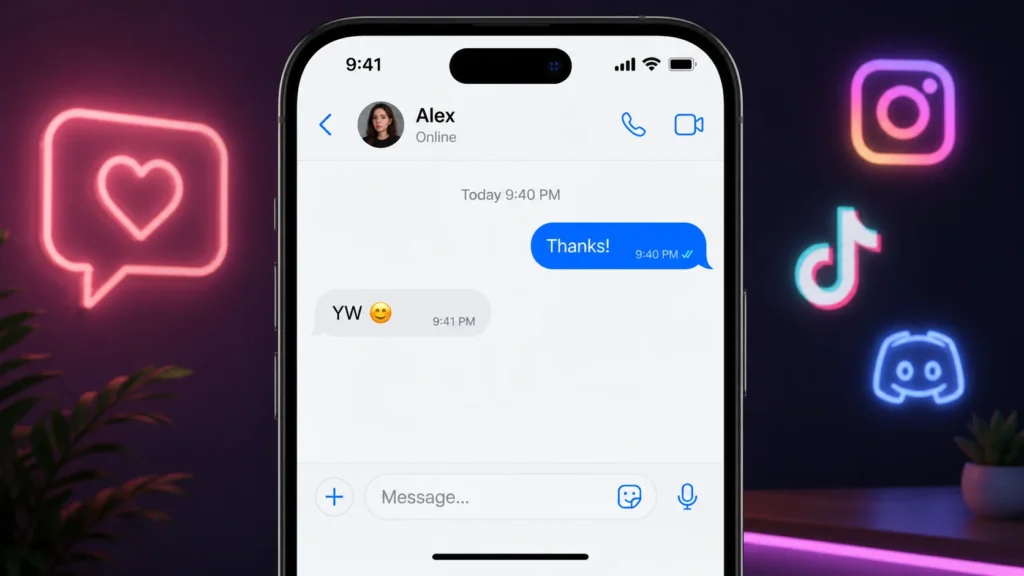
YW means “You’re Welcome.” It is a common internet slang abbreviation used in texting, chats, and social media. People use “YW” as a quick reply after someone says thank you. In most cases, it carries a polite and friendly tone and is widely used in informal digital communication.
Language online moves fast. Sometimes it feels like people type in shortcuts more than full sentences. One of the most common examples is “YW.”
If you’ve seen it in a chat and paused for a second wondering what does yw mean, you’re not alone. It looks small. Almost too small to matter. But it carries a full meaning that fits into everyday online communication.
At its core, YW stands for “You’re Welcome.”
Simple. Direct. Widely used.
But there’s more going on under the surface. The way people use “YW,” where they use it, and why it exists tells us a lot about modern digital communication.
Let’s break it down in a way that actually makes sense in real life.
What Does YW Mean in Texting?
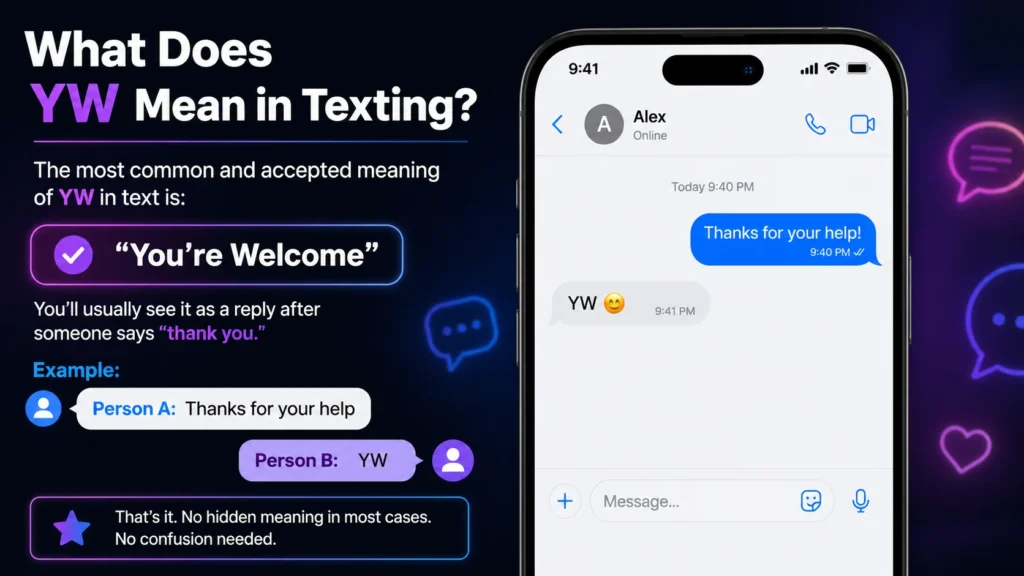
The most common and accepted meaning of YW in text is:
“You’re Welcome”
You’ll usually see it as a reply after someone says “thank you.”
Example:
- Person A: Thanks for your help
- Person B: YW
That’s it. No hidden meaning in most cases. No confusion needed.
However, like many internet slang terms, context matters. Sometimes people assume different meanings depending on tone, but over 95% of the time, it simply means “you’re welcome.”
Why People Use YW Instead of “You’re Welcome”
Now here’s where things get interesting.
Nobody types “YW” because they are lazy in a negative sense. It’s more about speed, rhythm, and how we communicate online today.
Speed is everything
Typing on a phone keyboard changes how people write. Short replies win. “YW” takes less time than “You’re welcome,” especially in fast conversations.
Think of it like tapping instead of speaking. You don’t want to type a full sentence when a quick reply does the job.
It matches internet culture
Online communication is built on abbreviations. People already use:
- LOL
- BRB
- OMG
- TY
- NP
“YW” fits right into that system.
It keeps conversations light
Short replies feel casual. Friendly. Easygoing. Nobody wants overly formal language in a quick chat with friends.
Compare:
- “You’re welcome” → polite and neutral
- “YW” → quick and relaxed
Same meaning. Different vibe.
It works across platforms
People use YW everywhere:
- WhatsApp chats
- Snapchat messages
- Instagram DMs
- Discord servers
- Gaming chats
No matter the platform, YW stays consistent.
Where You Will Commonly See YW
YW shows up in more places than most people expect. It’s not limited to one app or group.
Let’s break it down clearly.
Social media platforms
On social platforms, conversations move fast. Users don’t want to type long replies.
You’ll often see:
- Comments under posts
- Replies in DMs
- Short acknowledgments
Example:
- User: “Thanks for the info!”
- Reply: “YW 👍”
Messaging apps
Messaging apps are where YW truly lives.
On apps like WhatsApp and Messenger, people use it constantly because conversations feel informal.
Typical flow:
- “Thanks bro”
- “YW”
Short. Clean. Done.
Gaming chats
Gaming is one of the biggest drivers of slang.
In fast-paced matches, players don’t have time to type full sentences. So YW becomes a quick acknowledgment.
Example:
- Teammate: “Thanks for revive”
- Player: “YW”
It keeps communication efficient without slowing gameplay.
School and group chats
Even in school groups, YW appears frequently.
But here’s the catch: it stays informal. Students use it, but teachers usually prefer full words.
Real Meaning vs Misunderstood Meanings of YW
Most people assume YW has only one meaning. That’s mostly true, but internet slang can shift depending on tone and context.
Primary meaning
The main and widely accepted meaning:
YW = You’re Welcome
Rare alternative interpretations
In very specific or sarcastic contexts, people may misinterpret it as:
- “Yeah Whatever” (rare, informal sarcasm)
- “You Wish” (not commonly used as YW, but sometimes confused)
However, these are NOT standard meanings.
Why confusion happens
Text lacks tone. That’s the main issue.
When someone reads “YW,” they don’t hear voice tone or facial expression. So interpretation depends entirely on context.
Example:
- Friendly chat → “YW” = polite
- Sarcastic exchange → could be misread
But again, 99% of the time, it means “You’re Welcome.”
How to Use YW Correctly in Conversations
Using YW is easy, but using it correctly still matters if you want your messages to feel natural.
When to use it
You can use YW when:
- Someone thanks you
- The conversation is casual
- You want a short reply
Example:
- Friend: “Thanks for explaining that”
- You: “YW”
When it fits best
YW works best in:
- Friendly chats
- Online communities
- Quick replies
Simple usage rule
If someone says “thank you,” YW is a safe response almost every time.
When NOT to Use YW
Even though YW is common, it doesn’t fit everywhere.
Avoid using YW in formal settings
Don’t use it in:
- Job emails
- Professional reports
- Client communication
- Academic writing
Why it doesn’t work professionally
Formal communication needs clarity and full wording. Short slang can feel careless.
Instead, use:
- “You’re welcome”
- “Happy to help”
- “My pleasure”
Example comparison
- Informal: “YW”
- Professional: “You’re welcome. Let me know if you need anything else.”
Same meaning. Different tone. Different impact.
Variations of YW You Might See Online
People don’t always type YW the same way. Variations depend on mood and style.
Common versions
| Variation | Meaning | Tone |
| yw | You’re welcome | Neutral |
| YW | You’re welcome | Standard |
| YW 🙂 | You’re welcome | Friendly |
| YW!! | You’re welcome | Excited |
| yw 👍 | You’re welcome | Casual support |
What variations tell you
These small changes show emotion. Even without words, punctuation and emojis add tone.
Related Internet Slang You Should Know
YW is part of a larger system of digital shortcuts.
Here are some common ones:
- LOL → Laugh Out Loud
- BRB → Be Right Back
- TY → Thank You
- NP → No Problem
- TTYL → Talk To You Later
- IDK → I Don’t Know
Why slang matters
These shortcuts help people:
- Type faster
- Stay casual
- Match online culture
- Keep conversations flowing
Why YW and Internet Slang Matter in Digital Communication
Slang like YW is not just random typing. It reflects how humans adapt language to technology.
Faster communication
People want quick exchanges. Not long typing sessions.
Cultural identity
Gen Z and millennials especially use slang to create a shared digital language.
Efficiency in conversations
Short messages reduce friction in communication.
Imagine this:
- Long version: “You’re welcome, I was happy to help you.”
- Short version: “YW”
Both mean the same thing, but one moves faster.
NLP perspective (simple explanation)
From a language processing point of view:
- “what does yw mean” is a definition-seeking query
- “yw” is the target entity
- The system maps it to: You’re Welcome
This is called implicit entity resolution, where the system expands a short form into its full meaning.
FAQs
Does YW always mean You’re Welcome?
Yes, in almost all normal conversations, it means “You’re Welcome.”
Is YW rude?
No. It’s not rude. It’s neutral. But tone depends on context and relationship.
Is YW still used in 2026?
Yes. It is still widely used in texting, gaming, and social media.
Can I use YW in professional messages?
It’s better not to. Use full words in professional communication.
Why do people prefer YW over writing full words?
Because it saves time and fits the fast rhythm of online chats.
Final Takeaway
YW is one of the easiest internet slang terms to understand.
- It means “You’re Welcome”
- It is used in casual digital communication
- It helps people reply quickly and naturally
- It belongs to a larger system of texting abbreviations
If you see “YW” in a chat, you don’t need to overthink it. It’s simply a short, friendly response after someone says thank you.

Michael Anderson is a content writer specializing in word meanings, definitions and clear explanations of modern terms and phrases.