Last Updated on June 22, 2026
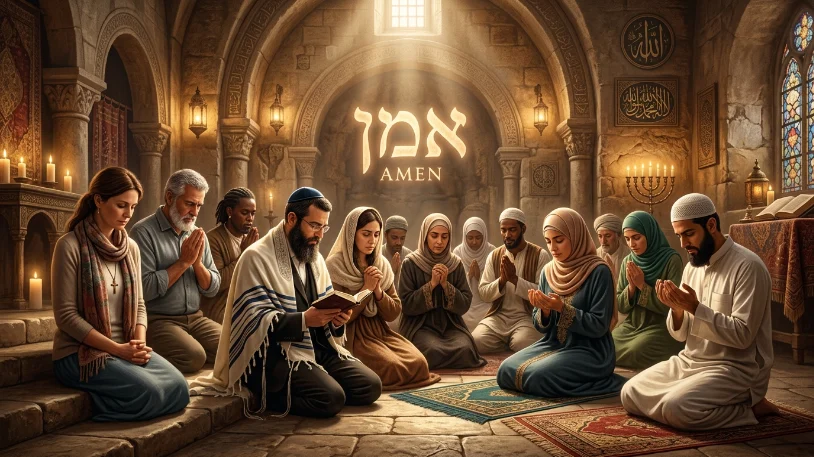
Amen means “so be it,” “truly,” or “let it be so.” It comes from the Hebrew word ’āmēn, which expresses agreement, truth, and certainty. People use it at the end of prayers in Judaism, Christianity, and Islam to affirm what has been said. In simple terms, saying “amen” means you agree with the prayer and believe it will come true.
Why the Word “Amen” Matters More Than You Think
You’ve probably said “amen” thousands of times. At church, after a prayer, or even in casual speech.
But here’s the interesting part.
Most people say it without fully understanding what it actually means.
So let’s fix that.
The phrase “what does amen mean” is not just a language question. It’s a journey into ancient Hebrew culture, early religious traditions, and modern spiritual expression.
At its core, “amen” is a word of agreement, truth, and confirmation. But its depth goes far beyond a simple “yes.”
Amen Meaning and Definition
What Does Amen Mean in Simple Terms?
In the simplest form:
- Amen = “So be it”
- Amen = “It is true”
- Amen = “Let it happen”
When someone says amen, they are:
- Agreeing with a statement or prayer
- Affirming truth
- Expressing trust in God or divine will
Think of it like hitting the “confirm” button in faith.
You hear a prayer. You say “amen.” You are saying, I stand with this.
Define Amen in a Clear Way
If we define amen precisely:
Amen is a declaration of affirmation used to express agreement, truth, or certainty, especially in religious prayer and worship.
It acts as a verbal seal at the end of spoken faith.
Amen Meaning in English
In English usage, amen translates closely to:
- Truly
- Surely
- So be it
- Let it be so
But no single English word fully captures its emotional and spiritual weight.
Amen Origin and Etymology
Where Does the Word Amen Come From?
The word “amen” originates from ancient Hebrew:
- Hebrew: אָמֵן (’āmēn)
It is built on the Hebrew root:
- ’mn (א-מ-נ) meaning:
- Firm
- Reliable
- Faithful
- Certain
So originally, amen didn’t just mean agreement. It meant:
“This is firm. This is trustworthy. This is true.”
Amen in Ancient Language History
The journey of the word looks like this:
- Ancient Hebrew → Jewish liturgy
- Translated into Greek (ἀμήν)
- Adopted into Latin
- Spread into English and global languages
What’s powerful is this:
👉 The word “amen” barely changed in 3,000+ years.
That alone shows how deeply rooted it is in religious tradition.
Amen Etymology Summary Table
| Language | Form | Meaning |
|---|---|---|
| Hebrew | ’āmēn | truth, certainty, faithfulness |
| Greek | amēn | truly, surely |
| Latin | amen | affirmation of prayer |
| English | amen | agreement at end of prayer |
Biblical Meaning of Amen
What Does Amen Mean in the Bible?
In the Bible, “amen” is used as:
- A response to prayer
- A confirmation of God’s truth
- A declaration of faith
It appears in both:
- Old Testament
- New Testament
Amen in the Old Testament
In the Old Testament, “amen” was often spoken by the people after blessings or curses.
Example idea:
- A priest declares a blessing
- The congregation responds: “Amen”
This shows:
- Agreement
- Acceptance
- Responsibility
Amen in the New Testament
In the New Testament, “amen” becomes even more powerful.
Jesus often uses it in a unique way:
- “Verily, verily” (translated from “Amen, Amen”)
This shows:
- Authority
- Truth
- Divine certainty
Jesus and the Word Amen
Jesus is even referred to symbolically as:
“The Amen, the faithful and true witness.”
This means:
- He represents ultimate truth
- His words are fully trustworthy
- He is the final confirmation of God’s message
Biblical Meaning Summary
In scripture, “amen” means:
- Truth confirmed
- God’s promise accepted
- Faith expressed aloud
Amen Meaning in Christianity
What Does Amen Mean in Christianity?
In Christianity, “amen” is used:
- At the end of prayers
- During worship services
- In hymns and songs
It represents:
Agreement with God’s will and spoken prayer.
Why Do Christians Say Amen?
Christians say amen to:
- Confirm prayers
- Show belief in God’s response
- Participate in communal worship
Think of it like this:
A prayer is spoken.
“Amen” is the spiritual signature.
Amen in Church Worship
In churches, you often hear:
- Pastor prays → congregation responds “Amen”
- Choir sings → crowd says “Amen”
- Closing prayer → final “Amen”
It creates unity.
Spiritual Meaning of Amen in Christianity
Spiritually, it means:
- Trust in God’s timing
- Agreement with divine will
- Acceptance of truth
Amen Meaning in Judaism
Jewish Use of Amen
In Judaism, “amen” is a response to blessings.
It is said when:
- Hearing prayers
- Receiving blessings
- Listening to Torah readings
Jewish Understanding of Amen
Judaism teaches that saying “amen” means:
- “I believe this blessing is true”
- “May it be fulfilled”
It is not passive.
It is active participation in faith.
Talmudic Insight
Jewish teachings emphasize:
“Greater is the one who answers amen than the one who recites the blessing.”
This shows how powerful agreement is considered.
Amen Meaning in Islam
What Does Amen Mean in Islam?
In Islam, “amen” is pronounced as:
- Ameen (آمين)
It is said after:
- Surah Al-Fatiha (opening chapter of the Quran)
- Supplications (dua)
Meaning of Ameen in Arabic
In Arabic context:
- Ameen = “O Allah, accept”
It expresses:
- Hope
- Request for acceptance
- Faith in response
Ameen in Islamic Prayer
Muslims say “Ameen” to:
- Confirm dua
- Ask for acceptance from Allah
- Express sincerity
Islamic Perspective Table
| Aspect | Meaning of Ameen |
|---|---|
| Prayer | Acceptance request |
| Worship | Agreement with supplication |
| Faith | Trust in Allah |
Amen Pronunciation and Usage
How Do You Pronounce Amen?
Common pronunciations:
- AH-men (traditional Hebrew/Christian)
- AY-men (modern English usage)
Both are widely accepted.
When Do People Say Amen?
People say “amen”:
- At the end of prayers
- After blessings
- During worship
- In personal affirmations
What Does Saying Amen Mean Emotionally?
It often reflects:
- Hope
- Faith
- Agreement
- Trust
Why Do People Say Amen? (Deeper Meaning)
Power of Saying Amen
Saying amen is not just tradition.
It acts as:
- A spiritual agreement
- A declaration of belief
- A verbal confirmation of truth
Psychological Meaning of Amen
From a human behavior perspective:
- It reinforces belief
- It strengthens group unity
- It creates emotional closure
Social Function of Amen
Amen also works socially:
- It signals agreement in groups
- It unites people in shared belief
- It ends spoken rituals cleanly
Amen in Modern Language and Culture
Beyond Religion
Today, people use “amen” outside religion too:
- “That’s true, amen!”
- “Amen to that!”
It now means:
- Strong agreement
- Emotional approval
- Emphasis
Amen in Music and Pop Culture
You’ll hear “amen” in:
- Gospel songs
- Hip-hop lyrics
- Movies and speeches
It often signals:
- Truth
- Power
- Emotional intensity
Modern Slang Usage
People sometimes use it humorously:
- “No homework? Amen!”
- “Pizza for dinner? Amen.”
It keeps its meaning of approval, but in a casual tone.
Amen vs Similar Words
Amen and Hallelujah Difference
| Word | Meaning |
|---|---|
| Amen | So be it / agreement |
| Hallelujah | Praise God |
Amen vs Yes
- Yes = basic agreement
- Amen = spiritual agreement
Amen carries deeper emotional weight.
Historical Significance of Amen
Ancient Use of Amen
Amen appears in texts over 3,000 years old.
It was used in:
- Hebrew prayers
- Temple rituals
- Early religious writings
Why It Survived So Long
Because it expresses:
- Universal truth
- Simple meaning
- Deep spiritual connection
Few words last this long unchanged.
Frequently Asked Questions
What is the real meaning of amen?
It means “so be it,” expressing agreement, truth, and certainty.
What does amen mean in the Bible?
It confirms truth, blessings, and God’s promises.
What does amen mean in Hebrew?
It means firm, faithful, and trustworthy.
What does amen mean in Islam?
It means “O Allah, accept our prayer.”
Why do people say amen after prayer?
To agree with and affirm the prayer spoken.
Is amen a prayer itself?
No. It is a response to prayer.
Conclusion
The word amen is small, but its meaning is enormous.
It connects:
- Judaism
- Christianity
- Islam
It expresses:
- Truth
- Faith
- Agreement
- Hope
When you say “amen,” you are not just ending a sentence.
You are saying:
“I believe this. Let it be so.”
And that’s why this ancient word still lives in modern speech, unchanged and powerful.

Michael Anderson is a content writer specializing in word meanings, definitions and clear explanations of modern terms and phrases.