

Last Updated on July 6, 2026
What is bed rotting in mental health? Bed rotting is the practice of spending extended periods awake in bedoften an entire day or weekendscrolling on phones, binge-watching shows, eating snacks, and avoiding responsibilities. While some frame it as self-care, mental health experts warn that excessive bed rotting can worsen depression, anxiety, and social isolation. Occasional, intentional rest can be beneficial, but when it becomes a frequent escape from life, it may signal an underlying mental health condition.
You’ve probably seen the term all over your FYP. “Bed rotting” has taken over TikTok, Instagram, and Twitterand for good reason. In a world that glorifies hustle culture and constant productivity, the idea of spending an entire day horizontal, scrolling through your phone, eating snacks, and doing absolutely nothing sounds like a dream.
But here’s the thing: what starts as a cozy self-care ritual can quickly turn into something more concerning. Mental health professionals are weighing in, and the consensus is mixed. Some say occasional bed rotting can be a much-needed reset. Others warn it can be a red flag for depression, anxiety, or burnout.
So, what does bed rotting actually mean in mental health? Is it a harmless way to recharge, or is it self-sabotage disguised as self-care? This article breaks down everything you need to knowfrom the definition and real-life examples to when it becomes a problem and how to practice intentional rest the right way.
Quick Answer Box
| Element | Details |
| Meaning | Spending extended awake time in bed for rest, scrolling, or escapism |
| Context | Social media trend (TikTok, Gen Z culture) + mental health discussion |
| Usage | “I’m bed rotting this weekend,” “Today is a bed rot day” |
| Platforms | TikTok, Instagram, Twitter/X, Snapchat |
| Example | “After that 60-hour work week, I’m bed rotting all Saturday.” |
| Tone | Casual, self-aware, sometimes ironic; can signal burnout or depression |
What Does “Bed Rotting” Actually Mean?
Let’s start with the basics. Bed rotting refers to spending prolonged periods in bed while awakenot because you’re sick, but because you need a break. You might scroll through social media, binge-watch Netflix, snack, nap on and off, or just stare at the ceiling. The key is that you’re choosing to stay in bed, often for an entire day or even a full weekend.
The term gained traction on TikTok in 2023 and has since become a cultural touchstone, especially among Gen Z. According to a 2024 survey by the American Academy of Sleep Medicine, more than 1 in 10 people in the U.S. have tried bed rottingand among Gen Z, that number jumps to about a quarter.
Where Did the Term Come From?
Interestingly, the behavior isn’t new. In Scotland, there’s an old wordhurkle-durklethat means spending time awake in bed doing nothing. The modern term “bed rotting” likely emerged when people sought a label for their behavior and found comfort in naming it. It’s also a play on the word “rotting” as in “decomposition,” which captures the intentionally lazy, unproductive vibe.
Bed Rotting vs. Normal Rest
Here’s an important distinction: bed rotting isn’t the same as taking a nap or sleeping in on a weekend. It’s awake time in bed, often accompanied by screens, snacks, and zero obligations. It’s a deliberate pause from the outside worldsometimes healthy, sometimes not.
Full Definition: Breaking Down the Concept
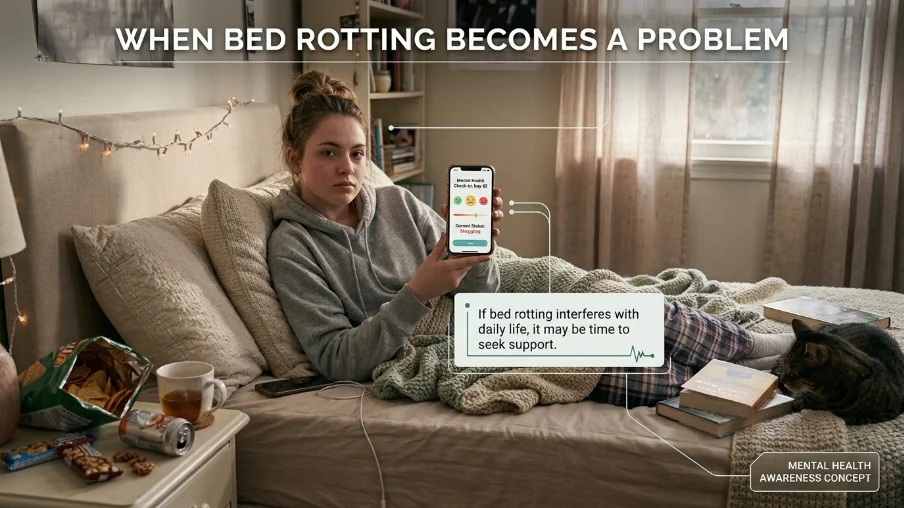
To fully understand bed rotting in mental health, let’s break it down into its core components:
The Behavioral Definition
Bed rotting is excessive passive engagement that doesn’t align with your values or genuinely refresh you. It’s not just restingit’s often a form of escape. You’re not sleeping, but you’re not really doing anything either. You’re in a kind of limbo: awake but checked out, present but disengaged.
The Psychological Definition
From a psychological standpoint, bed rotting sits at the intersection of rest, avoidance, and coping. For some, it’s a conscious choice to decompress after overstimulation. For others, it’s an unconscious pattern of withdrawal that can signal deeper issues like depression, anxiety, or burnout.
The Social Definition
Socially, bed rotting is a shared cultural phenomenon. It’s been normalized and even glamorized on social media, where users post about their “bed rot days” with a mix of humor and relatability. But this normalization can blur the line between healthy rest and harmful avoidance.
Context & Usage: Why People Bed Rot
Understanding why people bed rot is crucial to understanding its mental health implications. The reasons vary widely, from healthy self-care to serious red flags.
As a Response to Burnout
In a culture obsessed with productivity, many people feel emotionally and physically drained. Bed rotting offers a guilt-free rest period where you don’t have to be “on”. It’s a way to hit pause on a chaotic life.
“Taking intentional rest, especially in a safe and cozy space like your bed, can help your nervous system reset.” Najamah Davis, LCSW
Short-term bed rotting can work like a reset button, especially if you’ve been overwhelmed or overstimulated.
As a Coping Mechanism for Stress
For many, bed rotting is a way to cope with stress, emotional overload, or simply the desire for passive dopamine hitslike scrolling Instagram or watching comforting shows. It’s low-effort comfort in a high-effort world.
As a Symptom of Depression or Anxiety
Here’s where it gets serious. Bed rotting can also be a symptom of depression, anxiety, or other mental health conditions. When staying in bed becomes a patternespecially if it interferes with daily functioning, work, school, or relationshipsit may be time to look deeper.
Real-Life Examples
Let’s bring this to life with some realistic scenarios. These examples show how bed rotting shows up in everyday conversation and behavior.
Conversation Example 1 The Burnout Reset
Alex: “I’m so drained. I think I need a bed rot day this weekend.”
Jordan: “Same. No plans, no alarms, just me and my phone.”
Alex: “Exactly. I’m not even leaving my room.”
Conversation Example 2 The Ironic Flex
Mia: “What’d you do this weekend?”
Chris: “Honestly? Bed rotted. No cap.”
Mia: “LOL same. Best decision ever.”
Conversation Example 3 The Concerned Friend
Taylor: “You’ve been in bed all week. You okay?”
Sam: “Yeah, just tired.”
Taylor: “Fr? Because this feels different. You’re not even responding to texts.”
Sam: “I don’t know. Maybe I’m not okay.”
Conversation Example 4 The Guilty Pleasure
Riley: “I feel so guilty for bed rotting all day.”
Avery: “Don’t. You needed it. Hustle culture is toxic.”
Riley: “You’re right. But ngl, I still feel lazy.”
Conversation Example 5 The Wake-Up Call
Casey: “I’ve been bed rotting for three days straight.”
Drew: “That’s not self-care anymore, babe. That’s something else.”
Casey: “Yeah I think I need to talk to someone.”
Platform-Specific Meaning
Bed rotting doesn’t mean the same thing on every platform. Here’s how it’s used across social media:
TikTok
TikTok is where the trend exploded. Users post “get ready with me” videos that start and end in bed, or montages of their bed rot days set to lo-fi beats. The tone is often ironic and self-deprecating, but it’s also where the mental health debate is most active.
On Instagram, bed rotting shows up in Stories and Reels. Think: morning coffee in bed, a pile of snacks, and a caption like “manifesting a bed rot weekend.” It’s aestheticized and often framed as aspirational self-care.
Twitter/X
Twitter users tweet about bed rotting with humor and relatability. It’s less visual and more about the shared experience of being tired and over it.
Snapchat
Snapchat is more casual and personal. Users might send snaps of themselves in bed with captions like “bed rotting rn” or “don’t talk to me, I’m rotting.”
Alternative Meanings & Variations
While “bed rotting” is the most common term, there are variations and related concepts:
Hurkle-Durkle
The Scottish term for lounging in bed after waking up. It’s essentially the same behavior but with a cozier, less dramatic vibe.
Grass Rotting
A playful counter-trend that encourages spending time in nature instead of bed. “Grass rotting > bed rotting” is a common refrain.
Doomscrolling in Bed
Not exactly the same, but often overlaps. Doomscrolling is the compulsive consumption of negative news, and it frequently happens during bed rotting sessions.
Bed Rotting Adjacent Terms
- Rotting used more broadly to describe doing nothing
- Couch rotting same concept, just on the couch
- Goblin mode a 2022 trend about embracing chaos and laziness
How to Respond When Someone Says They’re Bed Rotting
If a friend or partner says they’re bed rotting, your response matters. Here’s how to navigate it:
If It’s Occasional and Intentional
- “Good for you! You deserve rest.”
- “Let me know if you want company or snacks.”
- “That sounds like exactly what you need.”
If It’s Frequent or Worrying
- “How are you really feeling?”
- “Is everything okay? I’ve noticed you’ve been in bed a lot.”
- “I’m here if you want to talkno judgment.”
What to Avoid
- “That’s so lazy.”
- “You should be productive.”
- “Just get up and do something.”
These responses can increase guilt and shame, making the person retreat further into isolation.
Misinterpretations: What Bed Rotting Is NOT
There’s a lot of confusion around bed rotting. Let’s clear it up.
It’s NOT laziness
Bed rotting is often a response to exhaustion, burnout, or overwhelmnot a character flaw. Labeling it as laziness misses the point entirely.
It’s NOT always depression
Occasional bed rotting can be a healthy way to recharge. It only becomes a concern when it’s frequent, uncontrollable, or interferes with daily life.
It’s NOT the same as sleeping
Bed rotting involves being awake in bed. It’s about rest and escape, not sleep.
It’s NOT a medical diagnosis
“Bed rotting” is not a clinical term. It’s a cultural label. But the behaviors associated with it can be symptoms of diagnosable conditions.
When NOT to Use Bed Rotting
There are times when bed rotting is not the move:
When You’re Avoiding Responsibilities
If you’re skipping work, school, or important obligations to stay in bed, that’s a red flag. Avoidance only increases stress in the long run.
When It Becomes a Daily Habit
Occasional is fine. Daily is a problem. If you’re bed rotting multiple times a week, it’s time to check in with yourself.
When You’re Using It to Numb Emotions
If you’re bed rotting to avoid feeling sad, anxious, or overwhelmed, it’s not self-careit’s suppression.
When It Causes Social Isolation
Spending too much time alone in bed can lead to loneliness and disconnect from others. Humans need connection.
Usage Tips: How to Bed Rot Safely (If You’re Going to Do It)
If you’re going to bed rot, do it intentionally and set boundaries. Here’s how:
1. Set a Time Limit
Don’t let it stretch into multiple days. One day is usually fine; two is pushing it. Set an alarm if you have to.
2. Keep It Occasional
Make bed rotting a treat, not a habit. Think of it like emotional junk foodfine in small doses.
3. Stay Connected
Send a text, call a friend, or at least let someone know you’re taking a day. Isolation is the enemy.
4. Get Some Sunlight
Even if you’re in bed, open the curtains. Natural light helps regulate your mood and circadian rhythm.
5. Move Your Body
Get up to stretch, walk to the bathroom, or do some light yoga. Physical inactivity can worsen depression.
6. Check In With Yourself
Ask: Am I resting, or am I avoiding something? Be honest.
Related Terms & NLP Variations
For semantic depth, here are related terms and variations:
- Self-care often how bed rotting is framed
- Burnout a key driver of bed rotting behavior
- Depression can manifest as excessive bed time
- Anxiety can lead to overwhelm and withdrawal
- Hustle culture the societal pressure bed rotting pushes back against
- Rest the legitimate need bed rotting attempts to fulfill
- Avoidance the unhealthy side of bed rotting
- Isolation a major risk factor
- Digital detox sometimes confused with bed rotting
- Catch-up sleep a potential benefit of bed rotting
FAQs
1. What does bed rotting mean in mental health?
Bed rotting means spending extended awake time in bed as a form of rest or escape. In mental health, it can be either a healthy reset or a warning sign of depression, anxiety, or burnout, depending on frequency and intent.
2. Is bed rotting a sign of depression?
It can be. When bed rotting becomes frequent, difficult to control, or interferes with daily life, it may signal depression or another mental health condition.
3. Can bed rotting be good for you?
Yes, in moderation. Occasional, intentional bed rotting can help you decompress, reset your nervous system, and recover from burnout.
4. How long is too long to bed rot?
If you’re bed rotting for more than a day or two, it’s time to re-evaluate. Frequent or prolonged sessions may indicate an underlying issue.
5. Is bed rotting just laziness?
No. Bed rotting is often a response to exhaustion, overwhelm, or mental health strugglesnot a character flaw.
6. What’s the difference between bed rotting and depression?
Bed rotting is a behavior; depression is a diagnosable condition. However, bed rotting can be a symptom of depression.
7. Why is bed rotting popular on TikTok?
It resonates with Gen Z’s exhaustion with hustle culture. The term gives people a shared language for a common experience.
8. What should I do if I can’t stop bed rotting?
Reach out to a mental health professional. If you’re struggling to get out of bed, you may need support.
9. Can bed rotting affect my sleep?
Yes. Spending too much awake time in bed can weaken the association between bed and sleep, potentially leading to insomnia.
10. What’s a healthier alternative to bed rotting?
Try intentional rest with boundaries: set a time limit, get sunlight, stay connected, and move your body. Or try “grass rotting”resting in nature instead.
Conclusion
So, what does bed rotting mean in mental health? The answer isn’t black and white.
On one hand, bed rotting can be a legitimate form of self-carea way to press pause, recover from burnout, and give your brain a break from the relentless demands of modern life. On the other hand, it can be a red flag for depression, anxiety, or avoidance. The difference lies in intent, frequency, and impact.
If you occasionally spend a Sunday in bed scrolling and snacking, you’re probably fine. But if you find yourself unable to get up, avoiding responsibilities, or feeling more drained than rested afterward, it’s worth paying attention to.
The key is intentionality. Ask yourself: Am I resting, or am I escaping? Be honest with your answer. And if you’re unsure, don’t hesitate to reach out to a mental health professional. Taking care of your mind is just as important as taking care of your bodyand sometimes, that means getting out of bed and asking for help.

Sophia Bennett is a professional writer focused on explaining word meanings, expressions and everyday language in a simple and engaging way.