
Last Updated on May 15, 2026
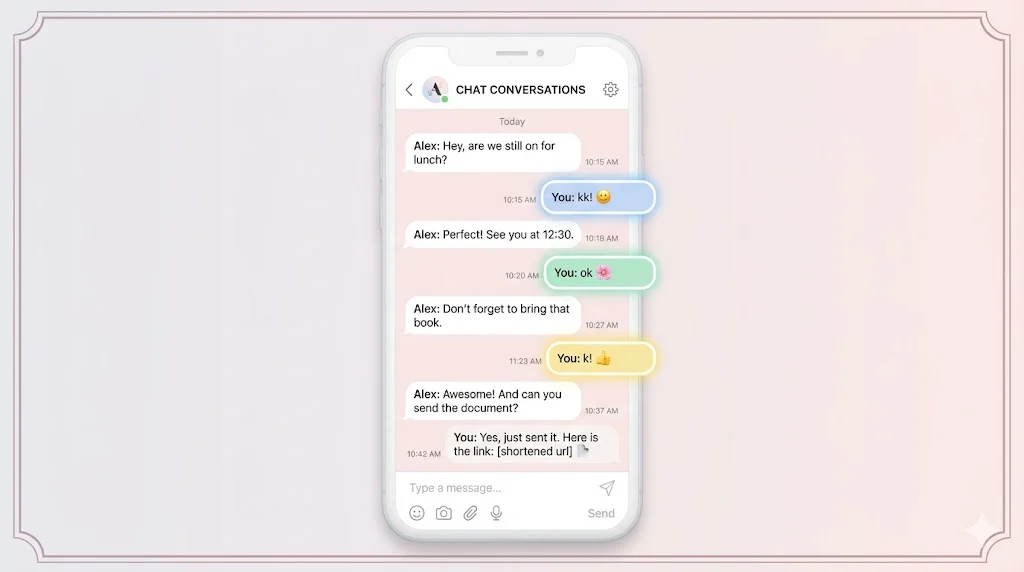
“KK” in chat is an informal abbreviation that means “okay” or “okay, okay.” It’s commonly used in texting and online conversations to acknowledge a message, show agreement, or confirm understanding in a quick, casual way.
You send a message, maybe something simple like “I’ll call you later” and the reply you get is just: “kk.”
No emojis. No extra words. Just two letters.
So what does it mean? Is it friendly? Rude? Dismissive?
If you’ve ever wondered about the full form of “kk” in chat, you’re not alone. This tiny abbreviation carries more meaning than it seems and depending on tone and context, it can feel warm, neutral, or even slightly cold.
In this complete guide, we’ll explore everything about “kk” in texting, including its meaning, origin, tone variations, examples, comparisons with similar abbreviations, and when to use (or avoid) it.
What Is the Full Form of KK in Chat?
The full form of KK is:
👉 “Okay” or “Okay, okay”
It’s essentially a shortened and repeated version of “OK”, used to:
- Confirm a message
- Show agreement
- Acknowledge information
Origin and Popularity of “KK”
Where Did “KK” Come From?
The abbreviation “kk” evolved from:
- “OK” → “K” → “KK”
In early texting culture, people started shortening words to save time and effort. Over time:
- “K” became common (but sometimes felt too short or rude)
- “KK” emerged as a slightly friendlier alternative
Why Did It Become Popular?
- Faster typing ⌨️
- Casual communication style
- Widely used in gaming and chat apps
- Feels less abrupt than “K”
Today, kk is widely used on platforms like:
- Discord
- Snapchat
- Gaming chats
Real-World Usage of KK in Chat
Understanding how “kk” is used in real conversations helps avoid confusion.
1. Simple Acknowledgment
“I’ll send the file later.”
“kk”
✔ Meaning: Got it
2. Agreement
“Let’s meet at 6 PM.”
“kk 👍”
✔ Meaning: Sounds good
3. Ending a Conversation
“Talk to you tomorrow.”
“kk”
✔ Meaning: Conversation closed
4. Quick Response (Busy Context)
“Don’t forget the meeting.”
“kk”
✔ Meaning: Noted quickly
Tone Breakdown: Is “KK” Rude or Friendly?
The tone of kk in chat depends on context, relationship, and delivery.
| Tone Type | Example Message | Interpretation |
| Friendly 😊 | “kk 😄” | Warm and casual |
| Neutral 😐 | “kk” | Simple acknowledgment |
| Playful 😄 | “kkk lol” | Light and fun |
| Slightly Cold ❄️ | “kk.” | Can feel distant |
| Dismissive ⚠️ | “kk” | May seem uninterested |
👉 Tip: Emojis and punctuation change tone significantly.
Example Table: KK in Different Situations
| Situation | Message Example | Meaning |
| Casual chat | “kk see you” | Friendly acknowledgment |
| Work reminder | “kk noted” | Professional-lite response |
| Gaming chat | “kk go now” | Quick agreement |
| Argument | “kk whatever” | Dismissive tone |
| Planning | “kk sounds good” | Positive agreement |
Comparison with Similar Chat Abbreviations
Here’s how kk compares with other common responses:
| Abbreviation | Meaning | Tone Difference |
| K | Okay | Very short, can feel rude |
| OK | Okay | Neutral and standard |
| KK | Okay, okay | Casual and slightly friendlier |
| Alright | Agreement | More expressive |
| Got it | Understood | More clear and professional |
| Sure | Agreement | Polite and flexible |
👉 Key Insight:
KK is more casual than “OK” but less abrupt than “K.”
When Should You Use KK?
Use KK When:
- Chatting with friends
- In casual conversations
- In gaming or social apps
- You want a quick reply
Avoid KK When:
- Writing formal emails
- Talking to clients or bosses
- Discussing serious topics
- You want to sound professional
Polite and Professional Alternatives
Instead of using kk, try:
- “Okay”
- “Understood”
- “Got it”
- “Sounds good”
- “Noted”
👉 Example:
Instead of:
“kk”
Use:
“Got it, thanks!”
Common Misinterpretations of KK
1. Thinking It’s Rude
Not always it depends on tone.
2. Confusing It with “K”
“KK” is generally softer than “K.”
3. Assuming Disinterest
Sometimes it just means the person is busy.
Usage Tips for Better Communication
1. Add Emojis for Warmth
- “kk 😊”
- “kk 👍”
2. Avoid Overusing It
Too many short replies can feel disengaged.
3. Match the Conversation Tone
Use similar energy as the other person.
4. Use Full Words When Needed
Clarity matters in important conversations.
Alternate Meanings of KK
While kk usually means “okay”, it can have other meanings in different contexts:
- K.K. – Initials (names)
- KK (music reference) – Could refer to a person’s name
- KK (gaming slang) – Still means okay/ready
👉 In texting, it almost always means “okay.”
Are There Cultural Differences?
Yes! In some regions:
- “KK” is very common and friendly
- In others, people prefer “OK” or full words
👉 Always consider:
- Age group
- Platform
- Relationship
FAQs
1. What is the full form of KK in chat?
It means “okay” or “okay, okay.”
2. Is KK rude in texting?
No, but it can feel cold depending on tone and context.
3. What’s the difference between K and KK?
“K” can feel abrupt, while “KK” is slightly friendlier.
4. Can I use KK in professional chats?
It’s better to avoid it in formal communication.
5. Why do people use KK instead of OK?
It feels more casual and slightly more expressive.
6. Is KK commonly used?
Yes, especially in informal chats and gaming.
7. How should I respond to KK?
You can continue the conversation or take it as acknowledgment.
8. Does KK mean agreement?
Yes, it usually indicates agreement or understanding.
Conclusion
The full form of KK in chat may be simple “okay” but its usage is shaped by tone, context, and communication style. It’s quick, casual, and widely used, making it a staple in modern texting.
- KK means “okay” or acknowledgment
- It’s informal and best for casual chats
- Tone depends on context and punctuation
- Avoid using it in professional settings
- Use emojis or words for clarity when needed
In today’s fast-moving digital world, even two letters can carry a lot of meaning so use them wisely!

Michael Anderson is a content writer specializing in word meanings, definitions and clear explanations of modern terms and phrases.