
Last Updated on June 22, 2026
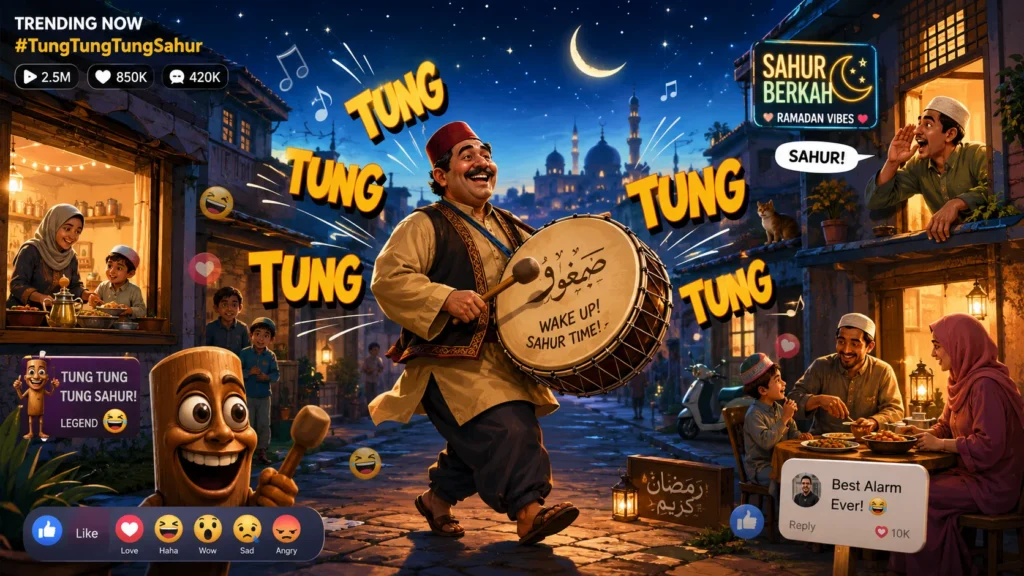
If you’ve been scrolling TikTok lately, you’ve probably heard it. “Tung tung tung sahur” It pops up in random videos. Sometimes loud. Sometimes chaotic. Sometimes paired with strange AI characters or glitchy edits that make zero sense at first glance.And naturally, you’re left wondering, What does tung tung tung sahur mean? Here’s the simple truth. The phrase sits at a weird intersection between real cultural tradition and modern internet meme chaos. It blends a traditional Ramadan practice with absurdist TikTok humor and turns it into something completely different online.
But to really understand it, we need to slow down and unpack each piece carefully. Because this isn’t just a random meme sound. It actually connects to history, culture, and the way Gen Z creates humor today.
Let’s break it down.
At its most basic level, the tung tung tung sahur meaning comes from two parts:
- “Tung tung tung” → a rhythmic drum-like sound
- “Sahur” → the pre-dawn meal eaten during Ramadan
So when you combine them, the phrase points to:
A drum beat or wake-up sound used to alert people that it’s time for sahur.
But online, especially on TikTok, the meaning shifts. It becomes less about literal waking people up and more about:
- A meme sound effect
- A chaotic audio trend
- A humorous internet phrase
- A symbol of “early morning brainrot energy”
So depending on context, the meaning changes. That flexibility is exactly why it went viral.
Understanding Sahur: The Cultural Foundation Behind the Meme
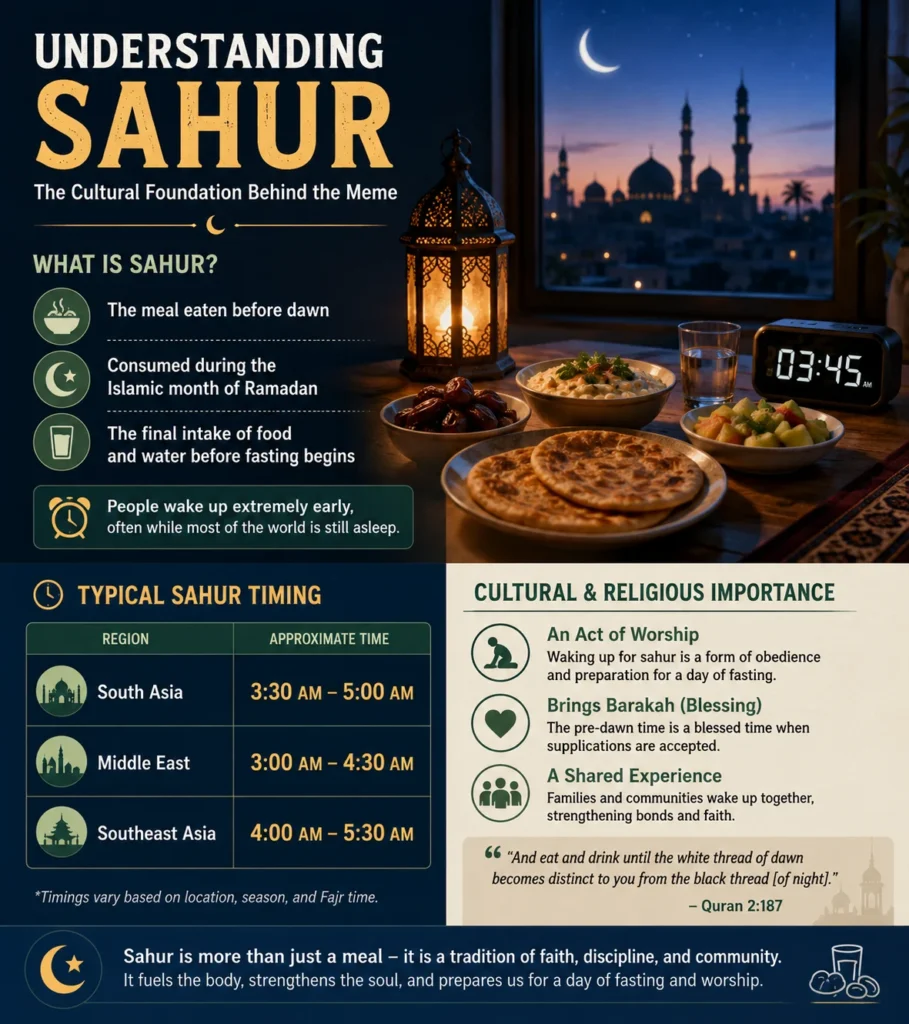
Before the internet turned it into a meme, sahur already had deep cultural and religious importance.
What is Sahur?
Sahur (also written as suhoor or sehri) is:
- The meal eaten before dawn
- Consumed during the Islamic month of Ramadan
- The final intake of food and water before fasting begins
People wake up extremely early, often while most of the world is still asleep.
Typical sahur timing:
| Region | Approximate Time |
|---|---|
| South Asia | 3:30 AM – 5:00 AM |
| Middle East | 3:00 AM – 4:30 AM |
| Southeast Asia | 4:00 AM – 5:30 AM |
Why Sahur Matters
Sahur is not optional in spirit. It plays a big role in fasting:
- It provides energy for the day
- It follows prophetic tradition in Islam
- It strengthens the fasting experience
- It carries spiritual reward in religious teachings
But beyond religion, sahur also shapes culture.
Traditional Sahur Wake-Up Culture (Where “Tung Tung Tung” Comes From)
Now we reach the key connection.
In many Muslim communities, especially in South Asia, Middle East, and parts of Southeast Asia, people historically used sound-based wake-up methods for sahur.
These included:
- Drummers walking through neighborhoods
- Mosques announcing wake-up calls
- Loud rhythmic beating on drums or metal objects
- Community volunteers shouting reminders
This is where the sound pattern “tung tung tung” naturally comes from.
It imitates:
- Drum beats
- Repetitive knocking sounds
- Street percussion rhythms
Imagine a quiet pre-dawn street. Then you hear:
tung tung tung
That rhythm carries through the neighborhood, gently waking people up.
So originally, this is not nonsense. It’s a cultural sound tradition tied to Ramadan life.
The Linguistic Structure Behind “Tung Tung Tung Sahur”
Let’s step into language for a moment. Because the phrase itself is interesting from a linguistic point of view.
Token Breakdown
The phrase splits into:
- tung
- tung
- tung
- sahur
N-Gram Patterns
- Unigram: tung, sahur
- Bigram: tung tung, tung sahur
- Trigram: tung tung tung
Why Repetition Works
Repetition creates:
- Rhythm
- Memorability
- Emotional stimulation
- Sound mimicry
This is why “tung tung tung” feels like music even without melody.
It behaves like an onomatopoeic pattern, meaning it imitates real-world sound.
How Tung Tung Tung Sahur Became a Meme
Now comes the internet transformation.
At some point, social media users especially on TikTok took the phrase and stripped it away from its original cultural context.
Instead of just representing sahur wake-up drums, it became:
- A comedic sound loop
- A remixable audio trend
- A base for absurd edits
- A part of “brainrot” meme culture
What TikTok Did With It
On TikTok, creators started:
- Looping the “tung tung tung” sound
- Pairing it with random visuals
- Adding exaggerated captions
- Mixing it with AI-generated characters
- Turning it into surreal edits with no logical story
A typical video might look like this:
- Dark screen
- Suddenly: “TUNG TUNG TUNG” blasts loudly
- A strange AI creature appears
- Text flashes: “SAHUR TIME??? 💀”
- Camera shakes violently
- Cut to another absurd scene
It makes no logical sense and that’s the point.
Why This Meme Fits TikTok So Perfectly
TikTok rewards content that:
- Grabs attention fast
- Uses strong audio hooks
- Creates loopable engagement
- Triggers emotional reaction (confusion counts)
“Tung tung tung sahur” checks all of these boxes.
The Audio Factor
Sound is everything here.
The phrase works because:
- It’s rhythmic
- It’s repetitive
- It feels like a beat drop
- It’s easy to recognize instantly
Even if you hear it once, your brain remembers it.
That’s classic viral audio behavior.
The Role of Absurdist Internet Humor
This meme also belongs to a bigger category of online humor:
Absurdist meme culture
This style of humor is built on:
- Randomness
- Lack of logic
- Overstimulation
- Unexpected transitions
- Surreal visuals
The goal is not to “make sense.”
The goal is to make you think:
“What did I just watch?”
Example of Absurd Meme Logic
Normal logic:
- Alarm rings → you wake up for sahur
Meme logic:
- Tung tung tung plays → interdimensional AI frog appears → universe collapses → sahur confirmed
It’s chaos by design.
Connection to “Italian Brainrot” Meme Culture
You may also hear the phrase linked to Italian Brainrot memes.
This isn’t about Italy specifically. It’s a label used for a meme style that includes:
- AI-generated characters
- Strange names and phrases
- Over-the-top sound effects
- Fake “cultural” randomness
- Chaotic storytelling
“Tung tung tung sahur” fits perfectly into this ecosystem because:
- It repeats sound for no reason
- It mixes cultural language
- It becomes funny through confusion
- It has strong meme flexibility
In other words, it belongs in the “brainrot universe” of TikTok humor.
Why People Can’t Stop Repeating It
There’s a psychological reason this phrase sticks.
The Earworm Effect
“Tung tung tung” behaves like an earworm because:
- It is short
- It repeats cleanly
- It has strong rhythm
- It lacks lyrical complexity
Your brain naturally loops it even after hearing it once.
Emotional Triggers
It also triggers:
- Humor
- Confusion
- Surprise
- Recognition (especially during Ramadan content season)
That mix makes it memorable.
Early Meaning vs Modern Meme Meaning
Here’s where things split.
| Context | Meaning |
| Traditional | Drum sounds used to wake people for sahur |
| Cultural | Ramadan wake-up tradition |
| Internet | Viral meme audio |
| TikTok | Brainrot edit sound effect |
| Gen Z humor | Random chaotic phrase |
So the meaning depends entirely on where you see it.
What You Should Understand So Far
At this point, you should see the pattern clearly:
- The phrase is not random
- It comes from real cultural practices
- The internet reshaped it into a meme
- TikTok amplified it through audio trends
- Absurd humor gave it viral power
But we’ve only covered the foundation.
In the next part, we’ll go deeper into:
- Exact TikTok trend evolution
- AI meme generation role
- Why it resurfaces during Ramadan
- How Gen Z humor turned it into “brainrot culture”
- And how it compares to other viral meme sounds
How “Tung Tung Tung Sahur” Blew Up on TikTok
Once the phrase left its cultural roots, TikTok did what it always does best it amplified it into something unrecognizable.
The turning point wasn’t a single video. It was a pattern.
Creators started noticing that:
- Repetitive sounds perform well
- Weird audio gets high retention
- Confusing clips trigger replays
- Meme chaos spreads faster than structured jokes
So “tung tung tung sahur” became perfect fuel.
The Viral Format That Took Over
Most viral videos followed a simple structure:
- Silent buildup or dark screen
- Sudden loud “TUNG TUNG TUNG” audio drop
- Flash of surreal visuals
- Random AI-generated character appears
- Rapid glitch cuts and zoom effects
- Caption like “SAHUR???” or “IT’S TIME 💀”
No story. No explanation. Just impact.
And that’s exactly why it worked.
Why TikTok Users Kept Reusing It
This trend didn’t stay in one niche. It spread across multiple content styles.
Main reasons for reuse:
- Easy to remix into any video
- Works with comedy or horror edits
- Fits Ramadan-themed content naturally
- Strong audio identity makes it recognizable
- Works even without context
Creators quickly realized something important:
You don’t need meaning. You just need rhythm.
The Role of Viral Audio Clips in the Trend
The heart of this meme is the sound itself.
The “tung tung tung sahur sound” acts like a digital trigger.
Why the sound works so well:
- It mimics a drum beat pattern
- It has natural repetition
- It creates anticipation
- It feels like a “call” or announcement
- It is simple enough to loop endlessly
On TikTok, audio trends behave like templates.
Once a sound goes viral:
- People attach their own jokes
- Others remix it into different formats
- It spreads across countries and languages
That’s exactly what happened here.
AI-Generated Content and the Meme Explosion
One of the biggest accelerators behind this trend is AI-generated content.
What AI added to the meme
Creators began using AI tools to generate:
- Strange humanoid characters
- Distorted creatures
- Dreamlike landscapes
- Glitch-heavy animations
- Fake “cultural” visuals
These AI visuals paired perfectly with the chaotic sound.
Why AI made it more viral
AI content helped because it:
- Looked unpredictable
- Felt slightly uncanny
- Required no filming effort
- Encouraged endless remixing
- Made memes feel “new every time”
This is where “tung tung tung sahur” evolved into something bigger than a sound.
It became a visual-audio meme template.
Understanding “Italian Brainrot” and Its Connection
To fully understand this trend, you need to understand brainrot culture.
“Italian Brainrot” is a label used for a meme style that includes:
- Absurd storytelling
- Random sound effects
- AI-generated characters
- Fake or exaggerated cultural references
- Overstimulating edits
Despite the name, it’s not limited to Italy or Italian content.
It’s more about style:
chaotic, overstimulated, and intentionally meaningless humor
Where Tung Tung Tung Sahur fits
This meme fits perfectly because:
- It repeats sound endlessly
- It mixes cultural language
- It becomes funny through confusion
- It relies on rhythm, not logic
- It works as a remix base
So instead of being just a Ramadan-related sound, it becomes part of a global meme ecosystem.
The Psychology Behind Why It Feels Addictive
Let’s get a bit deeper.
Why do people keep watching these videos?
Why does “tung tung tung” stick in your head?
1. The brain loves repetition
Repetition creates familiarity.
And familiarity creates comfort even in chaotic content.
2. The brain tries to find meaning
When something doesn’t make sense, your brain:
- Keeps replaying it
- Tries to decode it
- Searches for patterns
That increases watch time.
3. Audio loops create memory traps
Short rhythmic sounds:
- Stick faster than visuals
- Trigger recall later
- Replay automatically in your head
That’s why you might hear “tung tung tung” randomly hours later.
How the Meme Spreads Across Platforms
Even though TikTok is the origin point, the meme didn’t stay there.
It moved across:
- Instagram Reels
- YouTube Shorts
- Meme pages
- Discord communities
- Reddit-style forums
Each platform added its own twist
| Platform | Style of Use |
|---|---|
| TikTok | Fast edits, AI visuals, loud audio |
| Instagram Reels | Meme compilations, captions |
| YouTube Shorts | Longer remix versions |
| Discord | Reaction memes |
| Meme pages | Static joke formats |
This cross-platform spread made it feel unavoidable.
Why It Peaks During Ramadan Content Cycles
A key detail many people miss:
This meme often resurfaces during Ramadan periods.
Why Ramadan boosts the trend:
- Increased sahur-related content online
- More nighttime activity on social media
- Cultural relevance spikes
- More creators posting food and humor content
So even though it is a meme, it still connects back to real-life routines.
The Dual Identity of Tung Tung Tung Sahur
This phrase now exists in two worlds at once.
Real-world meaning:
- Drum-like wake-up call
- Sahur reminder tradition
- Cultural Ramadan sound
Internet meaning:
- Viral meme audio
- Brainrot content symbol
- TikTok remix template
- Absurd humor trigger phrase
This dual identity is what keeps it alive.
It can shift context instantly.
Meme Variations and Spin-Off Trends
Like most viral sounds, it didn’t stay in one form.
Common variations include:
- slowed + reverb versions
- exaggerated bass boost edits
- horror-style remix versions
- AI voice narrations
- comedic subtitle overlays
- “POV: it’s sahur time” edits
Each variation adds another layer of absurdity.
Examples of Viral Usage in Captions
Creators often pair the sound with captions like:
- “bro woke up the whole neighborhood tung tung tung sahur 💀”
- “me at 4 AM pretending I’m a sahur drummer”
- “this sound owns my brain now”
- “POV: you are the tung tung tung sahur guy”
These captions show how the meme blends humor with identity.
Why It’s Called “Brainrot” Content
The term “brainrot” is not literal.
It refers to content that:
- Overstimulates the brain
- Makes little logical sense
- Feels addictive despite randomness
- Encourages endless scrolling
“Tung tung tung sahur” fits because:
- It repeats endlessly
- It has no fixed meaning
- It relies on humor through confusion
- It spreads through repetition
Cultural Sensitivity and Meme Boundaries
Even though it is mostly harmless, context matters.
Safe usage includes:
- Ramadan humor
- Meme edits
- Cultural appreciation content
- Lighthearted jokes
Risky usage includes:
- Mocking religious practices
- Misrepresenting cultural traditions
- Offensive edits involving sacred contexts
Most creators stay within safe boundaries, but awareness still matters.
Where the Trend Is Heading Next
Meme trends rarely stay still.
“Tung tung tung sahur” may evolve into:
- AI-generated story universes
- Character-based meme lore
- Music remix adaptations
- Seasonal Ramadan meme cycles
- Hybrid brainrot compilations
Even if the exact phrase fades, its style will likely stay.
Because the real trend isn’t the phrase.
It’s the format.
The Origin Timeline of “Tung Tung Tung Sahur”
By now, you already know the meme didn’t appear fully formed. It evolved step by step.
Let’s map how it likely developed from tradition to TikTok trend.
Early Cultural Foundation (Pre-Internet Influence)
Long before TikTok existed, many Muslim communities used:
- Drum beats for waking people at night
- Street announcements before dawn
- Mosque loudspeaker reminders
- Community “sahur callers”
The rhythm often sounded like:
tung tung tung
This wasn’t entertainment. It was practical life.
It helped people wake up for sahur, the pre-dawn meal during Ramadan.
Early Internet Stage (Audio Memes Begin)
When short-form content started growing, users began:
- Recording rhythmic street sounds
- Mimicking drum beats
- Turning real-life audio into funny clips
At this stage, “tung tung tung” existed as:
- Sound imitation
- Background audio
- Cultural reference in niche content
It wasn’t viral yet.
TikTok Explosion Phase
Everything changed when TikTok’s algorithm started pushing:
- repetitive audio clips
- chaotic edits
- meme remixes
- fast-paced humor
Creators combined:
- “tung tung tung” sound
- “sahur” references
- absurd visuals
- AI-generated content
This is where the modern meme was born.
Brainrot Expansion Phase
Once it went viral, it stopped being just a sound.
It became:
- a meme identity
- a remix template
- a cultural joke format
This is where it entered brainrot meme culture.
Comparison: Tung Tung Tung Sahur vs Other Viral TikTok Sounds
To understand why this meme stands out, let’s compare it with other trends.
| Meme Sound | Structure | Meaning | Virality Driver |
|---|---|---|---|
| Tung Tung Tung Sahur | Repetitive drum-like sound + cultural word | Cultural + meme mix | Rhythm + confusion |
| “Oh No” Sound | Simple vocal reaction | Surprise/failure | Emotional reaction |
| “Ratatata” Sounds | Fast beat loop | None | Energy + rhythm |
| “Sigma Music” Edits | Epic music + edits | Internet masculinity jokes | Aesthetic appeal |
| “Skibidi” trend | nonsense audio + visuals | Absurd story universe | Narrative chaos |
Key difference
“Tung tung tung sahur” stands out because:
- It has real cultural roots
- It mixes meaning with absurdity
- It connects religion + meme culture
- It works both as sound and phrase
That dual nature makes it more layered than most trends.
The Role of Gen Z Humor in This Meme
Gen Z humor is different from older internet humor styles.
It often includes:
- irony over seriousness
- randomness instead of structure
- overstimulation
- self-aware absurdity
Why this meme fits Gen Z style
It checks all the boxes:
- It is intentionally repetitive
- It feels slightly chaotic
- It doesn’t require explanation
- It works as inside joke material
- It is easy to remix endlessly
Instead of asking “what does it mean?”, Gen Z often asks:
“What can I turn this into?”
That’s the key shift.
How AI-Generated Content Changed the Meme Forever
AI tools didn’t just support this trend.
They redefined it.
What AI added
Creators started generating:
- surreal sahur “drummers”
- distorted humanoid figures
- dreamlike desert scenes
- glitch-heavy animations
- impossible lighting effects
These visuals made the meme feel:
- unreal
- dreamlike
- unpredictable
Why AI matters here
Without AI:
- the meme would stay audio-based
With AI:
- it became a full audiovisual universe
This is why many versions feel like digital hallucinations.
Cultural Interpretation: Is It Just a Meme?
This is where things get interesting.
The phrase exists in two layers:
Layer 1: Real-world meaning
- sahur is a real Islamic practice
- drums and wake-up calls are cultural traditions
- “tung tung tung” imitates real sound
Layer 2: Internet reinterpretation
- absurd meme audio
- chaotic edits
- brainrot humor
- remix culture content
Neither layer cancels the other.
They coexist.
Why This Meme Feels So Sticky in Your Mind
Let’s break down the psychology again, but deeper.
1. Rhythm locks memory
The brain loves structured repetition.
“Tung tung tung” creates:
- predictable rhythm
- short syllables
- strong beat pattern
That combination is powerful.
2. Meaning confusion increases retention
When something is unclear:
- your brain replays it
- tries to resolve it
- stores it longer
Confusion actually strengthens memory.
3. Emotional mismatch effect
The meme mixes:
- cultural seriousness (sahur)
- chaotic humor (TikTok edits)
That contrast makes it more memorable.
Internet Culture Impact of Tung Tung Tung Sahur
This meme is not just a joke.
It reflects how internet culture is evolving.
Key cultural impacts:
- Traditional sounds become meme material
- Religious or cultural references enter humor spaces
- AI tools accelerate meme creation
- Short-form video reshapes storytelling
- Absurdity becomes a dominant humor style
This is part of a larger shift in digital culture.
Why It Spread So Fast Globally
The meme crossed borders easily because:
- sound has no language barrier
- repetition is universally understandable
- visuals are often self-explanatory
- TikTok algorithm promotes remixability
Even if someone doesn’t know what “sahur” means, they still:
- recognize rhythm
- understand humor tone
- react to chaos
That’s enough for virality.
Final Meaning of Tung Tung Tung Sahur
After analyzing culture, memes, sound, and evolution, we can simplify it.
Final definition:
“Tung tung tung sahur” is a viral TikTok meme phrase combining a drum-like wake-up sound with “sahur,” the pre-dawn meal in Ramadan, later transformed into an absurd, remixable internet audio trend used in brainrot-style meme content.
Simple Explanation for Beginners
If you want it even simpler:
- It started as a wake-up drum sound
- It got turned into a TikTok audio meme
- People now use it for funny, chaotic videos
- It doesn’t have one fixed meaning online
Will the Meme Last?
Most viral sounds don’t last forever.
But they leave traces.
Possible future outcomes:
- Seasonal comeback during Ramadan
- Revival in remix culture
- Transformation into new meme formats
- Reference inside future brainrot trends
Even if it fades, it will remain part of TikTok history
Final Thought
This meme shows something bigger than itself.
It proves that:
The internet doesn’t just share culture it reshapes it into entirely new forms.
A simple drum rhythm becomes a global joke. A religious routine becomes a meme template. And a sound meant to wake people up becomes something that keeps people scrolling.
That’s the internet in its purest form.

Michael Anderson is a content writer specializing in word meanings, definitions and clear explanations of modern terms and phrases.