
Last Updated on June 6, 2026
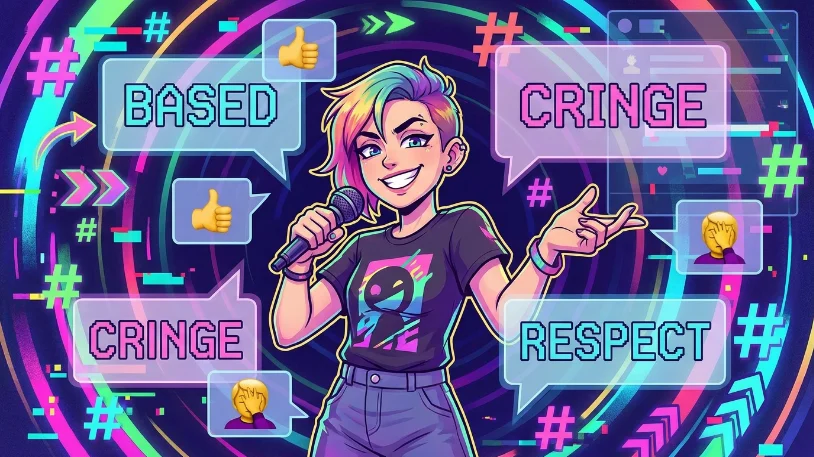
“Based” means expressing an opinion confidently and authentically without caring about others’ judgment. It’s commonly used online to show approval for someone being honest, bold, or unapologetically themselves.
You’ve seen it everywhere. A comment section explodes with reactions, and right there, sitting alone like a mic drop, is one word:
“based.”
No explanation. No context. Just that.
So what does it actually mean?
Let’s clear it up properly. Not the shallow version. The real one.
What Does Based Mean in Simple Terms
At its core, “based” means you respect someone for being real, honest, or bold.
It’s not just approval. It’s approval with attitude.
Here’s the simplest way to understand it:
If someone is “based,” they said what they believe without caring who disagrees.
That’s the heart of it.
Quick Definition Table
| Term | Meaning |
|---|---|
| Based | Confidently expressing an opinion without fear |
| Based (slang) | Approval of authenticity or boldness |
| Based person | Someone unapologetically themselves |
Why It Feels Different From “Cool”
You could say “cool.” You could say “nice.”
But “based” hits differently.
- “Cool” = general approval
- “Nice” = polite reaction
- “Based” = respect for courage + honesty
It’s sharper. More intentional.
Real-Life Examples of “Based”
You don’t learn slang from definitions. You learn it from usage.
Let’s walk through real scenarios.
Example 1: Social Media Comment
Someone posts:
“Most people pretend to agree just to fit in.”
Reply:
“Based.”
Why?
Because the person spoke a truth others avoid.
Example 2: Group Chat Moment
Friend says:
“I don’t care what anyone thinks, I’m doing what works for me.”
Reply:
“That’s based.”
This shows respect for independence.
Example 3: Controversial Opinion
Someone shares a hot take:
“Not everything popular is actually good.”
Replies split:
- One person: “Based”
- Another: “Terrible take”
That’s important.
“Based” depends on perspective.
Key Insight
- One group may call something based
- Another group may reject it
That tension is part of the word’s power.
Where Did “Based” Come From? (Real Origin Explained)
This word didn’t just appear out of nowhere.
Its history is messy. Then it got redefined.
The Original Meaning (Before Slang)
Originally, “based” meant something completely different.
- It referred to someone addicted to crack cocaine
- It had a negative, stigmatized tone
Not something you’d want to be called.
The Turning Point
Everything changed because of Lil B.
He flipped the meaning.
How Lil B Redefined “Based”
Lil B used “based” to mean:
- Being yourself without fear
- Ignoring judgment
- Living freely
He turned a negative label into a positive identity.
His Philosophy in Simple Terms
“Be based. Be who you are.”
That message spread fast.
From Music to Internet Culture
Once online communities picked it up:
- It spread through forums
- Then memes
- Then social media
Soon, everyone used it.
Not always in the same way.
How the Internet Changed the Meaning of “Based”
The internet doesn’t just adopt words.
It reshapes them.
Stage 1: Niche Communities
- Early adopters used it seriously
- Mostly tied to authenticity
Stage 2: Meme Culture Explosion
- Short reactions became popular
- “Based” turned into a one-word reply
Stage 3: Irony and Humor
Now things got interesting.
People started using “based”:
- Seriously
- Sarcastically
- Ironically
Sometimes all at once.
Important Shift
“Based” stopped being just a belief.
It became a reaction format.
Different Meanings of “Based” Today
This is where most people get confused.
Because “based” doesn’t have one fixed meaning anymore.
It depends on context.
Genuine Approval
This is the original modern meaning.
- You respect someone’s honesty
- You admire their confidence
Example:
“He spoke up even when no one agreed. Based.”
Ironic or Meme Usage
Sometimes it’s used as a joke.
- To exaggerate support
- To mock an extreme opinion
Example:
“Pineapple belongs on every food.”
“Based.”
That’s clearly not serious.
Political or Opinion-Based Use
You’ll see “based” a lot in debates.
- It signals alignment
- It shows agreement without explaining
Important: It doesn’t mean neutral approval.
It usually means you agree with the stance.
Edgy or Controversial Use
This is where nuance matters.
Sometimes “based” supports opinions that are:
- Provocative
- Polarizing
- Not widely accepted
So context becomes everything.
“Based” vs Other Slang Terms
Let’s make this crystal clear.
Comparison Table
| Term | Meaning | Tone | Key Difference |
|---|---|---|---|
| Based | Respect for bold honesty | Confident | Focus on authenticity |
| Cringe | Embarrassing or awkward | Negative | Opposite of based |
| Wild | Harsh but impressive | Aggressive | More cutting |
| Respect | Recognition of effort | Formal | Less slang-heavy |
| Cool | General approval | Neutral | Less specific |
Quick Breakdown
- Based vs Cringe
- Based = admirable
- Cringe = embarrassing
- Based vs Wild
- Based = honest
- Wild = brutally bold
When You Should Use “Based”
Used correctly, it sounds natural.
Used wrong, it feels forced.
Use It When
- Someone speaks honestly
- Someone ignores social pressure
- You want a short, impactful reaction
Good Use Cases
- Comment sections
- Casual chats
- Online discussions
Example Sentences
- “That was a based opinion.”
- “He’s based for saying that.”
- “Stay based.”
When You Should NOT Use “Based”
Let’s be real. It doesn’t fit everywhere.
Avoid It In
- Professional emails
- Academic writing
- Serious formal discussions
Why It Fails There
Because it’s:
- Informal
- Context-dependent
- Open to misinterpretation
Common Mistakes People Make With “Based”
Most people misuse it at first.
Here’s what goes wrong.
Mistake 1: Using It Without Context
Just saying “based” randomly doesn’t work.
It needs a clear situation.
Mistake 2: Thinking It Always Means “Good”
It doesn’t.
It means bold or authentic, not necessarily correct.
Mistake 3: Missing Sarcasm
Tone matters.
Sometimes “based” is actually mocking.
Mistake 4: Overusing It
If you say it everywhere:
- It loses impact
- It sounds forced
Why “Based” Became So Popular
There’s a reason it spread so fast.
Actually, several.
It’s Efficient
One word replaces a full sentence.
Instead of:
“I admire your confidence and honesty.”
You just say:
“Based.”
It Signals Identity
Using it shows you understand internet culture.
It’s like a badge.
It Works Across Platforms
You’ll see it on:
- TikTok
- X (Twitter)
- YouTube
Everywhere.
It Fits Meme Culture Perfectly
Short. Punchy. Flexible.
That’s all memes need.
What Does “Stay Based” Mean
This variation pops up a lot.
Meaning
“Stay based” means:
Keep being confident and authentic.
Example
- “Don’t change for them. Stay based.”
It’s encouragement.
What Is a “Based Person”?
A “based person” has a clear identity.
Traits of a Based Person
- Speaks honestly
- Doesn’t chase approval
- Accepts disagreement
- Stays authentic
In Simple Terms
They don’t perform for others.
They just are.
How to Use “Based” Correctly (Step-by-Step)
If you want to sound natural, follow this.
Step 1: Look for Boldness
Ask:
- Did someone say something honest?
- Did they ignore pressure?
If yes, you’re on track.
Step 2: Check the Tone
- Serious → genuine use
- Absurd → ironic use
Step 3: Keep It Simple
Don’t overthink it.
Often, just:
“Based.”
is enough.
Examples Across Platforms
Let’s break it down by where you’ll see it.
TikTok
- Reaction to bold opinions
- Often mixed with humor
Twitter (X)
- Common in debates
- Used for agreement
- Used in comment chains
- Sometimes ironic
Gaming Chats
- Reaction to confident plays
- Used casually
Is “Based” a Compliment?
Short answer: Yes, but with nuance.
Why It’s a Compliment
- It shows respect
- It values authenticity
- It rewards confidence
Why It’s Not Always Positive
Because:
- It can support controversial views
- It can be sarcastic
Final Insight
“Based” is less about being right.
It’s about being real.
Will “Based” Stay Popular?
Slang comes and goes.
But some words stick.
Why “Based” Might Last
- It adapts easily
- It works in multiple contexts
- It carries a strong idea
Likely Future
It may evolve.
But the core meaning?
Authenticity will always matter.
FAQs
What does based mean in slang?
“Based” means expressing your opinion confidently without worrying about what others think. People use it as a quick way to show respect for honesty or boldness. It’s not just approval. It’s approval for being real.
What does based mean on TikTok comments?
On TikTok, “based” usually shows agreement with a bold or unpopular opinion. Sometimes it’s serious. Other times, it’s used jokingly. You’ll often see it as a one-word reply under strong takes.
What does based mean in texting?
In texting, “based” works as a short reaction. It replaces longer phrases like:
- “I respect that”
- “That’s true”
- “You’re right for saying that”
It keeps things quick and expressive.
Is based a compliment?
Yes, in most cases, it is. Calling someone “based” means you respect their confidence and authenticity. However, tone matters. It can be sarcastic depending on context.
What does it mean when someone calls you based?
If someone calls you “based,” they’re saying:
- You spoke honestly
- You didn’t try to please everyone
- You stood by your opinion
In short, they respect your mindset.
What does based mean in Gen Z slang?
In Gen Z slang, “based” highlights individuality and self-expression. It’s often used to praise people who don’t follow trends or social pressure.
What does based mean on social media overall?
Across platforms like TikTok, X, and Reddit, “based” signals:
- Agreement
- Respect
- Alignment with a viewpoint
It’s a fast, recognizable reaction.
Can based be used sarcastically?
Yes, and this is where people get confused. Sometimes “based” is used to:
- Mock extreme opinions
- Add humor to absurd statements
Context decides whether it’s sincere or ironic.
What does “stay based” mean?
“Stay based” means:
Keep being confident and true to yourself.
It’s encouragement. Almost like saying, “Don’t change for others.”
What is a based person?
A “based person” is someone who:
- Speaks their mind
- Doesn’t chase approval
- Accepts disagreement
They value authenticity over fitting in.
Where did the term based come from?
The modern meaning comes from Lil B, who redefined it as being yourself without fear of judgment.
What does based vs cringe mean?
- Based = admirable, confident, authentic
- Cringe = awkward, embarrassing, trying too hard
They’re often used as opposites in online culture.
How do you use based in a sentence?
Here are a few natural examples:
- “That was a based take.”
- “He’s based for saying that out loud.”
- “Honestly, based.”
Short, simple, and context-driven.
Why do people say based online so much?
Because it’s:
- Fast
- Expressive
- Easy to understand within internet culture
One word can say a lot.
Does based always mean something positive?
Not always. While it usually shows respect, it can also:
- Support controversial opinions
- Be used sarcastically
So you always need to read the tone.
Final Thoughts
Let’s wrap it cleanly.
“Based” means expressing your true opinion confidently without caring about others’ judgment, and people use it to show respect for that honesty.
- It’s about authenticity
- It’s about confidence
- It’s about not performing for approval
Use it right, and it lands perfectly.
Use it wrong, and it feels off instantly.
If you’ve ever wondered what “based” really means, now you don’t just know the definition.
You understand the culture behind it.

Michael Anderson is a content writer specializing in word meanings, definitions and clear explanations of modern terms and phrases.