
Last Updated on June 10, 2026
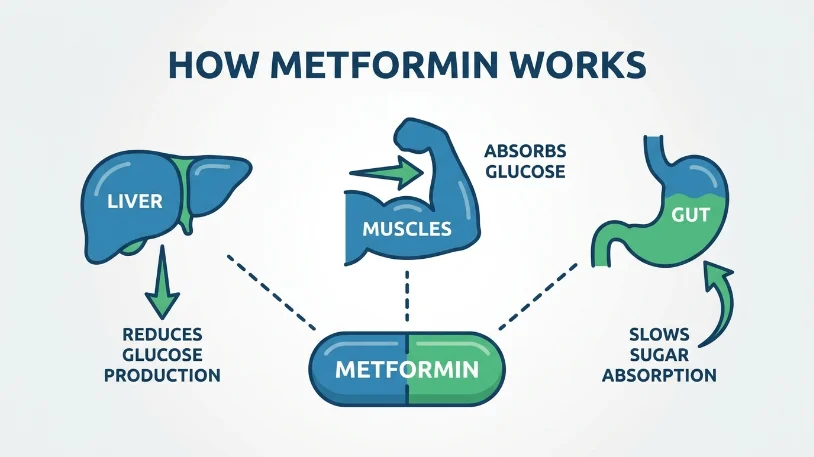
Metformin is an oral antihyperglycemic drug that lowers blood sugar by reducing glucose production in the liver, improving insulin sensitivity, and increasing glucose uptake in muscles. It helps manage type 2 diabetes, prevents blood sugar spikes, and supports long-term metabolic health without causing significant hypoglycemia.
What Does Metformin Do? A Clear, No-Fluff Explanation
If you’ve been prescribed metformin, you’re probably asking one thing: what does metformin actually do inside your body?
Here’s the straight answer.
Metformin lowers blood sugar by targeting the root causes of high glucose levels. It doesn’t force your body to produce more insulin. Instead, it makes your body use insulin better and produce less sugar in the first place.
That’s why doctors rely on it as a first-line treatment for type 2 diabetes.
But that’s just the surface.
Once you dig deeper, you’ll see that metformin works across multiple systems at the same time. It influences your liver, muscles, gut, and even your metabolism in subtle ways that add up to powerful results.
Let’s break it down.
What Does Metformin Do in Simple Terms
At its core, metformin acts like a metabolic regulator. It keeps your blood sugar from getting out of control.
Here’s what it does in plain language:
- Lowers blood glucose levels
- Improves insulin sensitivity
- Reduces sugar production in the liver
- Helps muscles absorb glucose
- Prevents sharp blood sugar spikes after meals
Think of your body like a system with too much sugar traffic.
Metformin doesn’t shut the roads down. It organizes the flow.
How Metformin Works in the Body (Mechanism of Action)
Now let’s get into the real science behind metformin function. This is where things get interesting.
It Reduces Glucose Production in the Liver
Your liver constantly produces glucose, even when you’re not eating. This process is called gluconeogenesis.
In people with type 2 diabetes, the liver often produces too much sugar.
Metformin steps in and slows that process down.
Result:
- Lower fasting blood sugar
- Less glucose entering the bloodstream unnecessarily
It Improves Insulin Sensitivity
Insulin resistance sits at the center of type 2 diabetes.
Your body produces insulin. However, your cells stop responding properly. That creates a buildup of glucose in your blood.
Metformin helps reverse that resistance.
What happens next:
- Cells respond better to insulin
- Less insulin is needed
- Blood sugar levels stabilize
It Increases Glucose Uptake in Muscles
Muscle tissue acts like a sponge for glucose.
When insulin works properly, muscles absorb glucose and use it for energy.
Metformin enhances this process.
Outcome:
- More glucose leaves the bloodstream
- Energy usage improves
- Blood sugar levels drop naturally
It Reduces Intestinal Glucose Absorption
Your gut absorbs sugar from the food you eat.
Metformin slows that absorption slightly.
This matters more than you think.
Why it helps:
- Prevents post-meal glucose spikes
- Creates smoother blood sugar curves
- Reduces metabolic stress
Summary Table: Metformin Mechanism of Action
| Function | What Metformin Does | Result |
|---|---|---|
| Liver | Reduces glucose production | Lower fasting blood sugar |
| Muscles | Increases glucose uptake | Better energy use |
| Insulin | Improves sensitivity | Less resistance |
| Gut | Slows glucose absorption | Fewer spikes |
Why Doctors Prescribe Metformin
Metformin isn’t just common. It’s foundational.
Doctors prescribe it because it addresses the root cause of metabolic dysfunction rather than just symptoms.
Metformin for Type 2 Diabetes
This is the primary use.
- First-line treatment globally
- Proven to lower HbA1c by 1–1.5%
- Works long-term without losing effectiveness quickly
Metformin for Prediabetes
Prediabetes often leads to type 2 diabetes if left untreated.
Metformin helps slow or stop that progression.
Key benefits:
- Reduces insulin resistance early
- Improves fasting blood sugar
- Supports lifestyle interventions
Metformin for PCOS (Polycystic Ovary Syndrome)
Insulin resistance drives many PCOS symptoms.
Metformin helps regulate metabolic imbalance.
Effects include:
- Improved ovulation
- More regular cycles
- Reduced androgen levels
Metformin for Metabolic Syndrome
Metabolic syndrome combines multiple risk factors:
- High blood sugar
- High blood pressure
- Excess abdominal fat
Metformin addresses the glucose and insulin side directly.
Emerging Uses Being Studied
Research continues to explore broader benefits.
- Longevity research
- Cancer metabolism studies
- Cardiovascular protection
While promising, these uses still need stronger clinical confirmation.
What Happens When You Take Metformin Daily
Your body doesn’t change overnight. However, noticeable effects begin quickly.
First Few Days
- Mild stomach discomfort
- Changes in appetite
- Slight digestive adjustment
First Few Weeks
- Blood sugar stabilizes
- Energy levels feel more consistent
- Fewer sugar spikes after meals
Long-Term Effects
- Lower HbA1c levels
- Reduced diabetes complications
- Improved insulin efficiency
Important Insight:
Metformin works gradually. It builds stability over time rather than delivering sudden results.
Metformin Benefits Backed by Science
Metformin stands out because it works well without extreme side effects.
Key Benefits
- Does not cause major hypoglycemia
- Improves insulin resistance
- Supports weight neutrality or slight loss
- Reduces cardiovascular risk in many patients
- Affordable and widely available
Clinical Outcomes
| Metric | Typical Improvement |
|---|---|
| HbA1c | ↓ 1–1.5% |
| Fasting glucose | ↓ Significant |
| Insulin resistance | ↓ Improved |
| Weight | Neutral or slight loss |
Metformin and Weight Loss — What’s Real
A lot of people expect dramatic weight loss.
That’s not how metformin works.
Reality Check
- It’s not a weight-loss drug
- Works best if insulin resistance is present
- May reduce appetite slightly
Why Some People Lose Weight
- Lower insulin levels reduce fat storage
- Appetite may decrease
- Blood sugar stability reduces cravings
Why Others Don’t
- Diet still matters
- Activity level plays a role
- Individual metabolism varies
Metformin Side Effects You Should Know
No medication is perfect.
Metformin is generally safe. Still, you should know what to expect.
Common Side Effects
- Nausea
- Diarrhea
- Gas
- Stomach discomfort
These often fade after a few weeks.
Vitamin B12 Deficiency
Long-term use can reduce B12 absorption.
Watch for:
- Fatigue
- Numbness
- Weakness
Doctors often monitor this yearly.
Rare but Serious: Lactic Acidosis
This condition is extremely rare but important.
Risk increases with:
- Severe kidney disease
- Liver problems
- Heavy alcohol use
Who Should Not Take Metformin
Metformin isn’t suitable for everyone.
Avoid if you have:
- Severe kidney impairment
- Advanced liver disease
- History of lactic acidosis
- Conditions affecting oxygen delivery
How to Take Metformin for Best Results
Small habits make a big difference.
Best Practices
- Take with meals
- Start with a low dose
- Increase gradually
- Stay consistent daily
Dosing Example (General)
| Stage | Dose |
|---|---|
| Start | 500 mg once daily |
| Adjustment | Increase weekly |
| Maintenance | 1000–2000 mg/day |
Immediate-Release vs Extended-Release Metformin
Not all metformin is the same.
Comparison Table
| Feature | Immediate Release | Extended Release |
|---|---|---|
| Frequency | 2–3 times daily | Once daily |
| Side effects | More common | Usually fewer |
| Absorption | Fast | Slow and steady |
Metformin vs Other Diabetes Medications
Metformin remains the first choice for a reason.
Comparison Overview
| Drug Type | Function | Downsides |
|---|---|---|
| Metformin | Improves insulin sensitivity | Mild GI issues |
| Insulin | Replaces insulin | Risk of hypoglycemia |
| Sulfonylureas | Increase insulin release | Weight gain |
| GLP-1 drugs | Reduce appetite | Expensive |
Common Myths About Metformin
Let’s clear the confusion.
Myth vs Reality
- “Metformin is insulin” → False
- “It cures diabetes” → False
- “It causes major weight loss” → Not usually
- “It’s unsafe long-term” → Generally safe with monitoring
Real-World Example: What Metformin Changes
Before metformin:
- High fasting glucose
- Frequent energy crashes
- Sugar cravings
After consistent use:
- Stable energy levels
- Better glucose control
- Reduced cravings
FAQs
How quickly does metformin work?
You’ll notice changes within days. Full benefits take a few weeks.
Why take metformin if you feel fine?
High blood sugar often has no symptoms early on. Metformin prevents long-term damage.
Can you stop taking metformin?
Only under medical guidance. Stopping suddenly may raise blood sugar.
Does metformin affect the gut microbiome?
Yes. Research shows it may alter gut bacteria in ways that improve metabolism.
Conclusion
Metformin doesn’t act like a quick fix.
It works quietly in the background.
It reduces sugar production.
It improves insulin response.
It stabilizes your metabolism.
Over time, those effects add up to something powerful.
Metformin doesn’t force control. It restores balance.
If your body struggles with blood sugar regulation, metformin helps fix the system rather than patching the symptoms.
That’s why it remains one of the most trusted medications in modern medicine.

Michael Anderson is a content writer specializing in word meanings, definitions and clear explanations of modern terms and phrases.